
Local NCJW evaluates its future as national organization pushes ‘five-year plan’
“It’s an existential review of the organization,” Glickman said. “It’s an important time for us, but we’re looking at it through a positive light.”
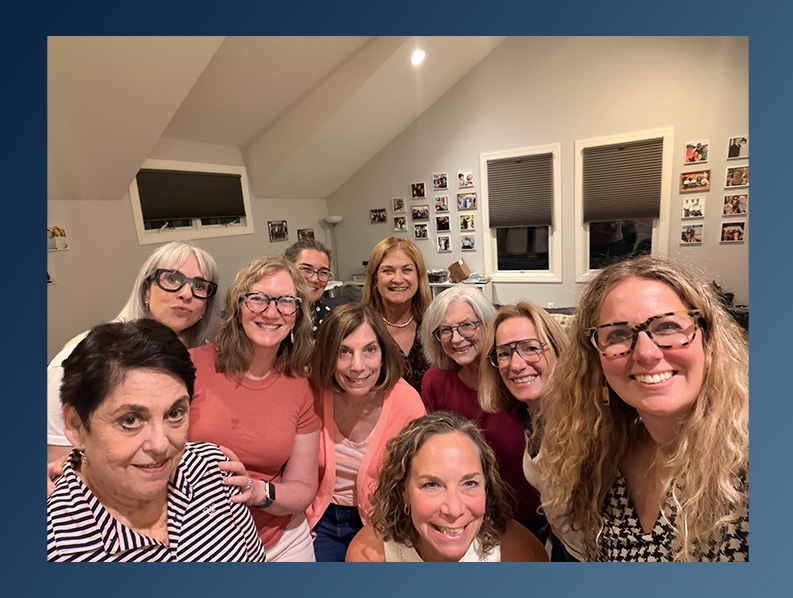
National Council of Jewish Women Pittsburgh is in a period of transition, according to co-President Andrea Glickman.
“There are external forces that have caused us to really take a look at ourselves internally and figure out who it is that we are and who we want to be,” Glickman told the Chronicle.
A transitional board — which includes two former executive directors — was created over the last few months, she said, to take a comprehensive look at the organization and determine how to “best protect our mission from a local perspective.”
The evaluation has come at a time of change for national NCJW.
In August 2026, the national group released a revised five-year plan (first released in 2025) titled “NCJW Forward.”
According to a story in eJewish Philanthropy, in order to continue to use the NCJW name, local chapters — or sections, as they are called in the organization — were told they need to align with the national organization’s shift from community service to advocacy.
NCJW sections have three options, eJewish Philanthropy reported: integrate, affiliate or disaffiliate. The offer to affiliate was only presented to a few sections.
To continue using the NCJW name, sections need to align with the national organization’s key focus areas outlined in the five-year plan: demanding reproductive freedom, advancing economic opportunity, safeguarding civil rights and fostering safe communities.
By 2030, the goal, according to the plan, is to have influenced state and national policies; build a new field structure and regional staffing model; engage a million “changemakers”; launch the NCJW Center for Leadership; introduce new tools for advocacy; deliver high-impact training and expertise in policy, community building, programming and coalition work; and create blueprints for success.
Some local sections have already been impacted by the plan.
In May, the national organization cut ties with its Los Angeles section, citing a “strained relationship,” according to the Forward.
By August, five sections were disaffiliated, with some spinning off into independent organizations. Two sections, NCJW Houston and NCJW Sarasota-Mantee have closed, according to eJewish Philanthropy.
Glickman said the Pittsburgh section has made no decision regarding its future with the national organization.
“It’s among the issues that our transitional board is evaluating,” she said.
The Pittsburgh section of NCJW, she pointed out, is over 130 years old.
“We have a tremendous legacy we’re looking to protect — and that doesn’t mean we’re going to stay the same because we have this really rich, robust history,” Glickman said. “Our mission may lead us to go in a different direction moving forward.”
The transitional board is looking at fundamental questions, she noted, such as: What does the community need from the organization today; where can the group have the greatest impact; what is the financial structure needed to be sustainable; and, what type of relationships are needed to pursue the best support for the future of the organization.
“It’s an existential review of the organization,” Glickman said. “It’s an important time for us, but we’re looking at it through a positive light.”
The Pittsburgh section, she said, has been mostly aligned with the national organization’s priorities and advocacy issues, and she doesn’t expect much divergence from that.
The work of the transition board is expected to take a minimum of a year, she said, and will include not simply an internal evaluation but external conversations with stakeholders and partners in and beyond the Jewish community.
The transition board has just begun its efforts, Glickman said, and recently attended a retreat to kick off its work.
Glickman doesn’t expect the Pittsburgh section’s fundraising to be affected if it decides to disaffiliate with the national organization, she said, because local funders and supporters are “connected to the work we do locally, whether it’s community service work, supporting programs at Thriftique or the children’s rooms in the courts, or our advocacy work. It’s all based on what we’re doing locally.”
Still, Glickman acknowledged that it has been a challenging time for nonprofits. She noted a lack of support by the federal government, and said that many foundations and other funders have had to focus on basic needs like hunger, poverty and housing, which has impacted NCJW Pittsburgh.
The section had to temporarily pause its MomsWork program, formerly known as the Center for Women, which sought to empower women through financial well-being, community and resources, with a focus on mothers.
It has also scaled back in other areas over the last several months, Glickman said, as the section takes the time to “strategically position ourselves for a better financial future.”
Glickman said that in her more than two decades with the organization, its mission has been clear: “We are a group of progressive Jewish women who support the rights of women, children and families in the region and we protect individual rights and freedoms.”
Saying that she is “forever an optimist,” Glickman said the transitional board is comprised of “phenomenal” women and that the organization has received support and guidance from “professional advisers,” which makes her feel positive about the future.
“We’re in this unique position where we have the opportunity to work with a really solid group of women to help formulate our strategy and focus moving forward,” Glickman said. “We’re looking at honoring our legacy while positioning ourselves for the future. We’re here to improve the conditions of people in community and advocate for issues that are important to us. That will always be what we do.” PJC
David Rullo can be reached at drullo@pittsburghjewishchronicle.org.
comments