
Eradicate Hate summit draws praise for its work
Faces questions over speakers with anti-Zionist history
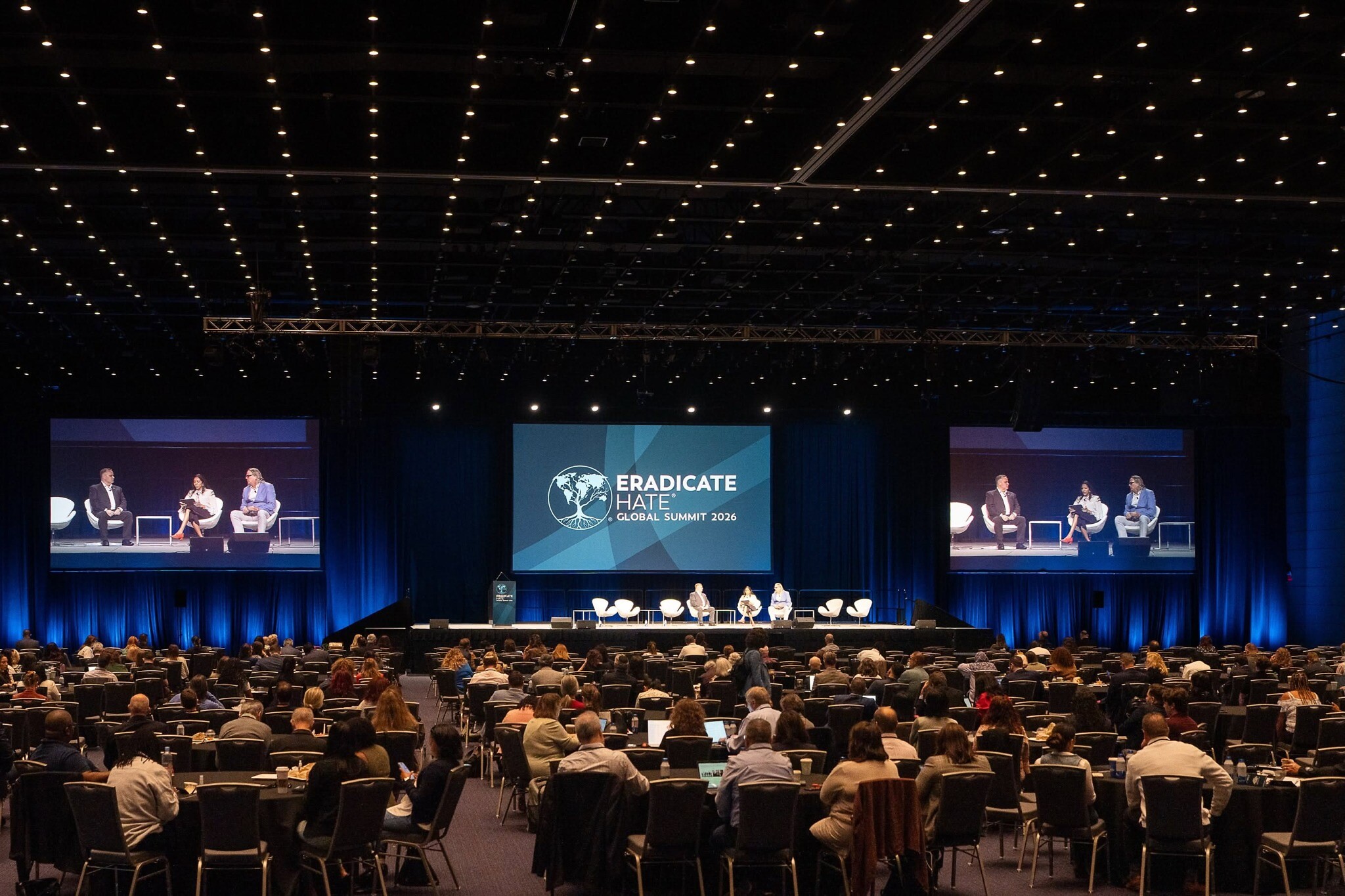
Dr. Alfred Garfinkle said he was “immensely impressed” with his time at the 2026 Eradicate Hate Global Summit.
Garfinkle knows the consequences of unchecked hate from firsthand experiences and was pleased to see the large number of people attending Eradicate Hate, now in its sixth year.
Born in the Polish Przemyśl ghetto and imprisoned in Bergen-Belsen as a child, Garfinkel was liberated by Soviet soldiers from a train bound for another concentration camp. He and his family then relocated to London.
The Holocaust survivor eventually became a physician, psychiatrist and trauma expert. He delivered a keynote address at the Eradicate Hate Global Summit, held at the David L. Lawrence Convention Center Sept. 15-17.
Garfinkle said it was his experiences as a child that drove him to become an expert on trauma.
“If you’ve suffered the way that I have, it makes you very sensitive to the suffering of other people,” he said. “Being a doctor, you sit with someone, you feel their pain, their struggle and that motivates me to be open and caring.”
Holocaust victims, he noted, were ordinary people thrust into extraordinary circumstances, but the experience of trauma can connect them with others who have endured profound suffering.
Garfinkle said that one of the lessons he’s learned is that we can help prevent pain.
“One of the best ways you can prevent or reduce people’s suffering is by the way you behave,” he said. “It’s not what other people do. It’s not about political solutions. It’s simply behaving in a particular way to the people around you.”
And when a person experiences trauma, Garfinkle said he believes it’s best to face it head-on, noting that he travels to Poland ever year and visits the death camp where his relatives were murdered.
“I say kaddish, which is healing for me because I’m still grieving for them,” he said. “I’m still grieving this huge family that was murdered who I never got to know.”
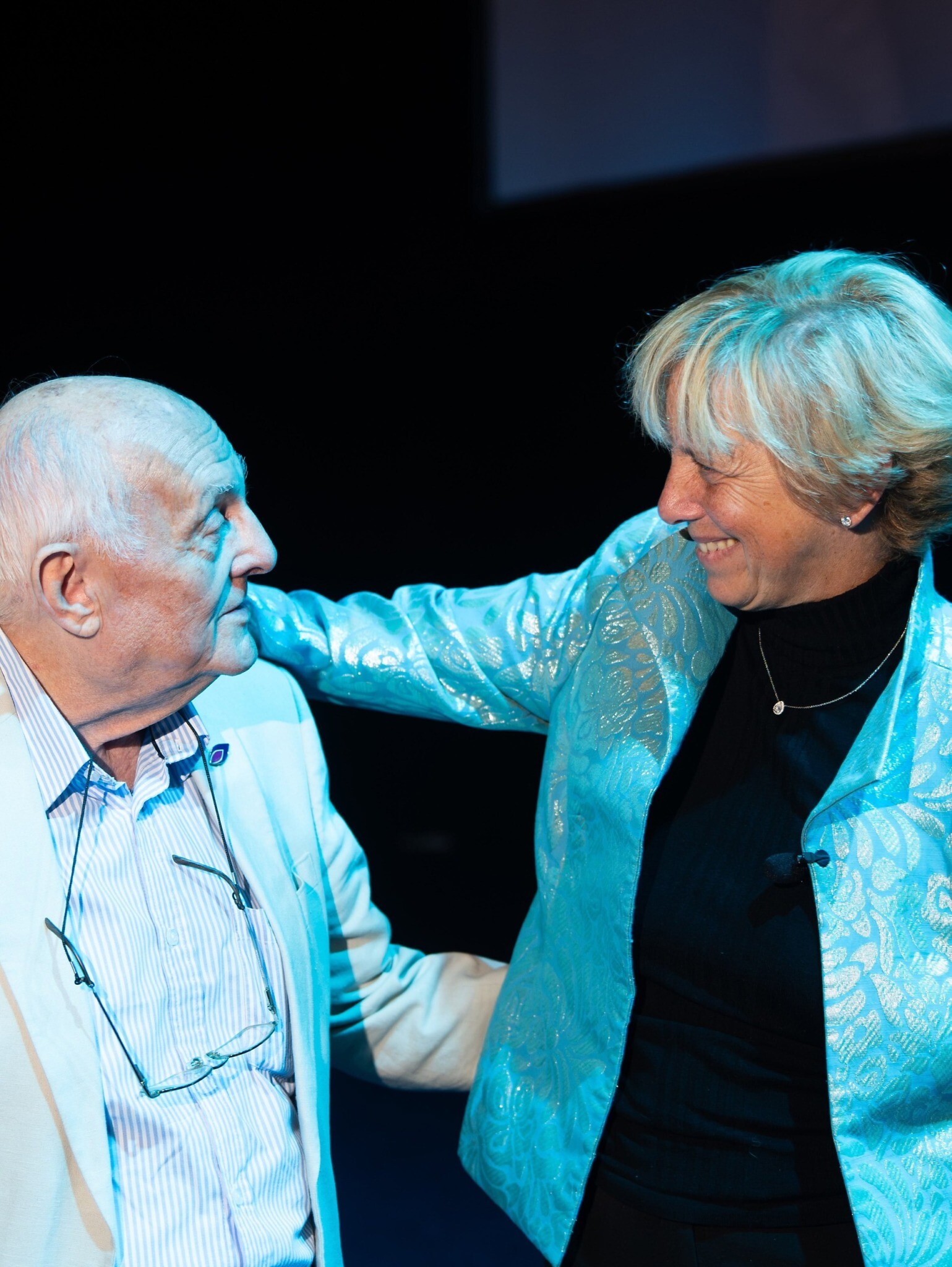
Eradicate Hate Global Summit co-Founder and Board Chair Laura Ellsworth said the summit, which has evolved over the years, continues its commitment to “get things done” to combat hate.
Launched in Pittsburgh as a response to the Pittsburgh synagogue shooting, Ellsworth said the summit will “never outgrow” its Steel City roots.
“It exists,” she said, “because of what happened at the Tree of Life in Pittsburgh. One thing we’ve been very clear about within the organization is that it will always stay in Pittsburgh, but we also have an opportunity to being in other places around the world.”
Ellsworth said the lessons learned at the summit can be used outside of Pittsburgh, including locations like Bondi Beach, where 15 people were killed and another 40 injured in a 2025 attack during a Chanukah celebration.
“I knew how they were feeling and I know how hard all of us in this room and so many people in Pittsburgh, including the survivors, have worked to regain a new version of their lives,” she said. “That gives us a power to help other people who are facing what we faced and to deal with it informed with what we have learned.”
The Eradicate Hate Global Summit, she said, is one of the repositories of the accumulated knowledge gained following the 2018 hate-based attack in Pittsburgh.
And while Ellsworth pointed out Eradicate Hate’s commitment to stopping the rise of antisemitism, the summit has faced some criticism by local community members for not confronting the hate arising from anti-Zionism. In particular, four of this year’s summit speakers — Salam al-Marayati, Michael Loadenthal, Robert Pape and Shahd Safi — have all espoused anti-Zionist messages.
Al-Marayati is the founder of the Muslim Public Affairs Council, a Muslim advocacy and public policy organization. During a Sept. 11, 2001, interview he said that Israel was responsible for the terrorist attacks in New York and Washington D.C. and has refused to call Hezbollah a terrorist group.
Loadenthal is the founder of the Prosecution Project, created to track and analyze felony criminal cases in the United States that involve illegal political violence, terrorism and extremism. He has written that violence against “colonialism” is “expected and just,” which is notable because of anti-Zionist accusations that Israel is a colonizing state.
Pape served as a keynote speaker at the summit and spoke at a separate event at the University of Pittsburgh. He is a political science professor at the University of Chicago.
He has argued that suicide terrorism is primarily a strategic response to foreign military occupation rather than primarily the product of religious ideology and has proposed the military containment of Israel, recommending that Congress pass legislation cutting off all U.S. military and economic aid to Israel if it attacks Iran, and requiring Israel to join the Nuclear Non-Proliferation Treaty.
Safi has repeatedly called Israel’s war in Gaza a genocide. She has also been associated with the organization We Are Not Numbers, whose leadership has been accused of being connected to Hamas and anti-Israel incitement.
Ellsworth is aware of community concerns about anti-Zionism, noting that the summit was founded by “a couple of lawyers.”
“Lawyers have devoted themselves to the adversary process where we believe that opposing viewpoints argued with respect and listening to one another produce the greatest truths,” she said. “We have always brought people with differing views to the summit for that purpose.”
Ellsworth said she is grateful for community members who voiced their concerns with the summit, because she wasn’t previously aware of those concerns. And, she said, she’s committed to having conversations “about how we can bring other diverse voices to the summit.”
“I want people to know that we welcome a diversity of voices and always have,” Ellsworth said.
That diversity, she said, has drawn criticism in the past.
“Eradicate Hate was one of the first organizations in the country to present hate on the left,” she said. “That was right before Oct. 7 and we got huge criticism for it.”
The three-day conference hosted a variety of local, national and international experts in the field of hate and included a student summit for nearly 600 students from 42 schools. Another highlight of the conference was a session dedicated to the Pittsburgh synagogue shooting, featuring Michael Bernstein, Tree of Life Center for Humanity board chair, and Maggie Feinstein, 10.27 Healing Partnership executive director.
Ellsworth was featured on a panel discussing the Bondi Beach massacre and Rabbi Jamie Gibson, chair of the Jewish Federation of Greater Pittsburgh’s Community Relations Council, was a speaker at the session “Faith as Frontline Preventions: The Role of Faith as a Protective Factor.”
Another session examined the terrorist attack on Temple Israel in West Bloomfield, Michigan, featuring the congregation’s Taylor Weintraub as well as Steve Richter from the West Bloomfield Police Department.
As the summit’s founder Ellsworth, had the opportunity to see the good it has done, she said.
“I get to see people who have met one another because of this conference and done amazing things around the world. I get to see survivors like the woman who spoke this year on the nihilistic violence panel,” she said. “I have seen survivors come here who have been lost in the world, who find their purpose and go off to do amazing things, including the Tree of Life survivors.”
When it comes down to it, she said, Eradicate Hate is about people.
“It’s about connecting people with a lived experience that has given them a passion for this work that matches my own,” she said. “That’s what makes this organization great. If you can activate hundreds of people and connect them to hundreds of people, give them the spark, then that’s going to change everything.”
The 2027 Eradicate Hate Global Summit has been scheduled for Nov. 9-11. PJC
David Rullo can be reached at drullo@pittsburghjewishchronicle.org.
comments