
Drawing the line: At a time of rising antisemitism, leadership demands moral clarity
Antisemitism must not be tolerated or excused by anyone, especially those elected to represent all their constituents, including Jewish and Zionist communities.

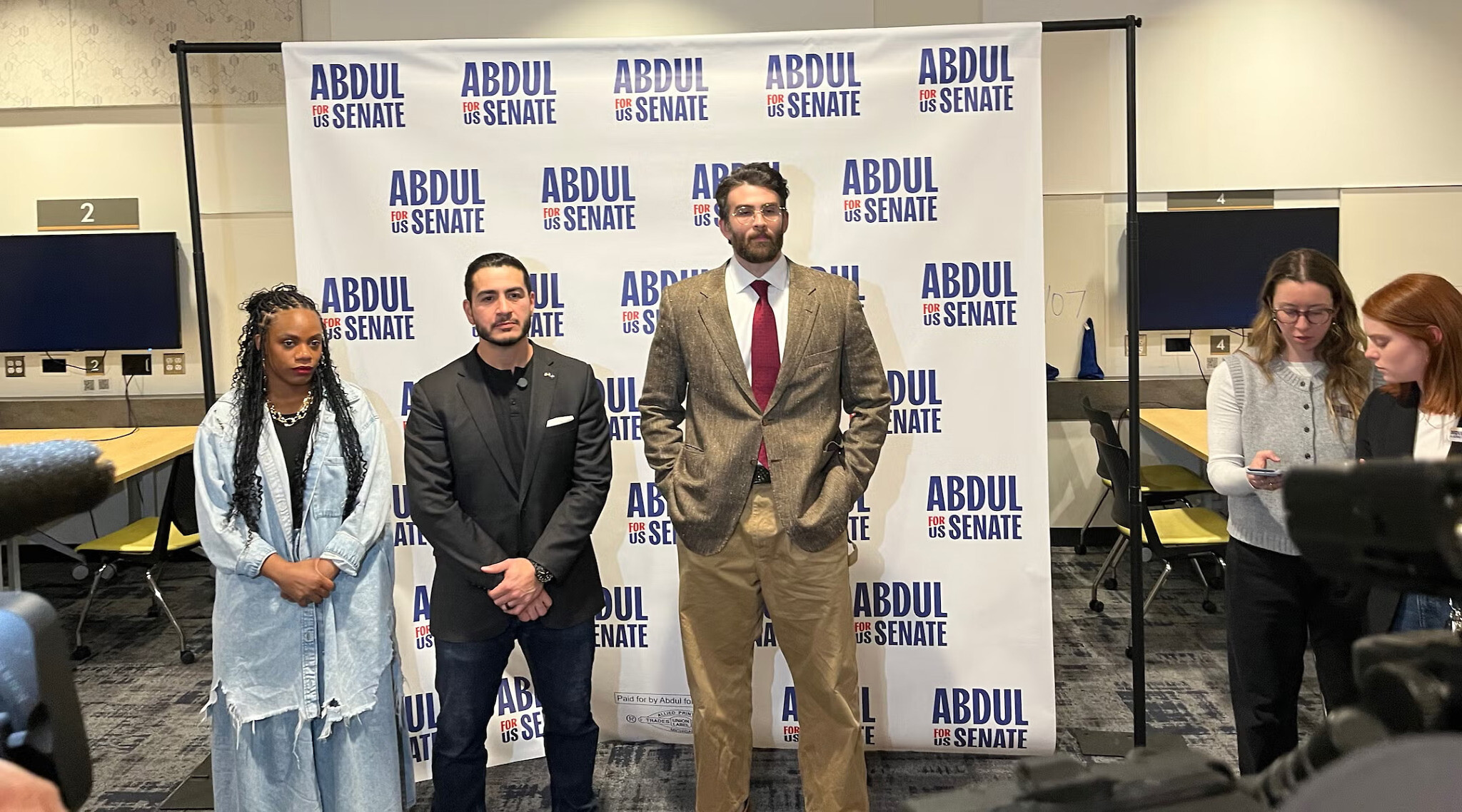
At a time when antisemitism is rising across the country, in our schools, our communities, on campuses and online, the moral clarity of our elected officials is being tested.
The question is simple: Will they draw clear lines against antisemitism, or will they cross them?
That is why it is so concerning that Rep. Summer Lee and Michigan Senate candidate Abdul El-Sayed recently chose to campaign alongside online personality Hasan Piker, whose rhetoric has repeatedly been called out as antisemitic, dehumanizing and harmful.
Get The Jewish Chronicle Weekly Edition by email and never miss our top stories Free Sign Up
Moreover, their collaboration is not a one-off event. Lee appeared alongside Piker at campaign rallies in Michigan, including events at Michigan State University and the University of Michigan, where the two shared a stage with El-Sayed. Additionally, El-Sayed actively campaigned with Piker across multiple college events, drawing both attention and criticism for the association. Other political figures also have engaged with Piker through interviews or appearances on his platform, including candidates like Tom Steyer, reflecting a broader trend of elected officials and public figures leveraging Piker’s large online audience despite ongoing controversy and concern surrounding his rhetoric.
This is not an isolated incident or a matter of partisanship. It reflects a broader pattern of whom elected officials choose to associate with, and whether antisemitism is treated as unacceptable, tolerated, or even elevated, when it is politically convenient.
Piker’s record goes far beyond legitimate political critique. He has used dehumanizing and antisemitic language about Jews and Zionists, including referring to Zionists as Nazis and calling Orthodox Jews “inbred.” Following the horrific Oct. 7 attacks by Hamas, Piker stated that “it doesn’t matter if rape occurred” and downplayed documented atrocities.
This rhetoric reflects a pattern many Jewish Americans recognize: language that erases, distorts and undermines Jewish identity. Choosing to campaign alongside someone with that record risks normalizing and excusing antisemitism. Antisemitism must not be tolerated or excused by anyone, especially those elected to represent all their constituents, including Jewish and Zionist communities.
When elected officials identify rhetoric like this as antisemitic, it should not be controversial to say, “This is a line that must not be crossed.” Rep. Ritchie Torres has warned of the “amplification of antisemitism” tied to Piker’s content, pointing to a broader and deeply troubling trend. Rep. Brad Schneider has described him as an “unapologetic antisemite,” and Michigan Democratic leader Mallory McMorrow has cautioned that elevating voices like his risks “fan[ning] the flames and stoke[ing] division.”
For Jewish Americans, this is not abstract. It is about safety, dignity and belonging, values that rhetoric like this undermines. Elected officials should not contribute to a climate where such language can escalate into real-world harm.
This is especially relevant considering recent claims that condemning Piker’s rhetoric constitutes censorship of criticism of Israel, reflects anti-Arab bias, or demonstrates a lack of empathy toward Lebanese and Muslim communities.
To be clear, death is always tragic, and every community impacted by the conflict deserves compassion and support. Empathy is not a finite resource, nor is it contingent on ignoring harmful rhetoric. Condemning antisemitism does not come at the expense of empathy for others; it is part of ensuring that all communities are treated with dignity. At the same time, rhetoric that goes beyond political criticism to dehumanize and target a community cannot be dismissed as legitimate discourse. Regardless of intent, language like that used by Piker can be perceived as reinforcing bias against members of the Jewish and Zionist communities.
The fact that elected officials are now being asked to choose between condemning antisemitism and maintaining political alliances, and that some fail to distinguish between the two, shows we are at a political crossroads.
Elected officials are not passive participants in public discourse. They are amplifiers. The people they stand with, and the voices they elevate, help define what is acceptable. At a time of rising antisemitism, those choices carry real consequences.
Leadership is not just about what one says. It is about what one does and the ideology one chooses to legitimize.
That is why this moment cannot end with concern alone.
Contact elected officials and demand accountability. Urge them to publicly condemn antisemitic rhetoric, to call on colleagues to distance themselves from it, and to make clear there is no place for legitimizing hate within public leadership.
This is what this moment requires.
Because silence is not neutral.
And ambiguity is not leadership.
If elected officials will not draw the line themselves, then constituents must demand that they do.
Call your representative. Speak out. Make it clear that antisemitism, no matter how it is framed, no matter who it comes from, has no place in our politics.
Public leadership drawing the line must never be optional when it comes to promoting hate. It is the minimum we should expect. PJC
Julie Paris is the Mid-Atlantic regional director of StandWithUs.
comments