
Days of Awe: 9/11 and Rosh Hashanah
Deuteronomy 29:9 – 31:30
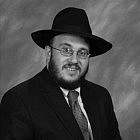

Next week we will experience a powerful calendrical conjunction: Rosh Hashanah will begin as the United States marks the 25th anniversary of 9/11. Personally, though, every Rosh Hashanah brings back memories of 9/11.
In the fall of 2001, I was 25, completing my rabbinical training at Yeshiva University and working as an assistant rabbi in New Jersey. Since the previous Rosh Hashanah, the Jewish world had been plunged into the terror of the first year of the second intifada, and a constant sense of dread and terror and sadness. On the Shabbat of 9/8, I delivered an optimistic sermon about the potential, even in a year of such terror, to find meaning in blessing in the 10 days left before Rosh Hashanah. Three days later was 9/11.
There was a family in the synagogue who lost a loved one in the twin towers, and the day before Rosh Hashanah I visited the shiva house. As someone who was just beginning my rabbinate and about to start my adult life, it had a very powerful impact on me. What do you say to a woman who lost her parents in Auschwitz and now her son in the towers?
Get The Jewish Chronicle Weekly Edition by email and never miss our top stories Free Sign Up
I was scheduled to speak that evening at the opening service of Rosh Hashanah. Feeling unequal to the task, I sat quietly by my computer sorting out how to frame Rosh Hashanah to a community in trauma. This is a lightly edited text of what I said, and as I look back 25 years — now as a husband and father — the ideas continue to resonate with me even more after the many crises of the last quarter century, and I hope my musings are meaningful for you as well.
Rosh Hashanah 2001
There is ancient prayer still recited in many synagogues at the last moments before Rosh Hashanah called Achos Ketana, and its chorus, I think, starkly resonates this year: Tichleh shana u-kileloteha, may the past year with its curses end. Without hyperbole, this has been a year that seems to have been shadowed by horrible curses. To the images of 5761— from that first picture of an American yeshiva student in Israel beaten at the hands of savages, to the bodies of soldiers in Ramallah, to school buses and discos and pizza shops, to the unspeakable horror that hit so close to home and that we still have yet to fully fathom — we can only add our assent to the prayer: Truly, let this year quietly find its way out the door without leaving more heartbreak in its wake.
However, it will be impossible to begin this new year of 5762 without last year’s images intruding into the prayers of the next two days. And each of us will find a line of our own in the machzor that will be infused with a new urgency against the gloom that shadows over our hearts. For me, though, I already know what piece of liturgy will burn my lips when I utter them tomorrow:
“Adam yesodo me-afar, ve-sofo le-afar — man comes from the dust, and to the dust he will inevitably return.”
“Banafsho yavi lavchmo — at risk of his life he seeks his daily bread, and death stalks doing the business of regular life.”
“Mashul ke-cheres ha-nishbar … ucha-chalom ya’uf — like broken pottery, dried grass, like a passing shadow, like a dust in the wind, like a passing dream, which too easily can be twisted into a nightmare.”
The reality of 5761 belies the need to voice this in words. None of us needs a new reminder of the frailty of existence, of how delicate are the gossamer threads that support our civilization, of how quickly our illusions of normalcy can be shattered.
But what is the conclusion of all of this sober, heart-wrenching evaluation of our lives? How must we conclude?
“Ve-Atah, Hu Melech, Kel Chai ve-Kayam! You are the King, the ever living God!”
When all else fails us, when this world shows itself to be an alma de-shikra, a world of falsehood and illusion, we are forced to reaffirm that only thing that is real and true and enduring is the King of Kings, and that realization is the heart of what Rosh Hashanah, or the Coronation Night, the Night of Coronation, is all about — and with each shofar blast tomorrow we proclaim our fealty to His dominion.
Yet why does He need this? Why does One who is Infinite need our coronation?
The 16th-century sage, Maharal of Prague, responded to a similar question: Why must we begin each Amidah prayer with a litany of praise? Do we really imagine God as a primitive, egocentric despot who will not grant our needs without the verbal baksheesh of “the great, the mighty and the awesome?” The Maharal explains that fundamental to the prayer experience is the need to internalize the idea that we are directing the needs of our hearts to the proper address, that he in fact is the rofei cholim, the healer of the sick, the matir assurim, the liberator of the confined, and is and will ultimately be the Mechayeh ha-Meisim, the One who can do the impossible and revive the dead. To truly pray means confronting the painful truth that neither army nor intelligence agency, skyscraper nor stock market is a guarantee of safety, security or happiness, but are mere extensions of the shards of pottery that are our lives. The opening of the Amidah in praise of God addresses not His need, but ours: To believe that the words we are mouthing have meaning requires a daily mental coronation, and similarly, this evening of Rosh Hashanah, this Night of Coronation, is the pathway that allows ourselves to truly beseech Hashem for a year of salvation that we all, individually and collectively need so desperately.
And so as night falls, and 5761 limps out, unmourned into history, and the new year of 5762 begins, we once again shoulder the awesome task of coronation, searing into our souls that, now and forever, You are the One, the only One, with the power to fulfill our deepest prayers.
Let us join that chorus of song for the King of Kings, and may Avinu Malkeinu, our King who is also our tremendously loving father, grant our heartfelt prayers for an immediate inscription in the Book of Life. PJC
Rabbi Daniel Yolkut is the rabbi of Congregation Poale Zedeck. This column is a service of the Vaad Harabonim of Greater Pittsburgh.
comments