
Canvases at upcoming exhibit invite viewers to see both sides
Symbolic and physical duality showcased in 'Allan Rosenfield: Fluid — Between Surface and Space'
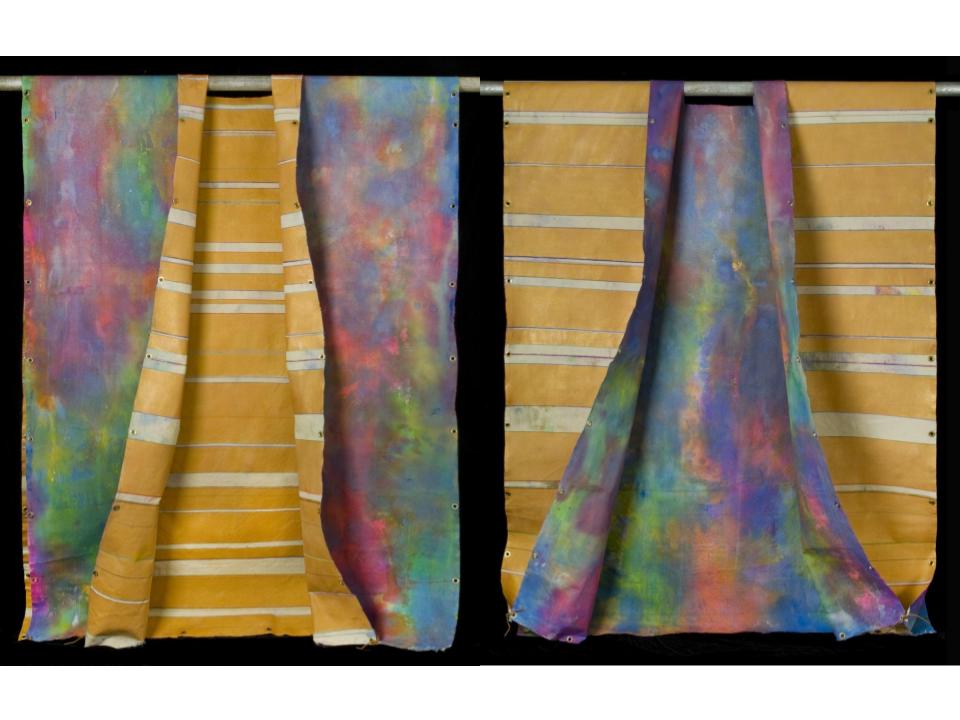
Two sides of a canvas are yielding one mesmerizing sight. Between March 17-May 31, the Jewish Community Center of Greater Pittsburgh’s American Jewish Museum is presenting “Allan Rosenfield: Fluid — Between Surface and Space.”
The show, which features works from the Shadyside-based Jewish painter, will deliver a “curious fascinating experience,” museum director Melissa Hiller said. Rosenfield’s works “are not quite painting, they’re not quite sculpture, they’re not quite objects. They’re really, as the title suggests, very fluid, and there’s something vague and mysterious and alluring about that.”
Speaking by phone from his studio, Rosenfield said the upcoming show includes a “body of work that I have never shown before.”
Several of the pieces feature large, decorated canvases. Hung between bays in the museum’s gallery, the two-sided works, which appear similar to adorned drapes or beautified tents, detail rich colors and design.
“I regard these things that I do almost as mandalas, as points of focus for meditation,” he said. “They’re both iconic and infinitely flexible. It’s almost as if they contain the contradiction within themselves. That’s what I think is most fun about my format — that they embody a symbolic duality, and they can also reflect an actual physical duality.”
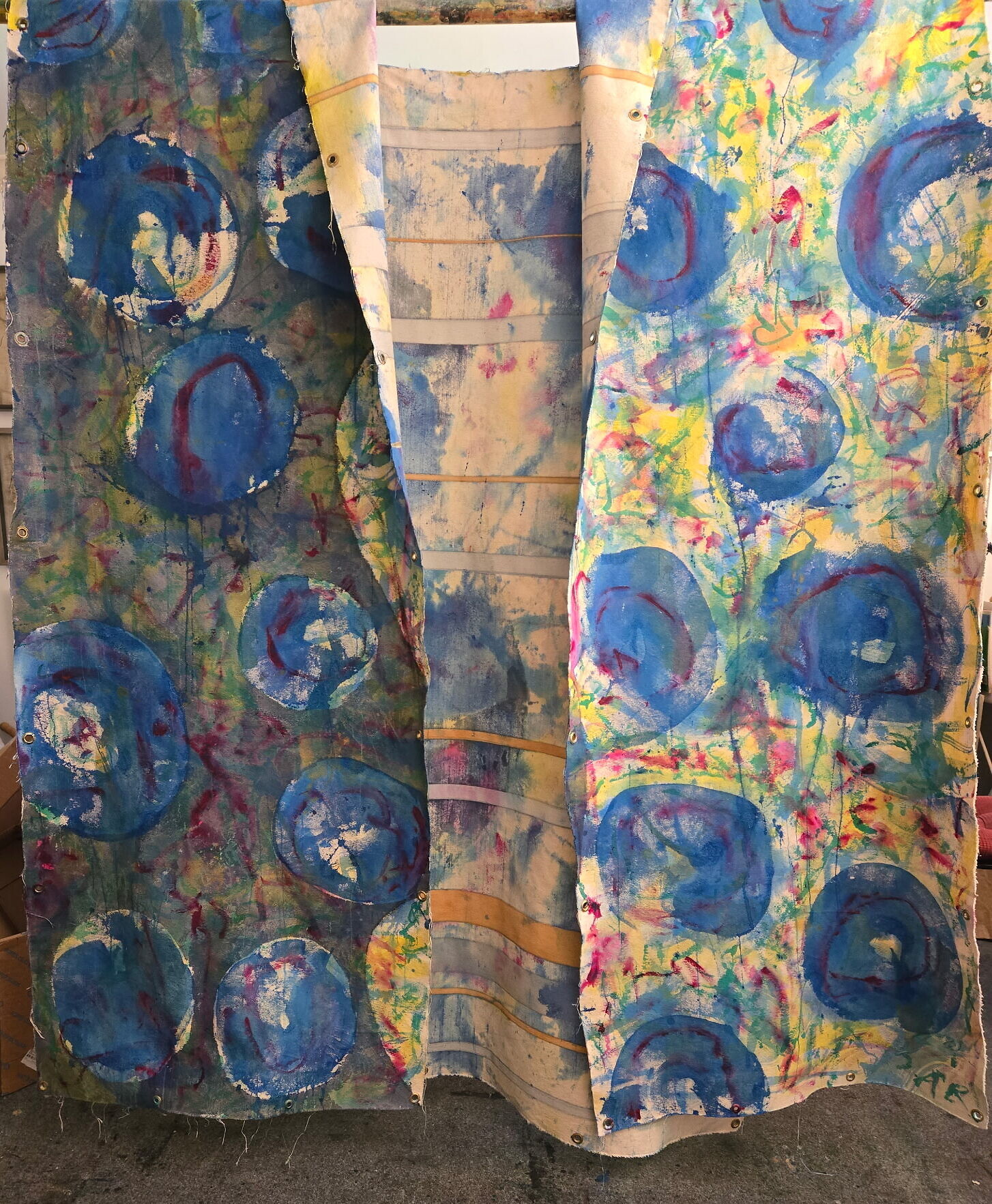
Rosenfield, 73, began painting two sides of a canvas after spending 18 months in Japan, completing a Fulbright research fellowship at Osaka University of the Arts, nearly 40 years ago.
“While I was there, I noticed displays of kimono — both historic and contemporary — and it just hit me that this was almost an aha moment,” he said.
Rosenfield asked himself, he continued, “Why can’t I paint on both sides of a canvas and somehow make one side reveal the other through arranging it, manipulating it? Of course, after that I was off to the races.”
The artist, who in addition to living in Japan has visited and taken residence in Europe, the Middle East — including Israel — Philadelphia, Los Angeles and New Mexico, seeks to integrate personal experiences within his work.
These pieces are “part of an ongoing search for meaning in my life,” Rosenfield said. “My work reflects a very turbulent inner world, a very imaginative inner world.”
At the same time, Rosenfield’s efforts represent “part of an ongoing quest for beauty,” he continued. “I know beauty is given short shrift these days, but I’m kind of a diehard.”
Similar to a stage curtain, Rosenfield’s canvases are often suspended from above and gently graze a floor.
Those encountering the works will notice the “inside painting is sometimes quite different from the outside painting,” he said. “It’s hide and reveal. It’s cover and uncover. And it does both at once.”
The creative process relies on bleeding and “not staining,” an approach Rosenfield described as similar to batik painting.
With such intricacies filling both sides of a canvas, viewers often wish to move the works and see more.
Rosenfield discourages such encounters.
“Although they are designed to tempt the touch, it’s hard to say it’s OK to touch them in an exhibit setting,” he said.
Instead, the works are solely intended to be seen. In a world where countless artists rely on digital engagements, he continued, these pieces invite viewers to experience a different intimacy.
“I only have this one way, this direct way, to encounter the art,” Rosenfield said. “Without the viewer, without the physical encounter, the visual encounter, it’s nothing.”
“Allan Rosenfield: Fluid — Between Surface and Space” is on view at the American Jewish Museum, JCC Squirrel Hill March 17 – May 31. An opening reception is scheduled for March 26 at 6 p.m. PJC
Adam Reinherz can be reached at areinherz@pittsburghjewishchronicle.org.
comments