
A profound failure by a Pittsburgh institution
That was the session’s final explicit message: Jews, as a group, do not get to decide what is anti-Jewish.

Antizionism has become the dominant public expression of anti-Jewish hatred at many elite institutions. I have wondered how it is possible that this hatred has become so pervasive, given that our community’s institutions have invested so much in education about Jewish history, especially the Holocaust.
A few months ago, I came face-to-face with an answer when I witnessed an incident where the Holocaust Center of Pittsburgh did not just fail to combat this modern form of Jew hatred, but excused it.
As reported in the Chronicle on June 26, Duquesne University’s Psychology Department has, at a minimum, shown a tolerance for antizionist hatred (“Mental health professionals sound alarm over antisemitism in psychology and social work”). The intellectual roots of antizionism lie in Nazi-Islamist collaboration and Soviet propaganda. Its goal is to mark all Jews for violence and purge them from “polite” society. This century-old movement of anti-Jewish exclusion and demonization has already destroyed Jewish communities from Russia to Iraq to Poland. Those who deny that modern antizionism is a hate movement must first confront the facts it has left on the ground: Jewish life dies wherever its program takes hold.
Get The Jewish Chronicle Weekly Edition by email and never miss our top stories Free Sign Up
This hatred now pervades the academic culture around me. One colleague, who takes Duquesne undergraduates on educational trips to Auschwitz, has remained enthusiastically involved in a professional psychoanalytic society that was, until recently, led by a “decolonizing psychologist” notorious for teaching that Zionism is a mental illness. Another colleague collaborates with someone who posted publicly that “the so-called ‘final solution’ was not nearly final enough,” published a manifesto for the “Islamic Marxist Revolutionary Alliance,” and is currently on trial in the United Kingdom for supporting terrorism. A graduate student in my department publicly celebrated Hamas terrorists and Oct. 7 atrocities.
As a result of calling these things out, I have been isolated and harassed.
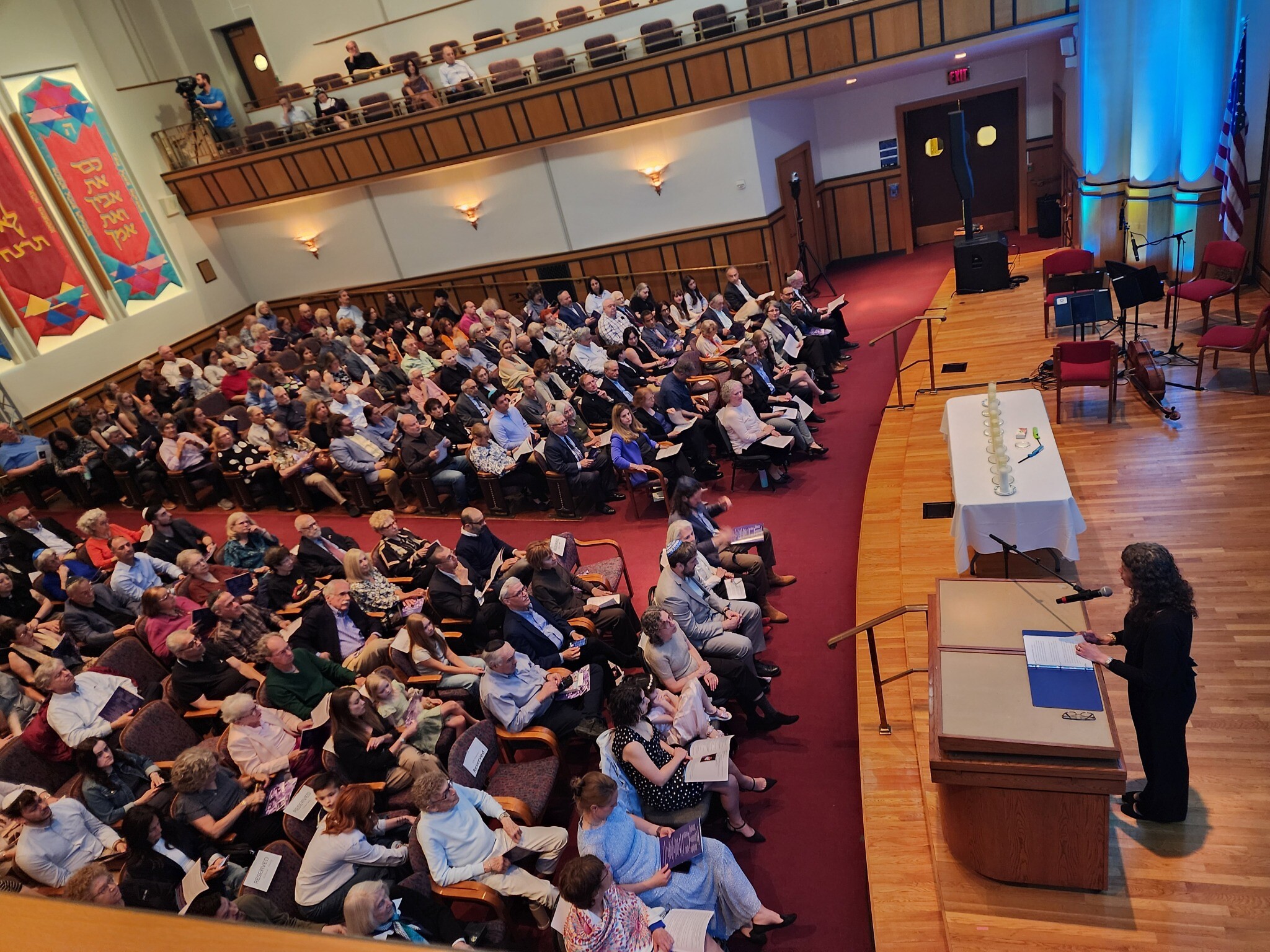
In response, Duquesne’s Psychology Department mandated a “Countering Antisemitism” training session, provided by the Holocaust Center of Pittsburgh. The training devoted nearly all of its attention to forms of anti-Jewish hatred that most educated Americans already recognize as bad: medieval religious anti-Judaism (“Christ killer!”) and 20th-century racial antisemitism (“Parasite!”). But it never named the form of Jew-hatred that prompted the training in the first place — antizionism — with its own familiar accusations of “Colonizer!” “Apartheid!” and “Genocide!”
If my department were plagued by Spanish inquisitors or neo-Nazi skinheads, the training might have been useful. It is not. I am countering a form of Jew-hatred expressed by ordinary academics using what now passes for acceptable academic language.
Near the end of the session, the colleague who educates undergraduates at Auschwitz but tolerates the celebration of Hamas atrocities by his own graduate student asked how one can criticize state policy without being branded antisemitic.
I expected a thoughtful and straightforward answer from the Holocaust Center’s educator. The educator could have said that criticism of the Israeli government is not anti-Jewish. Indeed, nobody criticizes Israeli governments more passionately than Israelis do. But the educator also should have said that singling out the world’s only Jewish state for standards applied to no other country, denying Jews the right to national self-determination, treating “Zionist” as a category of contamination and psychopathology, or obsessively degrading Israelis as “ethno-supremacist baby killers” are not legitimate policy critiques but modern forms of anti-Jewish bigotry and abuse.
The educator should have said that contemporary antizionism is not political criticism at all, but discrimination directed at Jews through the language of Israel.
Instead, what followed truly shocked me. After some hand-waving innuendo about geopolitical dynamics and colonialism, the Holocaust Center’s facilitator explained that just because a Jew says that something is antisemitic doesn’t mean it is. The oppressed group doesn’t get to decide what’s antisemitic.
Imagine workplace racism training that concluded by telling Black people they are not reliable authorities on the racism directed at them. Imagine telling gay people they cannot meaningfully identify homophobia.
Either would rightly be regarded as absurd. Yet when the subject was Jew-hatred, the proposition was presented as entirely reasonable.
That was the session’s final explicit message: Jews, as a group, do not get to decide what is anti-Jewish.
The unstated message was even more revealing: The facilitator’s apparent priority was to absolve those worried about being accused of antisemitism, not to help them counter the antizionist hatred they were helping to spread.
I later learned that, according to public materials, this Holocaust Center educator was trained by IfNotNow in 2016 and went on to co-found IfNotNow Pittsburgh. IfNotNow’s mission includes ending U.S. support for “the ongoing Nakba” and “Israel’s system of apartheid.” Indeed, IfNotNow’s statement after Oct. 7, 2023, placed blame on the Israeli and U.S. governments, not Hamas, for the massacre.
The Holocaust Center’s educator also is credited as one of the “collaborators and mentors” who peer-reviewed a 2025 guide that recasts Israel as an “ethnonationalist” state aligned with Christian imperialism and American white supremacy.
Why is this dangerous?
Antizionist hate — projecting the most hated evils of our age back onto Jews, now recoded as “Zionists” — is not just a problem in Duquesne’s Psychology Department. It is perhaps the most denied bigotry in the world today. If we want that denial to end, then choosing anti-Jewish bias educators who are trained by antizionists and who are tolerant of antizionism is counterproductive at best, and harmful at worst. That choice reflects institutional judgment, not merely a single educator’s personal opinion.
The Holocaust Center of Pittsburgh’s stated mission is to “connect the horrors of the Holocaust and antisemitism with injustices of today” and to “empower individuals to build a more civil and humane society.” That mission carries a profound responsibility: not merely to teach how Jew-hatred once appeared, but how it evolves and manifests in the present.
A training approach that refuses to name antizionism — and tells Jews they don’t get a say in what counts as anti-Jewish hate — does not prepare participants to recognize the dominant form of hatred confronting many Jewish students and faculty today.
That is not a minor omission. It is a direct betrayal of the Center’s founding purpose — and of the community it exists to serve.
Jew-hatred has never remained static. Like a virus, it mutates to survive, changing its language while preserving its target. Across centuries, it has adapted to new religious, scientific and political contexts, but its core remains the same: casting Jews as the source of whatever is wrong with society and portraying hostility toward them as not merely acceptable, but as good.
In medieval Europe, Jews were condemned as Christ killers who block eternal salvation. In the 20th century, they were condemned as race-polluters who block national unity. Today, they are increasingly condemned collectively through the world’s only Jewish state as racist colonizers who block global peace and harmony. Holocaust education that cannot explain that evolution — and how each mutation gains popular legitimacy by presenting itself in terms of the accepted theology, biological-science, or social-science scholarship of its age — is not merely incomplete. It leaves students, educators and institutions unable to recognize the prejudice unfolding directly in front of them.
An institution that cannot recognize hatred as it evolves cannot protect the community it was built to defend. Pittsburgh’s Jewish community deserves a Holocaust Center that can name the disease in its current form — before it’s too late. PJC
Alex Kranjec is an associate professor of psychology at Duquesne University.
Editor’s Note: You can read The Tree of Life’s response to this opinion piece here.
comments