
The implications of Bondi
Australia and the West must take decisive steps against Jew hatred or risk the long-term stability of their own societies.

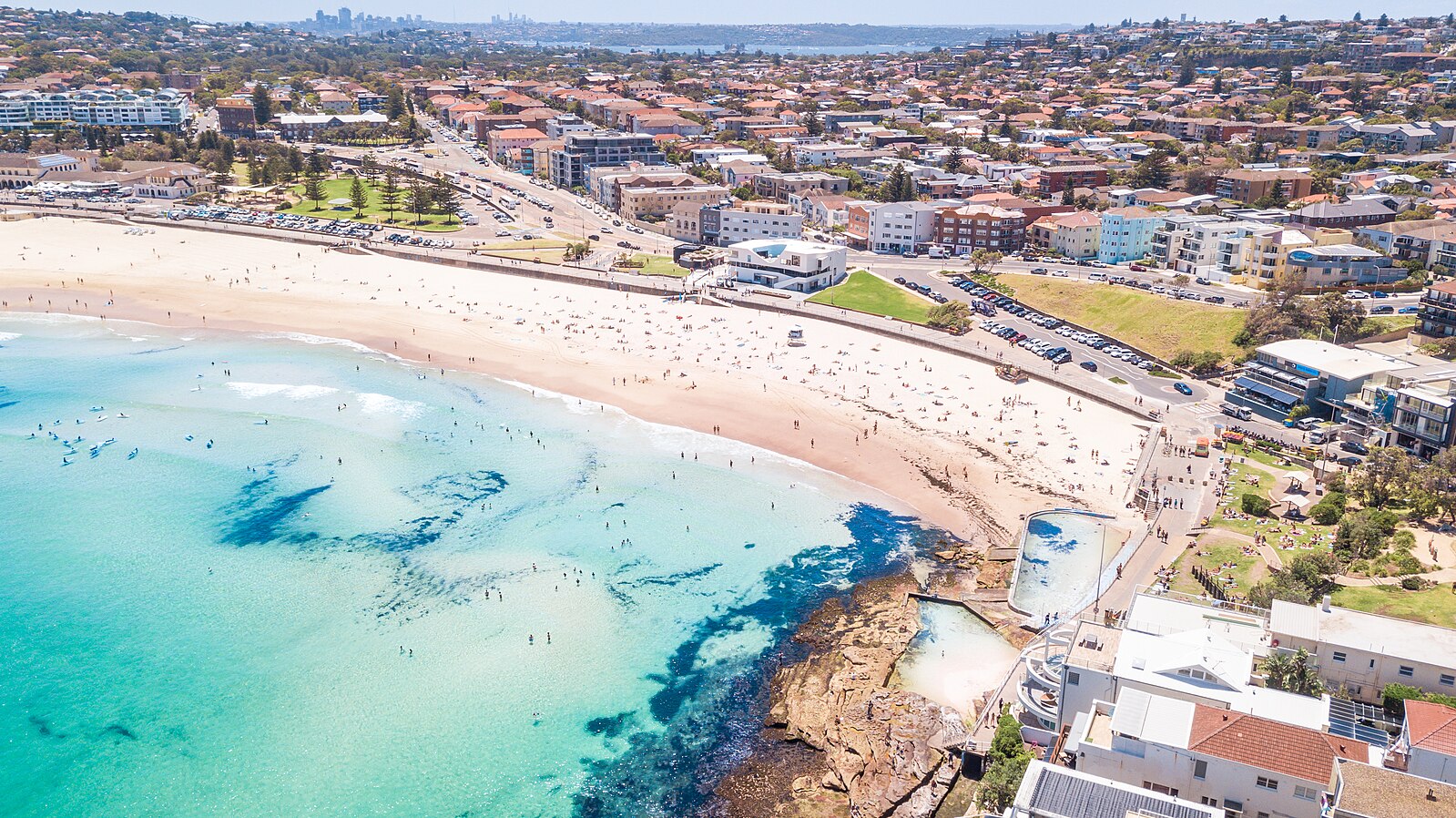
In the first few years of my life, my family lived in Bondi. Bondi Beach was a regular part of our landscape. As a small child, I understood nothing about what the beach likely meant to my mother and father. After all, when they were young children, they had both escaped Berlin with their parents just before Kristallnacht. In Australia, they were fortunate to grow up as far away as possible from the horrors of Europe. Like so many Jews of their generation, Australia represented a new beginning, a place of freedom and fresh air that was oceans distant from the anti-Jewish murderous hatred they left behind.
The wide expanse of Bondi Beach was symbolic of that reality. Bondi was a place where Jews could live and thrive with nary a thought that they might suffer discrimination. To be sure, there was antisemitism in Australia. But Australia was called the “lucky country” for a reason. It was largely guided by a “live and let live” ethos: People might have their differences, but giving others a “fair go” was the expected norm. As a result, the Australian Jewish community flourished within an environment of broad acceptance.
But, over time, the world became smaller. The Australian reality transformed. When the digital age arrived, oceans could no longer offer any barrier to viral calls for global intifada and threats could no longer be easily kept far away. And Bondi Beach, once a metaphor for Jewish liberty, safety and distance from strife, has now become Australia’s first entry on history’s long list of Jewish mass murder sites. The sun may shine and the water may sparkle, but the blood will forever cry out from the ground.
Get The Jewish Chronicle Weekly Edition by email and never miss our top stories Free Sign Up
David Wolfowicz, a thinker and researcher, recently offered this analysis: “If antisemitism is meant as an alarm for Jews, it should be treated as an air-raid siren for everyone else. Periods of violent antisemitism often coincide with moments of heightened tension within a society.”
Australia and the West should take note. While most Australians are not antisemitic, in the last several years they have allowed a lethal strain of Jew hatred to flourish within their midst. In large measure, that hatred stems from those who refuse to countenance the Jewish right to a state — meaning the Jewish right to be defended from harm.
And, through the centuries, it has been repeatedly demonstrated that those who are indifferent to the well-being of Jews are not friends of peace and freedom. Today, therefore, the choice is stark: Australia and the West must take decisive steps against Jew hatred or risk the long-term stability of their own societies.
A number of years ago at Chanukah, the late Rabbi Jonathan Sacks made the following observation:
“There were times when any other people would have given up in despair: after the destruction of the Temple, or the massacres of the crusades, or the Spanish Expulsion, or the pogroms, or the Shoah. But somehow Jews did not sit and weep. They gathered what remained, rebuilt our people, and lit a light like no other in history, a light that tells us and the world of the power of the human spirit to overcome every tragedy and refuse to accept defeat.”
Much changed on the first night of Chanukah: Lives were horrifically extinguished, terrible injuries were inflicted, families were shattered, and a community was terrorized. The image of Bondi Beach was irreversibly altered. For Australian Jews there will always be a “before Bondi” and an “after Bondi.”
But this much will assuredly remain the same: Through our tears and our pain, we will do as we have always done. We will gather those who remain, we will rebuild our people, and we will move forward to light a light like no other in history. For, against all the odds, that is what we do. PJC
Rabbi Danny Schiff is the Gefsky community scholar at the Jewish Federation of Greater Pittsburgh.
comments