
Rabbi Yonatan Udren’s long journey from Monroeville to Beit El, Israel
"I think those on the Israeli side of things, or at least more sympathetic to it, are going to be drawn to Israel and might find themselves making aliyah.”
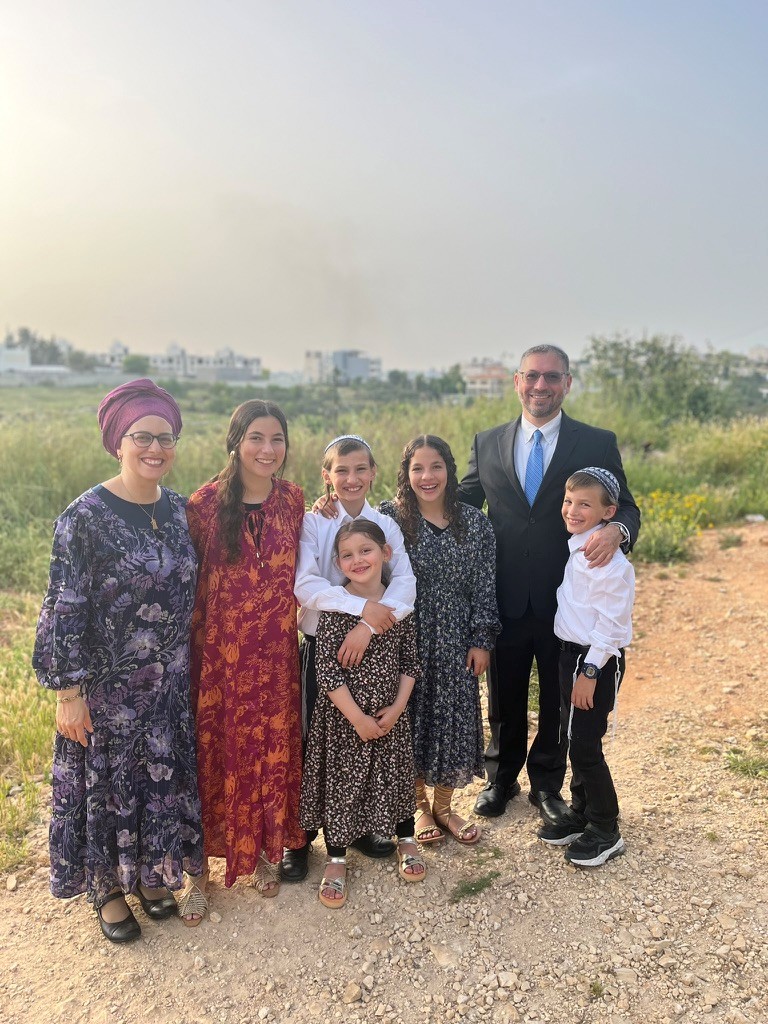
Spend a few minutes talking with Rabbi Yonatan Udren and you can’t help but feel his passion for Israel.
“It’s a very deep love affair with the country, with the physical land, with the spiritual experience of being there, with the feeling of connectivity and sense of home and being a part of the Jewish people in a way you just don’t feel outside of Israel,” Udren said.
And, while it is unremarkable for a rabbi living in a West Bank settlement to declare his love and support of Israel, dig a little deeper and you’ll find Udren’s story is far more complex than it first appears.
The son of Barb and Eric Udren, the future rabbi spent the first 11 years of his life in Monroeville, Pennsylvania, attending Reform congregation Temple David.
Udren credits his time at Florida State University and his positive experience at Hillel FSU — and his interest in a person he called “a cute young lady” (more on that later) — for sparking a greater interest in Judaism and the Jewish state.
“That drives everything, but a monthlong experience in a program called ‘Isralight’ opened me up to a more traditional sense of Judaism, which I had not been exposed to,” he said. “I caught the bug of Jewish learning. It really brought me in and continues with the work that I do.”
Udren decided to stay in Israel and study under Rabbi Shlomo Riskin, the founding chief rabbi of the Israeli settlement Efrat, which he established in 1983.
Udren now lives with his wife, Dena Udren (formerly Stein), and five children in the West Bank community of Beit El, a settlement adjacent to the city of Ramallah.
Dena Udren, the woman the rabbi referred to as the “cute young lady,” deserves some of the credit for his desire to make a home in Israel, he said.
The rebbetzin’s path is as unique as her husband’s origin story.
She grew up in Point Breeze experiencing a typical Jewish upbringing. Her family was affiliated with the Conservative Congregation Beth Shalom. She attended Reizenstein Middle School and Taylor Allderdice High School, and spent summers at Camp Ramah in Canada.
She knew from the time of her bat mitzvah that she was going “to be more religious than my parents,” she said.
Dena Udren’s journey was gradual — she began staying home on Shabbos during high school and keeping kosher as much as possible. But it was her time at Camp Ramah and dinners shared with Orthodox families in Squirrel Hill that helped pique her interest in diving deeper into religion, she said.
“I fell in love. There was a process of going to the Carnegie Library and reading about the history of Conservative Judaism because I was a nerdy kid and wanted to understand it. And then there was USY. I was really active in it. It was an amazing outlet for me to not only learn about Judaism but to have a leadership position, as well,” she said.
By the time she was looking at colleges, Dena Udren’s priorities had shifted.
“I was looking at what’s the kosher food like and what’s religious life like for an Orthodox Jew on campus,” she said. “I ended up at the University of Michigan and had a great time there.”
Dena Udren’s journey took her to an Orthodox women’s seminary in Israel — Midreshet Rachel V’Chaya — and to Hebrew University.
Eventually, though, she had to answer the question: Pittsburgh or Israel?
“I loved Pittsburgh, but I loved Israel more,” she said.
After a sojourn back in the States where Dena Udren earned her master’s degree in education from the University of Pennsylvania and spent time teaching, she returned to Israel and the women’s seminary.
Next up was finding a mate. She turned to divine intervention for help.
“I said, ‘I’m ready to get married. God, help me find my husband,’” she said.
She was dating a man named David, who was also a friend of her future husband. When Yonatan Udren expressed interest in dating Dena, David didn’t stand in the way.
“To his credit, he said, ‘I’m going out with her tonight but I think she might be more for you than me,’” she recalled.
During her last date with David, he said he wanted to set her up with his friend Yonatan.
“The last thing he said to me as we parted ways was, ‘Invite me to the wedding,’” she recalled.
The rest, as they say, is beshert.
The pair was married by former Shaare Torah Rabbi Daniel Wasserman at Beth Shalom before making aliyah for good.
If you aren’t yet sold on the divine intervention argument, Dena Udren points out that her family lives in Beit El, the place where the Torah says Jacob had his dream. Her father’s Hebrew name is Yaakov (the Hebrew version of Jacob). Both he and the patriarch had a daughter named Dena.
“I feel incredibly blessed to be walking in the footsteps of the matriarchs and patriarchs,” she said. “Our kids are growing up in a place that’s incredible.”
As for Yonatan Udren, he, too, is thrilled with the couple’s life and the ability to work in Israel.
Following his ordination in 2010, he began working at the Rabbi Reuven Grodner Beit Midrash program at Hebrew University, a hub for Jewish learning and community for English-speaking students in Jerusalem.
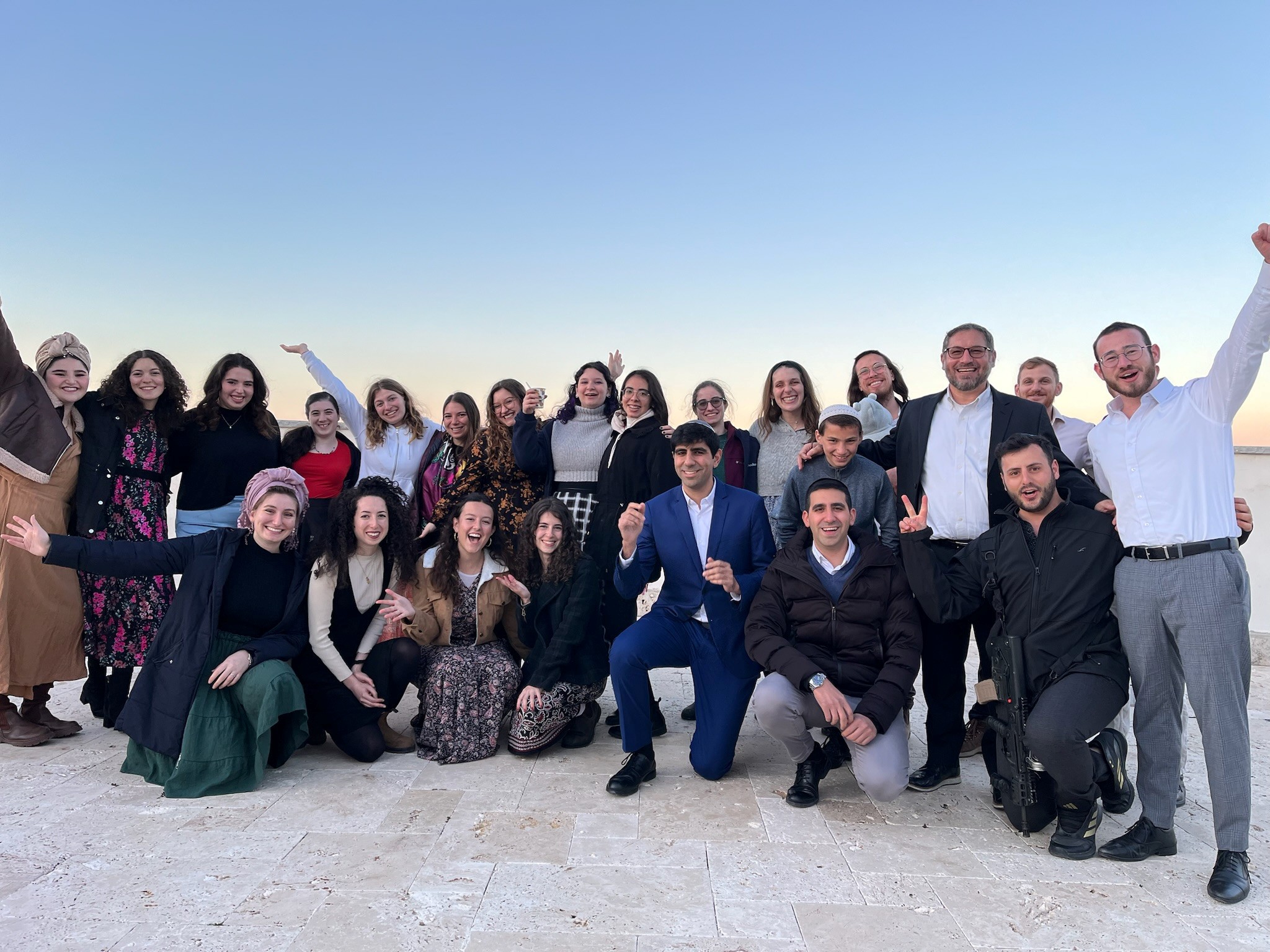
When COVID hit, Yonatan Udren said, the program needed to shift because there weren’t many overseas students. Out of necessity, RRG created the Torah Café, a program for olim studying at Hebrew University who were looking for community and Jewish learning.
‘
The program partnered with the lone soldier center The Michael Levin Base, which allowed Torah Café to use its community center. The café began with 15 young people and by the end of the 2021 academic year, the rabbi had connected with more than 80.
The program expanded to include 14 different colleges and universities in Jerusalem, each one with a handful of English-speaking students and lone soldiers.
“We still have a very active base of 80 to 100 active students at Hebrew University and the downtown program brings in hundreds and hundreds of young people, somewhere around 1,600 young people since Oct. 7, who have come through the door of our Torah Café,” he said.
The students are looking for more than simply studying.
“They have a strong Zionist sense, coming and making aliyah, and are looking for something that gives that Jerusalem experience, that communal experience based on Jewish learning in an open and diverse environment, as well as Shabbat and holiday programming and to build a sense of community,” Yonatan Udren said.
Oct. 7, he said, has shaped his experiences both personally and professionally.
He noted that a large percentage of the young males from Beit El have entered the IDF.
“A lot of men and boys are out there and not yet home,” he said. “So, you see a lot of fathers walking in army uniforms, even on Shabbat. There are a lot of families that are fatherless for months.”
The rabbi has attended many shivas for families that have lost sons.
The need for community in dark times hasn’t been lost on Yonatan Udren, who said it has strengthened the work he does.
If there’s a silver lining, he said, a large group of American Jews will likely come to Israel over the next few years.
“I see a line in the sand, unfortunately, in the Jewish world,” he said. “I see a rift that’s scary and challenging to me between the Israeli Jewish experience and the American Jewish experience since Oct. 7. I think those on the Israeli side of things, or at least more sympathetic to it, are going to be drawn to Israel and might find themselves making aliyah.”
In the end, he said, his role is to assist those coming to Israel find community and to be a part of the Jewish people’s future.
“My hope is that we’ll be able to be here and grow and meet what they need,” he said. PJC
David Rullo can be reached at drullo@pittsburghjewishchronicle.org.
comments