
Pitt, CMU face criticism for their responses to anti-Zionist, antisemitic activity
Pitt spokesperson Jared Stonesifer told The Pitt News that the university doesn’t intend to withdraw the report.
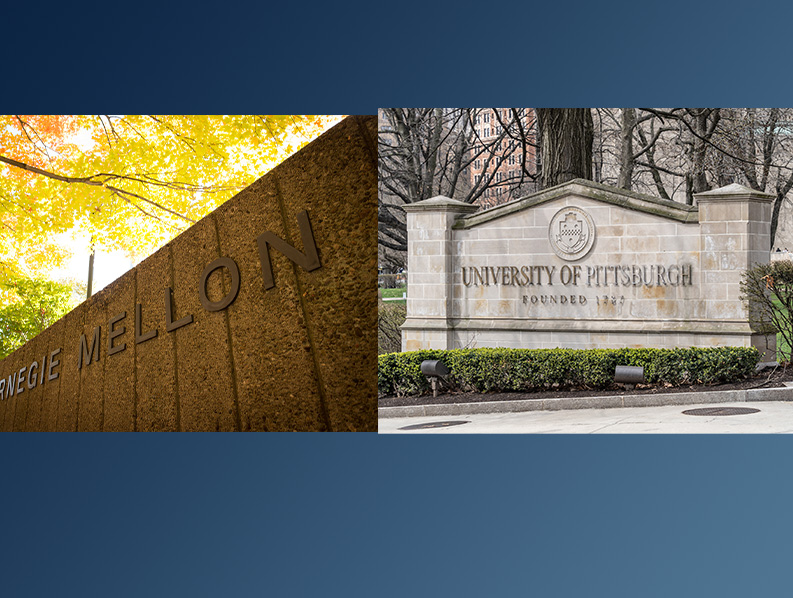
Less than a week after the fall semester began at both the University of Pittsburgh and Carnegie Mellon University, each school faced criticism for its response to anti-Zionist and antisemitic activity on campus.
Students for Justice in Palestine published an eight-slide Instagram screed that denounced the final report of Pitt’s Working Group on Antisemitism, published July 20.
SJP, which was suspended by Pitt for six months last year before a federal judge ended the suspension, wrote that it “condemned” the Working Group’s report, and echoed calls by other groups to “disavow” it.
SJP’s post claims that the Working Group conflates antisemitism with anti-Zionism and ignores white supremacy as a root cause of antisemitism. SJP’s post also asserts that university police and outside groups, including the Jewish Federation of Greater Pittsburgh, are attempting to regulate student speech.
The Working Group, SJP wrote, is calling for the university to “normalize and further indoctrinate Zionist ideology” through its recommendations to create partnerships with Israeli faculty and the university, and to strengthen relationships with organizations like Hillel Jewish University Center of Pittsburgh, Chabad at Pitt and the Federation.
SJP further accuses Pitt of “perpetuating the genocide,” and criticizes the university for ignoring calls for an academic boycott of Israel.
Several far-left groups have accused Israel of genocide since the Jewish state began its response to the Hamas-led Oct. 7, 2023, terrorist attack on civilians, which triggered the war in Gaza.
SJP also claims the university ignores anti-Palestinian racism and Islamophobic violence and hate crimes, but offers no evidence to support those claims. Instead, SJP charges Pitt Police with harassment and “extrajudicial brutality” against Muslims and those in solidarity with Palestine.
Campus police are also accused of “collaborating” with the Jewish Federation of Greater Pittsburgh’s “private security firm,” which SJP says, “exposes the bias in these violent organizations.”
The social media post has received a mixed response, with some writing in support of SJP’s statements and others accusing SJP of antisemitism.
Less than a week after SJP’s post, The Pitt News, the university’s student-run newspaper, published a story covering criticism of the Working Group’s report by members of the American Association of University Professors, Faculty and Staff for Justice in Palestine and the faculty affinity group Pitt Jewish Community.
Some criticism centers around the way the Working Group was formed, its procedures and conclusions, the perspectives culled in its report and the fear of infringement on academic freedom. Other criticism, including from members of the Pitt Jewish Community, expresses concern that not enough Jewish people were consulted to share their perspectives during the creation of the report.
The Pitt News report followed on the heels of a letter titled “An Alternative Vision for Confronting Antisemitism,” published on Google and written and signed by “Jewish faculty, staff, students and alumni of the University of Pittsburgh,” taking aim at both the Working Group’s report and the University’s Response to the Working Group on Antisemitism’s Report and Recommendations, published the same day as the report.
Pitt spokesperson Jared Stonesifer told The Pitt News that the university doesn’t intend to withdraw the report and is working on taking next steps to implement several of the report’s recommendations.
The same day that SJP posted its criticism of the Working Group on Instagram, a group labeling itself “Some friends” repainted CMU’s Fence, then posted photos and a statement on the Instagram page cmufence, which is not associated with the university.
The message read “We ❤️ you Rosalyn,” and “Nobody’s free until everybody’s free,” as well as the Yiddish phrase, “Mit chavershaft,” meaning “With friendship” or “In the spirit of friendship.” Earlier in the summer, another Yiddish phrase was painted on the Fence, which translated to “death to Zionism.”
In the written post accompanying the Fence photos on Instagram, “Rosalyn” is identified as Rosalyn Tosh, one of 10 students investigated for painting not only the “death to Zionism” message on the Fence, but also the phrase “by any means necessary,” which was painted atop a Fence post along with “Free Palestine.”
CMU administration officials painted over “death to Zionism” and began an investigation, ultimately culminating in the investigation of 10 students, some of whom were placed on interim partial campus access restriction.
According to the cmufence Instagram post, several students have had their charges resolved or dismissed by the university. Tosh, however, continues to be barred from campus and suspended from utilizing university housing.
This isn’t the first time Tosh has run afoul of CMU’s administration due to messages she has painted on the Fence. In a July 2026 Public Source story, Tosh identified herself as one of the students responsible for painting “No rapists on campus” ahead of President Donald Trump’s visit to the campus in 2025. That painting led to the temporary closure of the Fence and the formation of CMU’s Fence Working Group.
In 2025, msn.com reposted a story by College Fix that alleged Tosh — while still using her former name, “Ryan” — was being investigated by CMU for writing the phrases “kill cops,” “kill transphobes” and “kill police” during a campus free speech event.
CMU officials previously told the Chronicle that they couldn’t comment on any active investigation or any student’s interim access restriction, but that the university works to balance its commitment to free speech with its responsibility to uphold community standards and adhere to the law.
“The goal,” the university officials noted, “is always to safeguard the community while preserving, where possible, the opportunity for students to continue academic progress during an ongoing investigation.” PJC
David Rullo can be reached at drullo@pittsburghjewishchronicle.org.
comments