
One Oxford Centre features photographer’s striking landscapes of Israel
Largest exhibition of Israeli landscape photography in North America
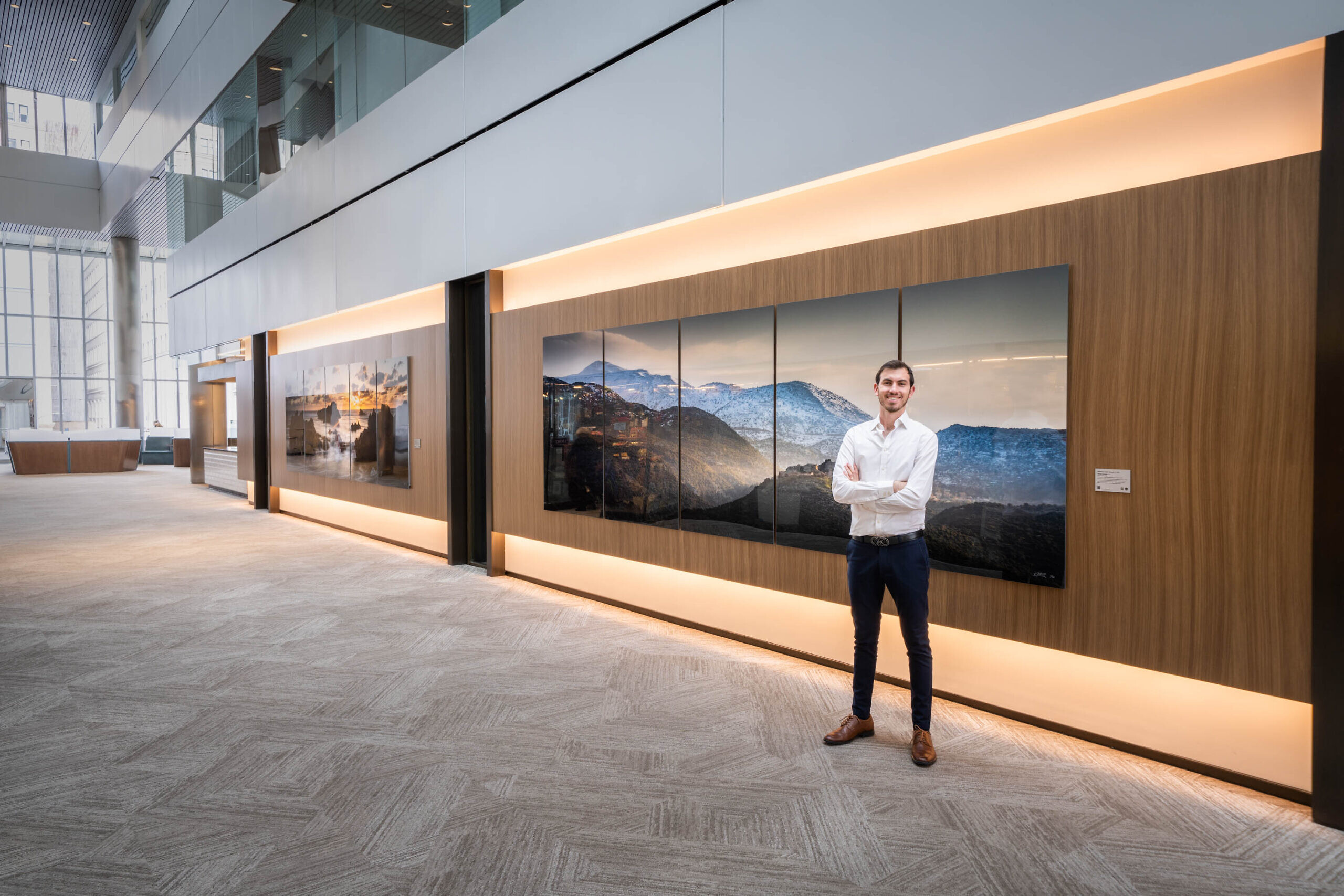
Artist Yehoshua Aryeh Stauber doesn’t feel the presence of the divine solely in synagogue. Stauber, a landscape photographer who made aliyah with his wife in 2018, draws from the long tradition in Jewish spirituality of communing with nature to experience a connection with Hashem. Now, Pittsburgh residents can see Stauber’s striking photographs in the lobby of One Oxford Centre downtown in the largest exhibition of Israeli landscape photography in North America, “Land of Life.”
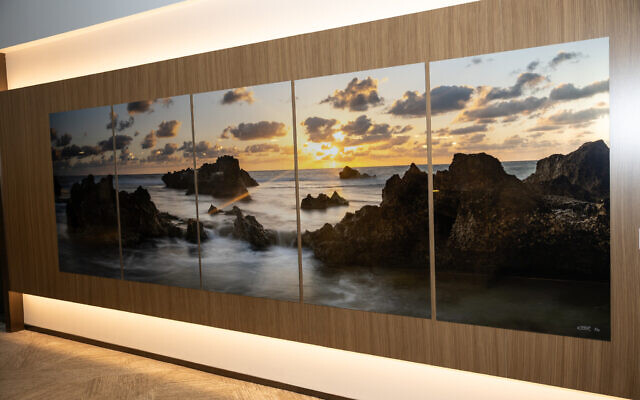
Though Israel is barely the size of New Jersey, and appears miniscule on a map of the world, Stauber’s vast photographs show the diverse landscapes, from austerely beautiful snow-capped mountains to dramatic yet peaceful ocean shores. The seven pieces span geography from the Dead Sea to the Mediterranean to the Galilee region.
“For me, photography isn’t about just capturing what I’m looking at, it’s about capturing what I’m feeling,” said Stauber, originally from Hollywood, Florida. Though he shoots with a digital camera, his process is closer to that of a film photographer. He works as much in the camera as he can with minimal editing and makes use of long exposure to draw viewers into the landscape.
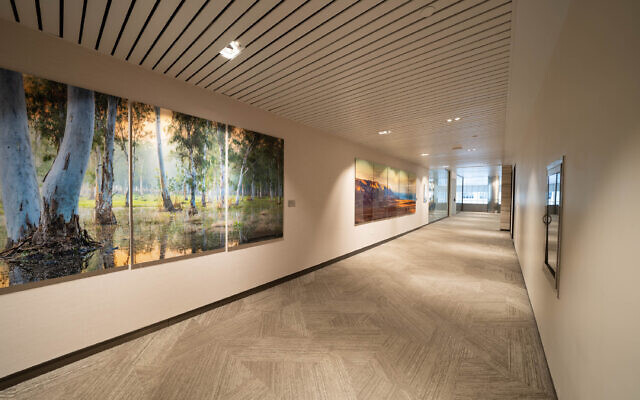
The effect of the long exposure is that the images are more dynamic than typical landscape photography, which sometimes feels still or stagnant. Stauber’s photographs feel as if a viewer could step into them.
“I’m in a partnership with nature,” he explained. “I shoot at sunrise and sunset, and the light isn’t something I could replicate [through editing]. The sun is my best friend.”
Stauber shoots with the final print in mind and tries to include as many details as possible. In one image of a eucalyptus grove in Hadera, the details are so fine that viewers can see the delicate curve of a blade of grass and the softness of the mist at sunrise.
Stauber’s work brings to mind Rabbi Nachman of Breslov’s practice of hitbodedut, self-seclusion and meditation, often in the natural world with few other people around. Stauber alluded to the sage’s teaching to see Hashem as the greatest artist and the landscape as beyond what human beings can create. Though none of the imagery is overtly religious, one photograph shows an ancient, abandoned building from the Crusades amidst vast, snowy hillsides in the north of Israel. It conveys the fact that nature outlasts even the bloodiest of violence, and that among the mountains, the remnant of the Crusades looks small.
Stauber’s photographs also implore Jewish viewers to remember the agricultural origins of many of their traditions, but also the ways they can connect to the land now. Through the rich harvests of fruit in Israel and the fertile soil for winemaking, the ways for Jews to connect to agriculture are abundant.
In one photograph of Masada from above, Stauber captures rivulets of water flowing through stone but ultimately ending up in the same spring. “It’s amazing that the water finds its ways down. We all have our own path, but we can all end up in the same place,” Stauber said of his inspiration for that image. It’s a moving reminder that though there are many ways to practice Judaism, many relationships to the modern country of Israel, and many Jewish identities, there is a central unity of tradition all Jews can draw from.
In December 2023, Stauber displayed his work in the European parliament building in Belgium, which he had booked in advance. Though it was soon after Hamas’ Oct. 7 invasion of Israel, Stauber kept the appointment, hoping his work would open dialogue about Israel’s long history beyond violence and war. Several Palestinians attended the opening, and Stauber talked with them about the beauty of the land, which both peoples live on, and the importance of conserving it for everyone. “The land, nature, is universal,” Stauber said.
Stauber’s work came to Pittsburgh through a family connection. His uncles, Aaron and Daniel Stauber, acquired One Oxford Centre in 2025 and wanted to make the building a more welcoming environment for tenants.
“We’d like to do something important here in Pittsburgh. We feel a tremendous responsibility to maintain the buildings we own,” Aaron Stauber said. Since the pandemic, far fewer office workers are downtown, so the Stauber brothers are working to create a building that isn’t just a workplace but a gathering space. Quantum Theatre also recently staged a production of a play, “Enron,” in One Oxford Centre, and now, with “Land of Life,” the building is once again a home for the arts.
Stauber’s work was particularly resonant to his uncle, who went back to school for a degree in marine conservation from University of Miami later in life.
“I realized that one of the legends in conservation, Rachel Carson, was from Pittsburgh,” Aaron Stauber said of the decision to bring his nephew’s photographs into the building. “Nature speaks to everybody.”
“Land of Life” is a permanent installation that will be seen by everyone who walks through the building, whether they’re working in an office upstairs or grabbing a coffee at Starbucks.
“I wanted to show the world how beautiful Israel’s landscape was to me,” the artist said. “I want to use my platform for that.”
Yehoshua Stauber’s “Land of Life” is on view in the first and second floor lobbies of One Oxford Centre and open to the public. PJC
Emma Riva is a freelance writer living in Pittsburgh.
comments