
No longer out of bounds: Pittsburgh teen lacrosse players finally visit Israel after canceled trips
With sport propelling travel, peer-to-peer connections prove most memorable
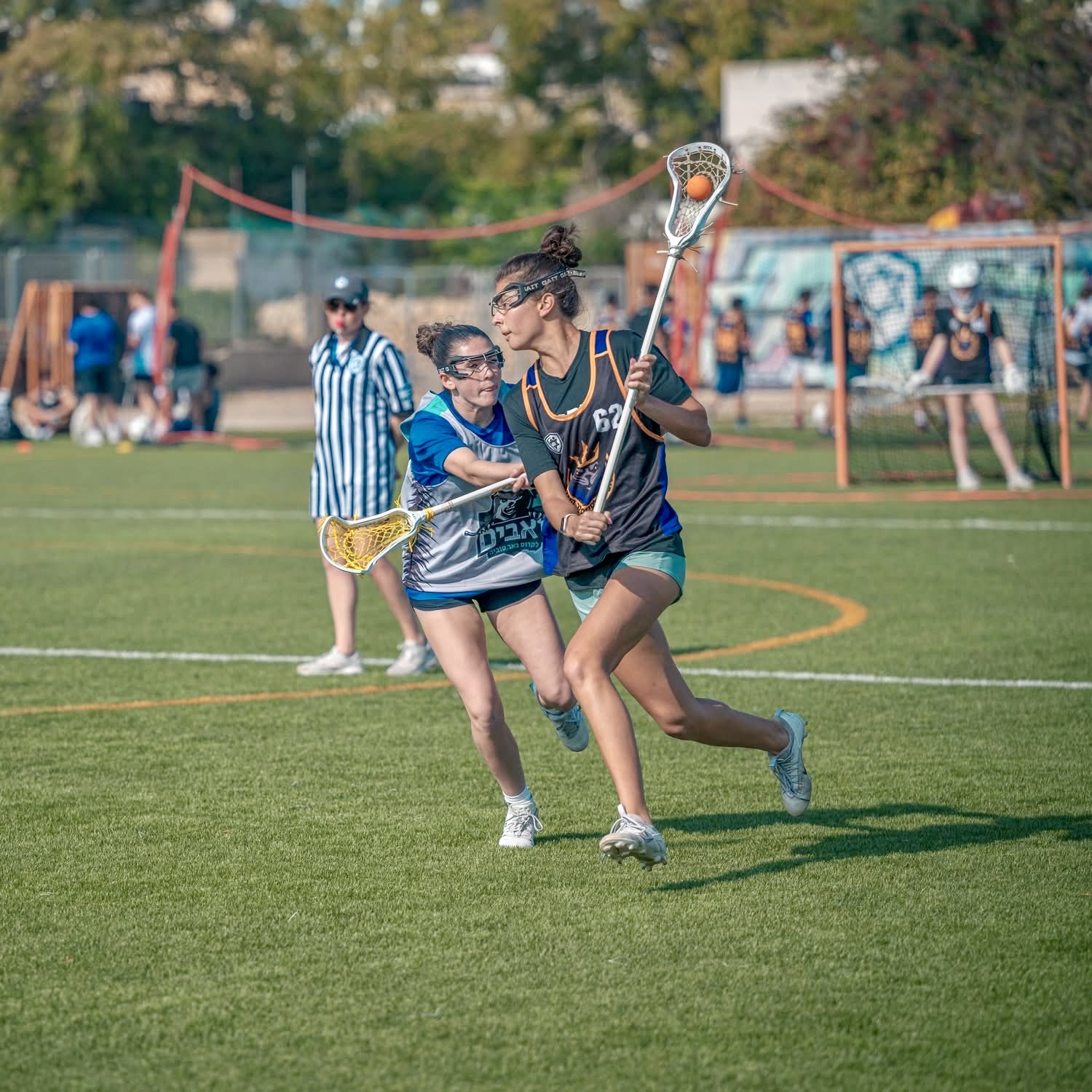
Canceled trips to Israel didn’t preclude two Pittsburgh teens from making their way to the Jewish state. The journey, which involved years of scheduled visits, postponements and adjustments, culminated weeks ago when Reagan Surloff and Jacob Amster joined Israel Lacrosse Association for a nearly two-week winter break excursion, complete with touring, volunteering and competition.
Before their travels, Reagan, 16, and Jacob, 17, were supposed to spend the summer in Israel with Diller, a teen fellowship program operated by the Jewish Community Center of Greater Pittsburgh and supported by the Jewish Federation of Greater Pittsburgh. Regional unrest, however, required itinerary changes.
“About two weeks before we were supposed to leave, Iran started launching missiles,” Reagan, a Pine-Richland High School student said.
Organizers moved the summer 2025 activities to Washington D.C.
“I was pretty bummed,” Jacob, a Fox Chapel High School student, said.
Jacob’s disappointment was relatively familiar.
A 2023 visit to Israel was upended by the events of Oct. 7, he said.
Before their Dec. 21-Jan. 3 trip, neither of the Pittsburgh teens had been to Israel. Both had met Israeli teens by participating in Diller — Israeli teens visit Pittsburgh as part of the program — and desperately wanted to see what life was like for their Israeli peers.
After learning about the Israel Lacrosse Association program, Reagan and Jacob registered. Based in Be’er Tuvya, a moshav located about 35 miles west of Jerusalem, the program offers service trips for Jewish teens.
“Going to Israel and playing lacrosse sounded great,” Jacob said.
“I felt like I had to go,” Reagan said.

Both teens have played lacrosse for years. The opportunity to compete abroad, teach the game to young Israelis and net a small escape from Pittsburgh winters sounded enticing; the only issue, the teens said, was the cost. Diller had credited each teen with $3,600 for future Israel travel but the lacrosse trip posted a $6,200 fee.
Israel Lacrosse Association suggested contacting RootOne, an initiative seeded by The Marcus Foundation and powered by The Jewish Education Project, which offers trip vouchers to eligible applicants who complete various pre-trip requirements, including virtual learning sessions and surveys.
Reagan and Jacob undertook the tasks and received funding to cover most of the trip’s remaining costs, each teen told the Chronicle.
Jacob received an additional scholarship from the Federation, according to David Heyman, Federation’s associate vice president of marketing.
As the long-awaited journey approached, the teens’ excitement grew.
“I was pumped to get there and finally experience what Israel is like,” Jacob said.
“Initially, I wanted to go just for lacrosse, but as we got closer to the trip,” Reagan’s enthusiasm and interests expanded, she said. “As we were traveling there, I thought I am finally going to be in Israel with so many people like me.”
Participating teens included about 35 high school lacrosse players from across the U.S. The trip, both Reagan and Jacob said, featured a balanced itinerary involving teaching, touring and plenty of play.
While in Be’er Tuvya, the teens stopped in several elementary and middle school classrooms.
“The school visits were the best part of the trip,” Reagan, a StandWithUs Leventhal Intern, said. “Some Israelis had never met Americans before and treated us like celebrities. They were like, ‘Could we get your Instagram?’”
The requests fetched smiles but conversations with fewer words garnered even greater connection, she said.
“Most of the students didn’t speak very good English. We had to figure out how to communicate through the game, and not through the language, which was fascinating,” she said.
With limited shared vocabulary, the players used Hebrew words such as yad (hand) and poh (here) along with demonstrations.

“The fact that language was not a barrier was very shocking to me,” Reagan said. “Before my trip I thought I needed to know Hebrew. Even with the few words I learned, it was really eye-opening that we could still work together well.”
It wasn’t the only discovery she made.
“When people ask me about my trip, I don’t really think about lacrosse,” she said. “I think about the people I met and my friend who I had met through Diller.”
That friend, Reagan explained, was one of several Israeli teens from the Misgav region who visited Pittsburgh last year as part of the Diller program.
“We had them come stay with us for 10 days; and my friend, who I never thought I would see again, I got to go to her family’s house and have Shabbat dinner with them. They came to watch me play and I saw where they lived,” she said. “Seeing what life was like for her, or for kids who live on a kibbutz, was very cool.”
Shabbat proved particularly meaningful for Jacob as well.
“I got to stay at someone from Israel Lacrosse’s house,” he said. “I hung out with him and his cousins, it was the highlight of the trip. It was a real Shabbat dinner. They cooked all the food. They have a huge family. They all came. We all hung out, ate food then drove around on his golf cart blasting music.”
Experiential education is often praised for generating meaningful insights.
Among adolescents, preparing for and participating in a study abroad experience yields a “process of reflection and growth with both short-term and potentially long-term impacts,” researchers wrote in the Journal of Hospitality, Leisure, Sport & Tourism Education. The ultimate impact of these experiences can foster the “development of global citizenship among participating adolescents.”
Having finally reached Israel after years of delay, Jacob said he plans on returning to the Jewish state. Whether with Birthright Israel, or as part of a fraternity trip in college, “I definitely plan on going back.”
Reagan, who spoke to the Chronicle by phone en route to New York to observe the University of Rochester’s Women’s Lacrosse team, said that since returning to Pittsburgh her friends have asked numerous questions about the Israel trip.
The detail she often returns to, she said, “is how I stayed with my friend in Misgav, and how I picked fruit from a tree in her backyard.” PJC
Adam Reinherz can be reached at areinherz@pittsburghjewishchronicle.org.
comments