
Louise Silk’s ‘Dayenu’ shows the work of an artist brimming with life
“Dayenu” is, in some ways, a continuation of Silk’s 2025 exhibition at the Heinz History Center, “A Patchwork Life.”
When Louise Silk’s granddaughter was born, she didn’t know if she wanted to be called Bubbe. “It feels like an old-fashioned term, the image of an old lady with chicken soup on the stove all the time,” she said. Anyone who knows Silk knows that though she is warm and hospitable, that isn’t her. “I decided I wanted to be a more modern Bubbe,” she explained.
In her recent textile exhibition, “Dayenu,” Silk allows participants to take a piece of “Bubbe wisdom” from one of her quilts. This Bubbe wisdom isn’t just how long to simmer a stock or whether going out with your hair wet will make you sick, though. Bubbe quilt has a combination of Jenny Holzer-esque fragments including “substance over style,” “progress over process,” “embrace loving goodness” and “leave space in your heart for the unimaginable.”
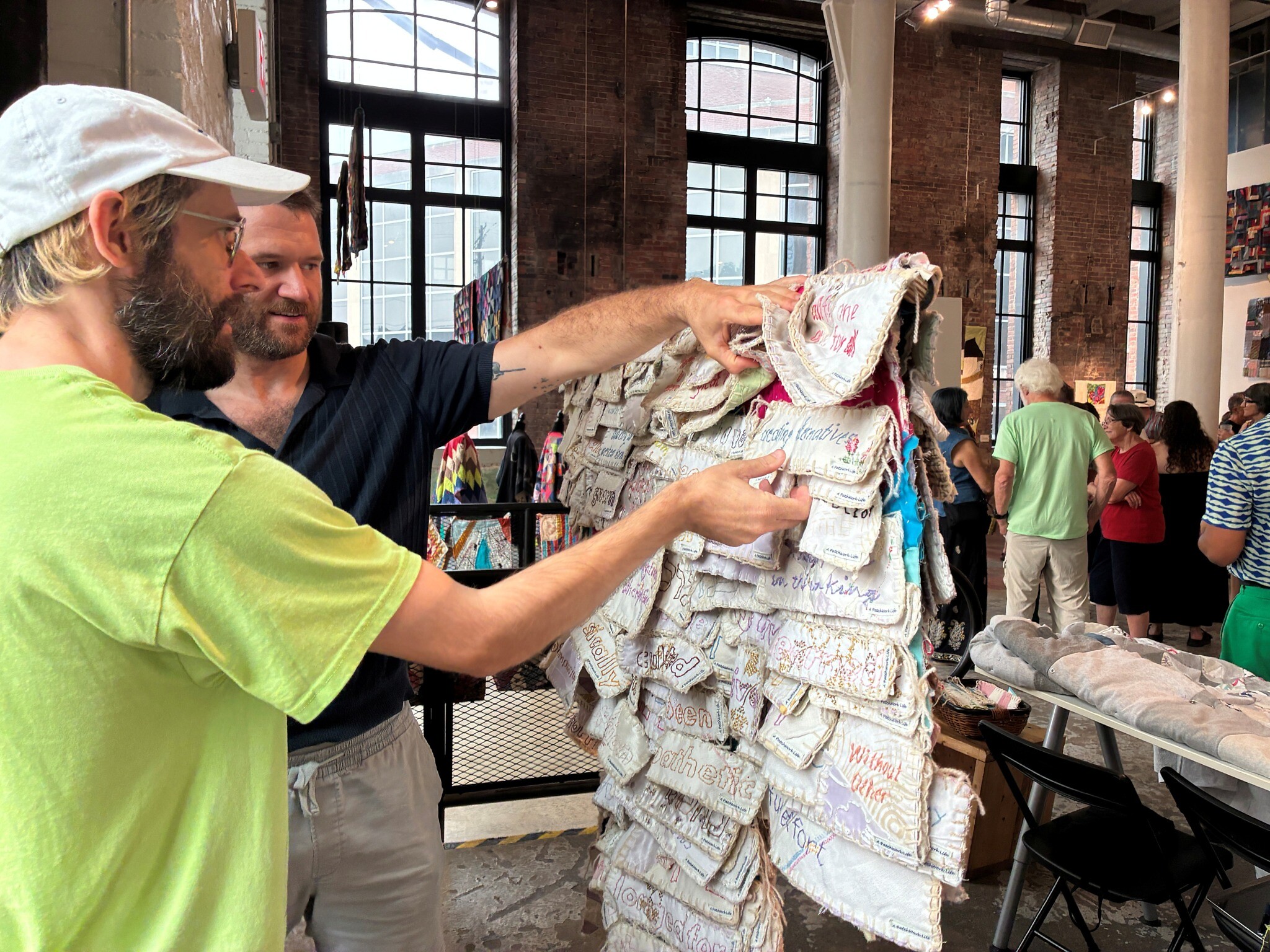
Each quotation took some inspiration from a version the Vidui — the Jewish deathbed confession — that Silk saw, where rather than confessing shortcomings, the text reflected on all that a person has gained in life. Visitors can take a piece of the Bubbe wisdom quilt that resonates with them, in line with the participatory nature of many of Silk’s other projects.
“Dayenu” is, in some ways, a continuation of Silk’s 2025 exhibition at the Heinz History Center, “A Patchwork Life.”
“I was more the subject in ‘A Patchwork Life,’ and I didn’t have much of a say. This show is more about me as an artist,” she said. “A Patchwork Life” was a retrospective that treated Silk’s textiles as a part of Pittsburgh’s Jewish history, but “Dayenu” shows Silk’s work not as artifacts but as a living, continually changing practice by an artist who has no intention of ceasing to make work.
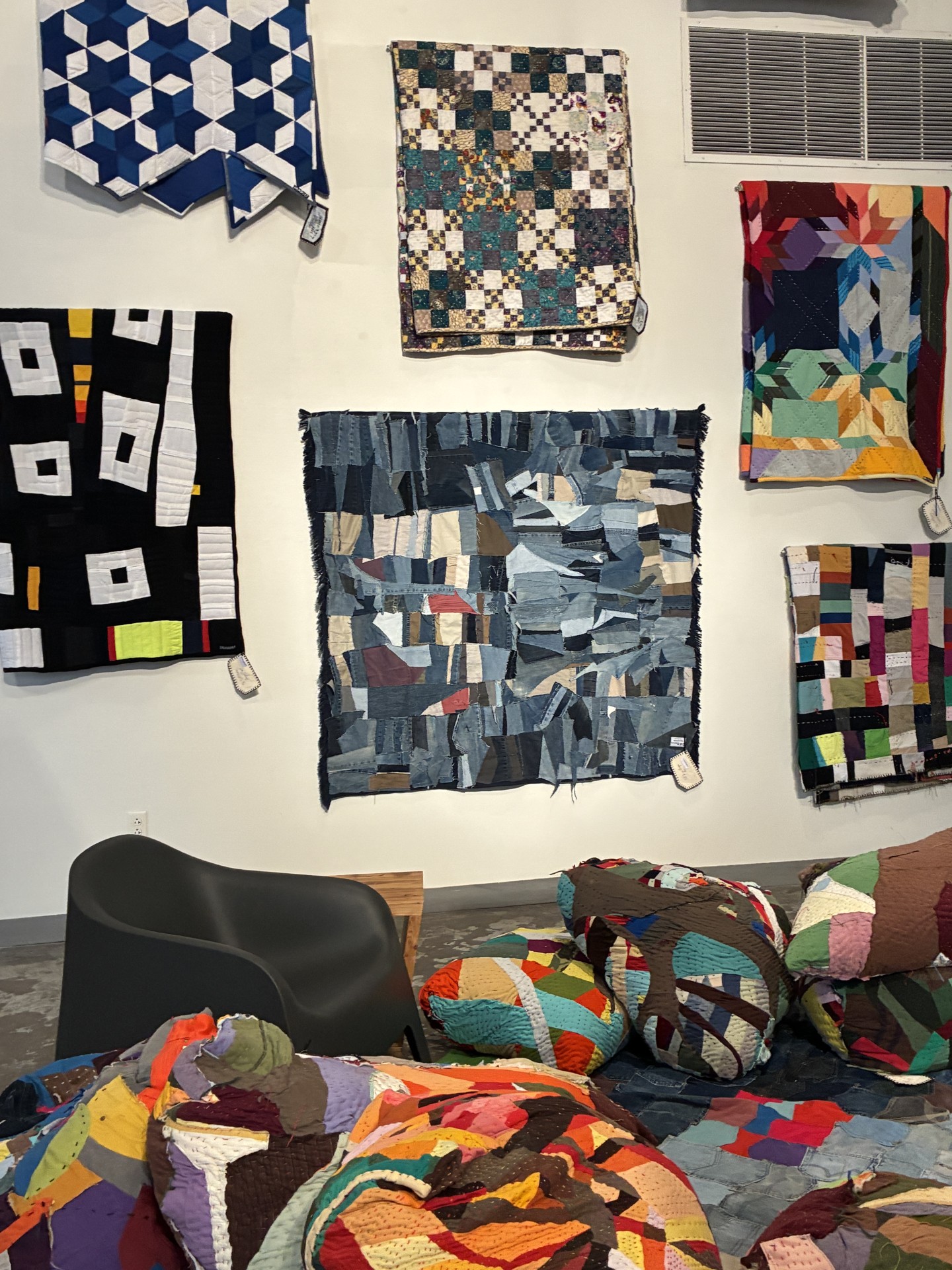
Under Brew House’s high ceilings, Silk’s pieces are given the breathing room to fill the space. She calls her work meditations on “the loving and healing capacity of spirit,” and there is something deeply life-affirming about the way she uses fabric. She uses both jewel tones and earth tones, creating work that feels both familiar and otherworldly.
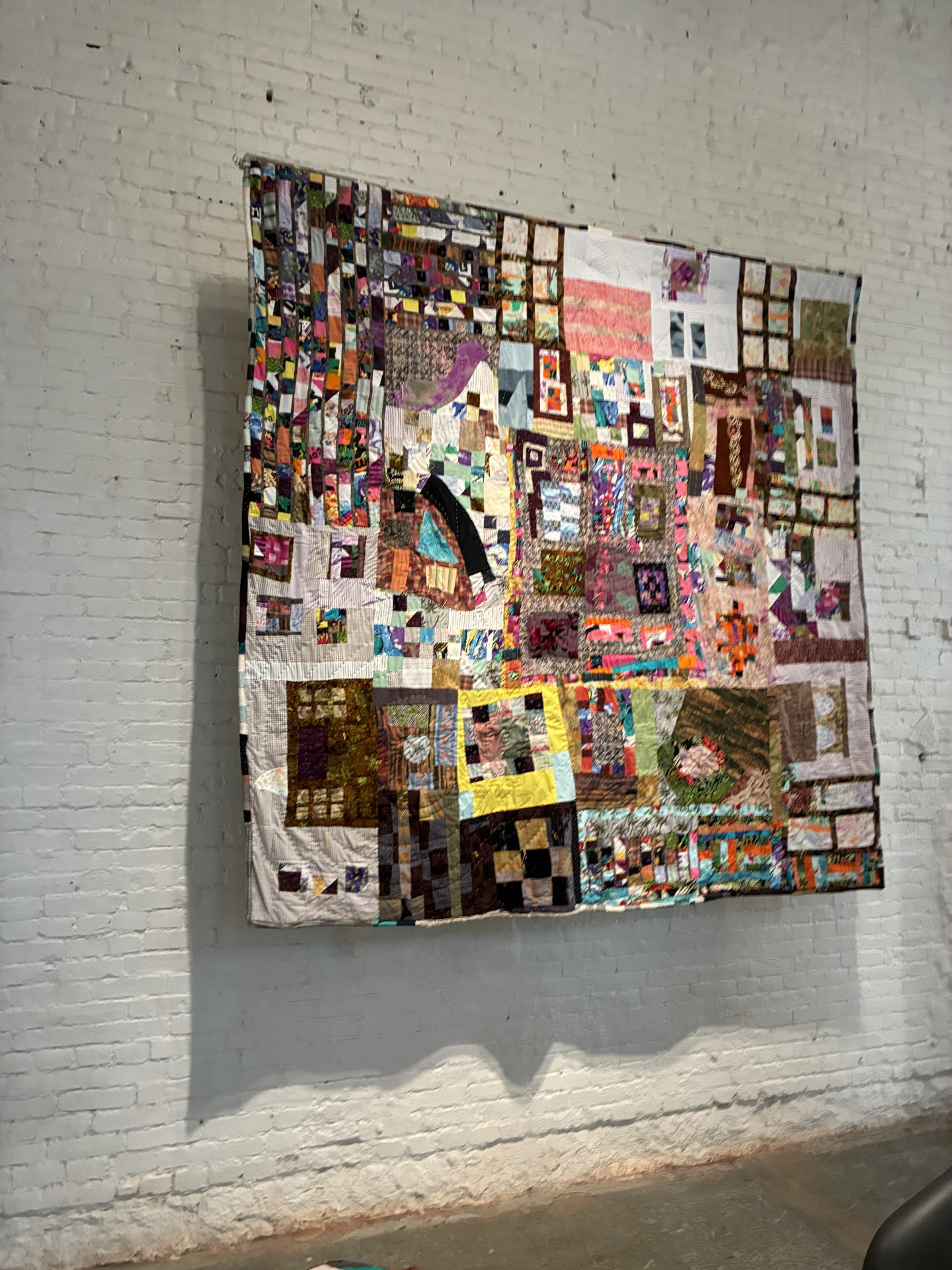
“Dayenu” also shows the range of scales Silk can work at, from tiny swatches in the Bubbe wisdom quilt to sweeping tapestries and kaftans that take up entire walls. Fragmentation is a large part of her work, with uneven edges to some pieces and quilts made up of leftover, reclaimed fabric from jeans or T-shirts.
In Silk’s process, being apart from the whole does not mean that you aren’t whole in and of yourself. It’s a profoundly Jewish idea, but one that can resonate with anyone, too. It becomes clear that for Silk, fabric is a medium for expressing multifaceted elements of her identity and to negotiate the different parts of her sense of self. In one gallery card beside “BUBBEWISDOM TALLIT KATAN,” alongside the physical materials, Silk lists “Jewish, Feminist, American, Wife, Mother, Grandmother […] Writer, Friend, Right Action, Moral Knowledge, Common Sense […] Ephemeral Spirit.”
“72 NAMES OF G-D,” a quilted series of small swatches made up of plaid, doilies, or figuratively illustrated cloth, uses God’s multiplicity. It’s an undeniably spiritual and explicitly Jewish piece that invites viewers to linger on it. For those who read Hebrew, it feels familiar, but for those who don’t, the language’s visual character can still feel ancient and powerful. Silk captures how a spiritual relationship is both tender and intimate and sublime and all-encompassing.
Silk’s stitching techniques create color palettes that bring to mind Gustav Klimt’s ethereal inversions of color expectations. “NARROW BRIDGE,” one of the show’s centerpieces, gets its title from Nachman of Breslov’s quotation that “The whole world is a narrow bridge, and the only thing to do is to be brave” (kol ha’olam kulo gesher tzar me’od, veha’ikar lo lefached klal). The medium of textiles, hanging so precariously off of the walls and held together with such tiny stitches, captures this balance between fragility and strength.
The show’s title, too, offers a Jewish lesson. Dayenu (“it would have been enough” — a familiar song from the Passover Seder) reminds us to practice gratitude and to realize how fragile our own presence in the world is. Just to breathe another day would be enough, but as the prayer describes, life offers us so much more than that. I saw the show as the sun blazed blood orange over a smog-laden sky. But to be inside four walls and be together in community with Silk and her work — it was enough. PJC
“Dayenu: It Would Have Been Enough” is available to view through Sept. 5 at Brew House Arts, 711 South 21st Street, 15203.
Emma Riva is a freelance writer living in Pittsburgh.
comments