
Little things mean a lot
Antisemitic microaggressions are verbal, behavioral or environmental indignities that communicate hostile, derogatory or negative slights about Jewish identity, culture or religion.
Some of us might remember a popular song from the 1950’s, “Little Things Mean a Lot.” It was sung by Kitty Kallen, aka Katie Kalinsky, daughter of Russian immigrants, and in 1954 it topped the charts as Kitty sang about how tiny behaviors are more significant than one might think. Kitty sings, “Blow me a kiss from across the room, Touch my hair as you pass my chair. Little things mean a lot.”
That’s the positive. Today the flip side might be called “microaggressions,” something the rise of antisemitism has spawned.
Experts tell us that antisemitic microaggressions are everyday verbal, behavioral or environmental indignities that communicate hostile, derogatory or negative slights about Jewish identity, culture or religion. These slights are “micro,” often too small to compete in the world of macroaggressions that dominate the news and command our attention.
Get The Jewish Chronicle Weekly Edition by email and never miss our top stories Free Sign Up
Quoting recent statistics from The J7 Large Communities’ Task Force Against Antisemitism, journalist Hen Mazzig (Future of Jewish, July 30, 2026) writes that the report found that “2025 was the deadliest year for antisemitic violence in the diaspora since the 1994 Jewish community centre bombing in Buenos Aires.”
Mazzig makes the point that, “Behind those murders sits a much larger pattern of everyday hostility.” Stabbings and shootings get all the attention, but smaller microaggressions are quietly telling the antisemitism story.
I can relate.
Last year while sitting at an outdoor café in Rome, a woman approached me to comment on my Jewish jewelry. She noticed my blue Star of David and she thanked me for wearing it prominently. We chatted a bit, sharing “Jewish geography,” while a waiter watched us closely. When the woman returned to her table the waiter approached me, placing a full glass of water on my table. Then he used his elbow to knock the glass forward, spilling water all over me. The waiter joined his friends, laughing and pointing while I tried to dry my clothes.
In April I was in hospital after a bad fall. As I was about to be taken for surgery, a nurse approached my bed. He heard that I was Jewish and asked if it were true. When I responded that “Yes. I’m Jewish,” the nurse leaned over my head and shouted into my face, “Are you a ZIONIST?” Frightened and somewhat rattled I said, “Let’s talk later.”
In the scope of extreme antisemitic violence these microaggressions are just that – micro. But experts say that the impact is cumulative and that while a single comment might seem small, experiencing them over and over is often compared to “death by a thousand cuts.”
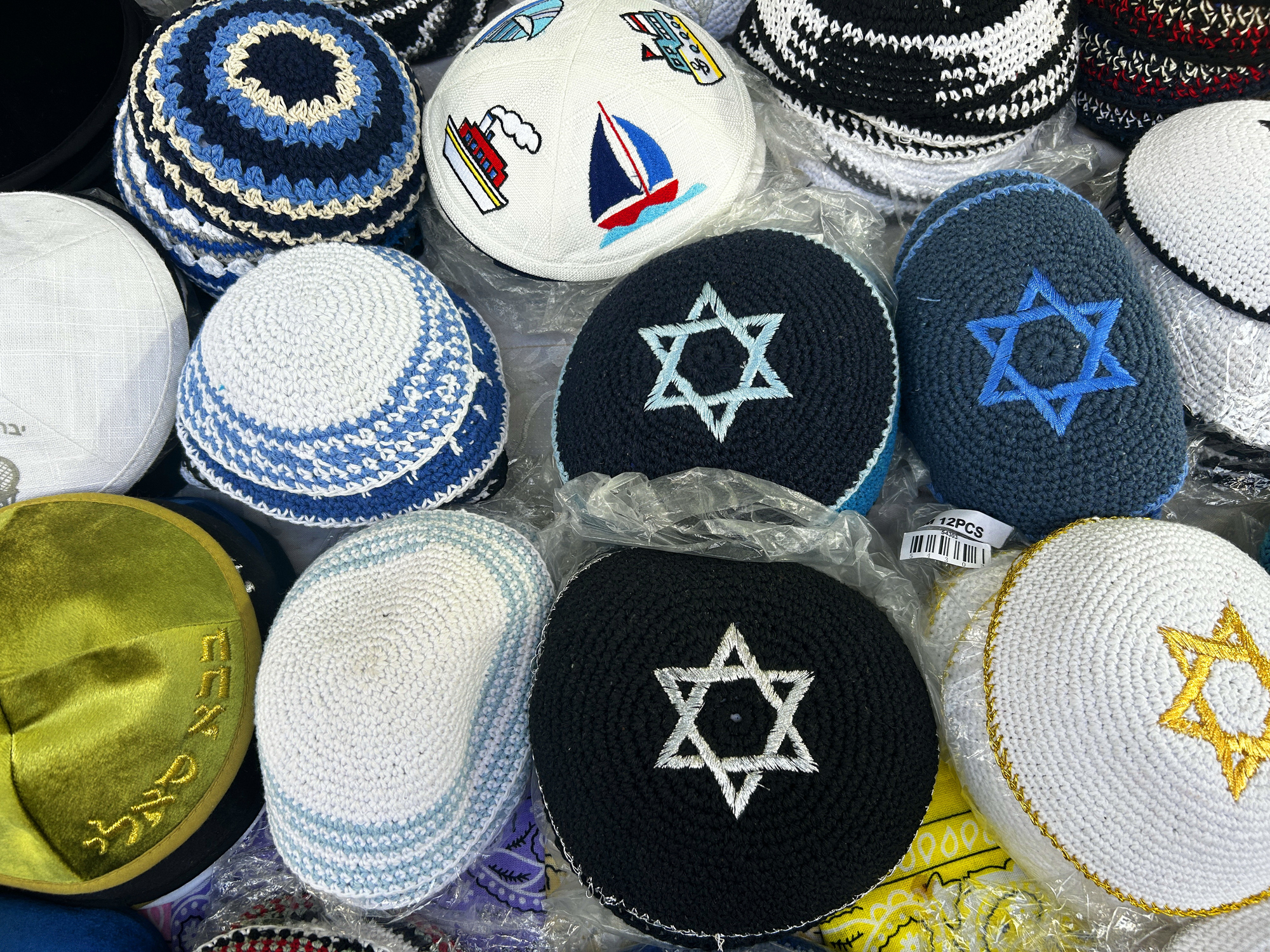
A kippah is a small thing, literally and figuratively. It is not mentioned in the Torah, but in the world of Jewish ritual items the kippah commands attention as it maintains a place of honor at Jewish family simchas, especially weddings and b’nai mitzvah celebrations. Often these events are memorialized with a loving inscription printed inside each kippah.
Having officiated at more than 200 of these events, I’ve brought home many inscribed kippot: “Mazel Tov Josh and Abby,” reads one, while another features “Kyle’s Bar Mitzvah 2002.” This year, however, the kippah message was different. No obvious Hebrew phrases, no identification of the ceremony and no inscription of the bar mitzvah’s obviously Jewish surname. Instead, inside the kippah we find, “Italy 2026 BSG.” BSG’s mom put it this way: “With all that’s happening, it’s better not to call attention to a Jewish ceremony.”
I understand the concern and the caution about what Jewish organizations call the “new normal,” but I feel we Jews and our children are paying a price. What are the long-term effects of these microaggressions if indeed “little things mean a lot?” PJC
Rabbi Barbara Aiello is the first woman and first non-Orthodox rabbi in Italy. She opened the first active synagogue in Calabria since Inquisition times and is the founder of the B’nei Anousim movement in Calabria and Sicily that helps Italians discover and embrace their Jewish roots. She is originally from Pittsburgh.
comments