
Jewish professor files EEOC complaint against Duquesne University
Complaint charges discrimination, retaliation and creating a hostile work environment
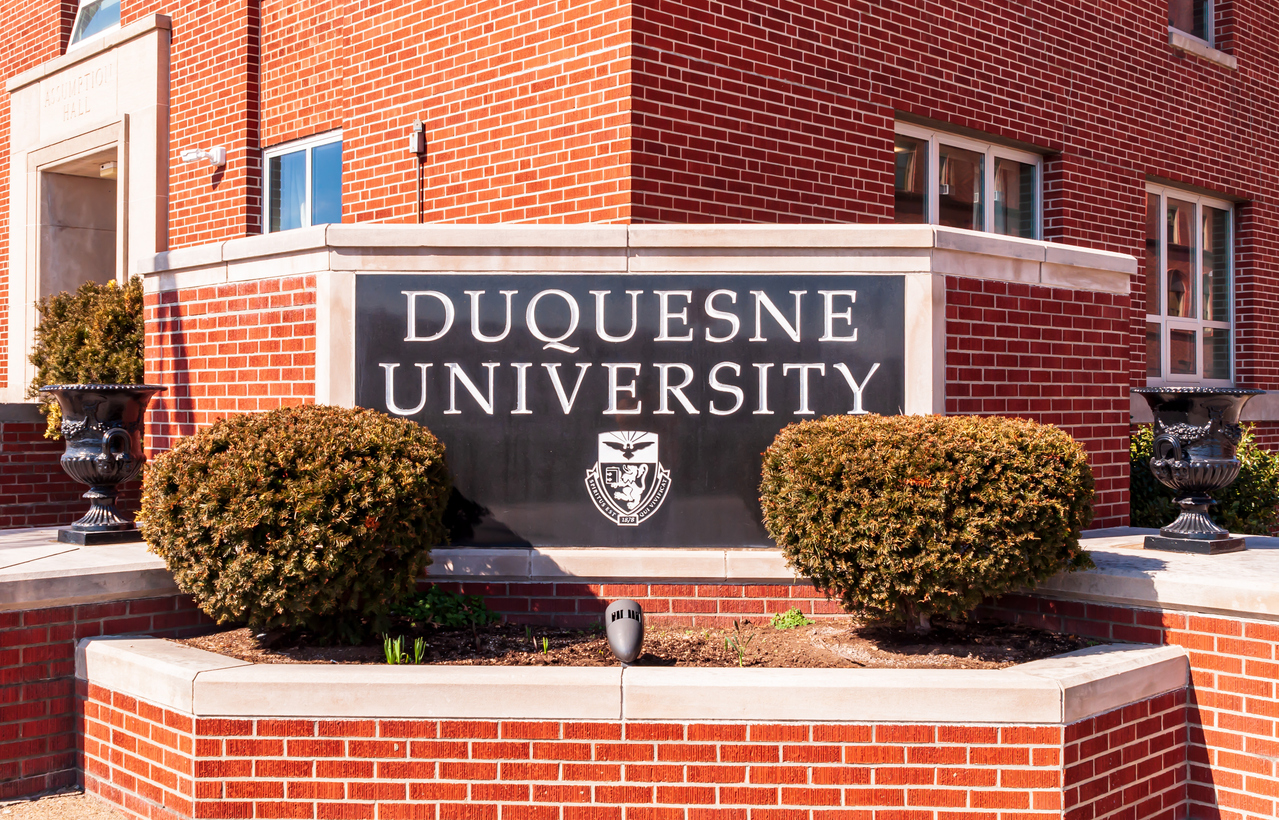
A Jewish Duquesne University psychology associate professor has filed an Equal Employment Opportunity Commission complaint against the university, alleging that he was subjected to a hostile work environment, discrimination and retaliation — violations of Title VII, a 1964 federal law that prohibits employment discrimination based on race, color, religion, sex or national origin.
The complaint was filed Sept. 11 by the Louis D. Brandeis Center for Human Rights Under Law on behalf of Alexander Kranjec. It urges the EEOC to investigate allegations of antisemitic harassment aimed at Kranjec that he says created a hostile work environment. The complaint alleges that when Kranjec reported the conduct, he faced retaliation affecting his teaching responsibilities and professional standing.
The behavior, according to the complaint, violates not only Title VII but Duquesne University’s own anti-discrimination and anti-retaliation policies, which prohibit workplace discrimination based on religion, and retaliation against employees who report or oppose discrimination and harassment.
Beginning in October 2023, Kranjec, a tenured professor who has taught at the university since 2011, reported anti-Jewish discrimination and harassment within the psychology department, including departmentwide communications and social media posts that, he alleges, invoked anti-Jewish stereotypes, celebrated or excused violence against Israelis and targeted him by name.
In October 2024, Kranjec told department leadership that graduate students had posted antisemitic and anti-Israel content on social media, including one student’s posts supporting the terrorist group Hamas.
In response to his objections in the department, Kranjec said he was reported to the university EthicsPoint reporting system and accused of bullying by a graduate student.
According to the EEOC complaint, Kranjec continued to alert the department about antisemitic activity. He also notified Kristine Blair, dean of liberal arts, that planned antisemitism training in December 2025 would mostly likely fail to address the specific types of antisemitic discrimination present in the psychology department.
The professor’s concerns about the antisemitism training materialized when a Holocaust Center of Pittsburgh instructor allegedly told an attendee, “Just because a Jew says that something is antisemitic … [I] don’t ascribe to the belief that the oppressed group gets to decide 100% of the time what’s antisemitic and what’s not,” according to the complaint.
Kranjec brought to the department’s attention social media posts written by a graduate student that mentioned him by name and called him “racist.” He also asked, without receiving a response, about bringing his concerns directly to the American Psychological Association, which accredits Duquesne’s program.
Instead of offering solutions to the alleged discrimination, the complaint states that the university began to treat Kranjec as if “he was creating problems in the department.”
Duquesne University officials advised Kranjec that his complaints did not meet the threshold for creating a hostile work environment and “took actions that affected his teaching responsibilities, evaluative roles and professional standing,” the EEOC complaint alleges.
One of those actions was the creation of an alternative course students could take to avoid Kranjec’s PSYC 560 class. This new class was created, the complaint states, “to protect students from feeling pressured by his views after he raised those concerns.”
Kranjec said he was told that department leadership considered whether the alternative course might be discriminatory toward him but dismissed the concern.
The EEOC complaint lists several other incidents that allegedly contributed to Kranjec’s belief that the university was creating a hostile work environment, including his removal from a Jewish graduate student’s Comprehensive Exam committee. Kranjec was told his ideology was “considered incompatible” with the student related to “Jewish identity.”
The complaint asks the EEOC to grant Kranjec protection from further retaliation; take corrective and remedial action to address antisemitic discrimination and harassment; restore Kranjec’s teaching responsibilities and committee roles; remove, correct or prevent the use of any discriminatory or retaliatory records or complaints; implement training and policy measures to prevent future anti-Jewish discrimination; and, grant compensatory damages, including for emotional distress and reputational harm and for attorney’s fees and costs.
The EEOC administrative complaint was filed with both federal and state agencies, Louis D. Brandeis Center for Human Rights Under Law Attorney Deena Margolies told the Chronicle.
Margolies said that Kranjec’s complaints offer a view into a broader problem across universities and organizations.
“People don’t recognize antisemitism,” she said. “We understand the IHRA definition and contemporary examples, but a lot of people don’t. They dismiss it as political speech. They don’t understand that for most Jews, Zionism is a core part of their Jewish identity and when you exclude people based on that or ostracize or harass them, that’s antisemitism.”
Duquesne University, she said, “wrote off” Kranjec’s complaints as ideological or political when, in reality, it was discrimination.
Kranjec said that the troubling behavior can be traced back to the days following Oct. 7, 2023, when the university president issued what he called a “strong statement for Israel.” That spurred a reaction by graduate students who created a petition which, he said, “had some language in it that had a history of being used by antisemites and anti-Zionists. I pointed that out and that’s when people started to attack me for the first time.”
The university, he said, initiated two Human Resources investigations. The first concluded that the incidents Kranjec reported didn’t meet the bar of creating a hostile work environment. A second investigation is ongoing.
Asked if he believes the university will ultimately address the antisemitism he reported, Kranjec said, “It’s a hard question.”
“One the one hand, I have to trust that they’ll recognize the problem,” he said. “They have not succeeded in doing that.
That’s people in my department. The upper administration has not taken a clear position. So, the jury is still out on them.”
On the other hand, Kranjec said, the broader question is how to get people to understand antisemitism.
“There’s a lack of cultural understanding and education,” he said. “It’s a challenge to get people to understand how to change this sort of pervasive discriminatory culture.”
As for his future at Duquesne, Kranjec was pensive in his response.
“I used to think that the Catholic nature of the university inoculated it against stuff like this because of the shared religious and cultural traditions — values that made them nice places for Jewish faculty and Jewish students,” he said, before noting that his issues are specific to the psychology department.
“The question is, can my department change? And what kind of life am I going to have in it? That’s a really big question mark,” he said.
Duquesne University did not respond to the Chronicle’s request for an interview. PJC
David Rullo can be reached at drullo@pittsburghjewishchronicle.org.
comments