
From fear to faith: The Torah’s blueprint for facing overwhelming odds
Deuteronomy 16:18–21:9

For nearly two years, the Jewish people have been in a state of war. For our brethren in the Holy Land the battle is one fought with guns, tanks and planes. Those of us who live outside of our homeland are removed from the physical battle, yet have been fighting in a different dimension. We look around and see so many — including those whom we believed to be allies — aligning with the dark forces that seek our destruction. Our weapons in this fight are words, advocacy, education and, most importantly, the light of Torah and mitzvos.
In fighting this battle, especially for so long, many feel drained, tired and overwhelmed. We sometimes wonder how we will have the strength to go on. Fear and dread may become daily companions.
For many, especially in the younger generations, this experience is new. Yes, we heard stories of the suffering our people faced in the past. Even so, for much of our lives we lived in relative peace and safety. We thought, or perhaps hoped, that “never again” would be our reality.
Get The Jewish Chronicle Weekly Edition by email and never miss our top stories Free Sign Up
In this week’s Torah portion, we find G-d’s instructions on going to war. The Torah presents the words of encouragement which the Kohen Gadol, the High Priest, would say to those going out to battle against those who sought to harm the Jewish people.
“When you go to war against your
enemies and see horses and chariots (literally: horse and chariot) and an army greater than you, do not fear them … ” The soldiers facing the battle are instructed “do not fear them.” But how is that possible?
When standing facing a vast enemy, and certainly one that is “greater than you,” fear is a natural and seemingly logical response.
The Torah therefore goes on to tell us how it is possible to overcome that fear. The verse mentioned above continues, “because G-d your L-rd, who brought you up out of Egypt, is with you.” Yes, we are but a small minority, and those who seek our annihilation are many. Those out to destroy us may be larger and more powerful than you. However we do not go to war with our own strength, we go with G-d. And before G-d, the vast hordes — even the most powerful weapons — are as insignificant as a single horse and chariot. As Rashi explains, the Torah used the singular “horse and chariot” to allude to this message.
To some, this might seem to be a religious argument, one that is removed from the real world. Yet when it comes to the Jewish people, it is the only approach that fits the reality. As Ben-Gurion once said, “In the land of Israel, a person who does not believe in miracles is unrealistic.”
To put it simply, if we look at the world through our own lens, then fear and perhaps even despair are the natural outcome. Only by lifting ourselves above the mundane, by connecting ourselves to a Higher perspective, can we fight this battle without fear. When we commit ourselves to doing mitzvos and studying Torah, we develop our spiritual sensitivity and become attuned to the Divine reality. When we start our day with a mitzvah, by putting on tefillin, going to shul to daven, or joining a Torah class, we become more able to face our daily struggles in tranquility, and without fear. PJC
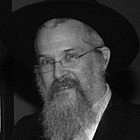
Rabbi Yisroel Rosenfeld is the rabbi at the Lubavitch Center and the executive director of Chabad of Western Pennsylvania. This column is a service of the Vaad Harabonim of Greater Pittsburgh.
comments