
From Dresden to Tangier to Pittsburgh: Survivor Jerry Guttman tells a story of escape and resilience
'You don't have to necessarily stay where you are just because you're there. There are opportunities'

A Holocaust survivor who has never publicly shared his story is set to tell his tale on stage. On Feb. 23, Squirrel Hill resident Jerry Guttman will present a 40-minute overview of his life followed by a question and answer session led by Holocaust Center of Pittsburgh Director Emily Loeb.
The program, held at Chatham University’s Eddy Theater, should encourage people to learn more and “ask their own questions,” Guttman, 93, told the Chronicle.
Born in Dresden, Germany, in 1932, Guttman said he was fortunate enough to come from a forward-thinking family.
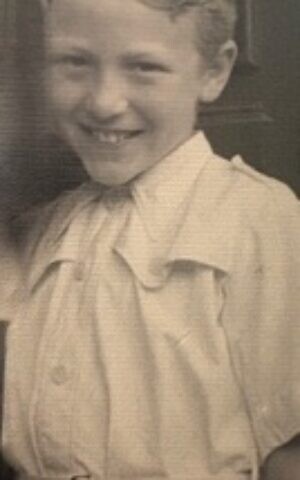
“About a year before Hitler came to power, my parents had the presence of getting the hell out,” Guttman said. The family relocated to Italy, which “at the time, was perfectly normal in the sense that Jews were thriving in Italy.”
Until the mid-1930s, Jews had “equal status” in Italy, according to Yad Vashem.
During that period, the Italian Jewish community, which totaled close to 50,000 in 1933, was “fully integrated into Italian culture and society,” noted the U.S. Holocaust Memorial Museum.
Guttman’s family was far from the first to establish roots in Italian soil. Before the Guttmans’ arrival, Jews had called the region home for more than 2,000 years.
In 1938, life drastically changed in Italy after passage of a series of racial laws, Guttman said. “And so again, for the second time, my parents had the presence of trying to get out.”
While leaving Italy was possible, few destinations were willing to accept Jews. Guttman’s parents identified Tangier, Morocco, and Shanghai, China, as possible spots to move the family.
“I never asked my father specifically, but I imagine that at the time, he looked at a map and Tangier made more sense than Shanghai,” Guttman said.
Guttman described Tangier as a city “ruled by several governments.” In practice, “if you wanted to mail a letter, you had a choice of the Italian post office, the Spanish post office, the French post office, etcetera. It was truly an open city.”
Though Guttman’s father previously worked as a furrier, he abandoned the trade upon moving to Tangier and opened a café, called Tingis, “which incidentally, for the record, exists today,” Guttman said.
At the time, Tangier’s Jewish population consisted largely of refugees. Although the city lacked a synagogue, Guttman said he celebrated his bar mitzvah in a community center, and maintained a cosmopolitan upbringing filled with multiple linguistic influences.
At home, he spoke German with his parents. At school, which was run by the French government, he spoke French. In the streets, he spoke Spanish.
While living in Milan, he learned Italian and English, explaining that his English improved thanks to regular visits to the airport. “I would take my bike and I would hang out outside of the airport, because there were tourists coming by, asking for directions, and so I was able to help them out.”
The tactic led to his getting hired as a tour guide by an American couple, who planned to spend nearly two weeks traveling through Italy. When their trip was over, Guttman was asked if he’d like to come to the U.S.
Guttman told the couple he’d never thought about going to the U.S., and despite an American gentleman taking his information “it was the end of the story,” he said.
About nine months later, Guttman said he received a call from the American Consulate in Milan saying, ‘Please come in to work out your visa.’”
Guttman sought advice from his parents, who said, “Look, I mean, what do you have to lose? Go ahead. If you like it, fine. If you don’t like it, you can always come back.’”
With that guidance, at age 21, in 1953, Guttman boarded the SS Independence in Genoa and traveled by boat to New York City. A year after his arrival he was drafted into the military.
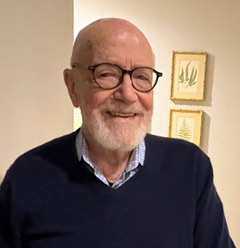
Guttman served for two years and eventually became a citizen. Thanks to the GI Bill, he said, he later attended the University of Pennsylvania. Guttman, and his late wife, Avie, lived in Philadelphia for years before moving to California. In 2021, Guttman returned to Pennsylvania to be closer to family.
The Holocaust survivor — who works out twice a week with a trainer at the Jewish Community Center in Squirrel Hill — told the Chronicle that two factors prompted his decision to share his story and explore the details of relocation, risk and family history. “First of all, I think it’s interesting in general; but more specifically, I think that it shows resilience.”
For younger people, it’s important not to “take things for granted,” he continued. “You don’t have to necessarily stay where you are just because you’re there. There are opportunities. You have to take risks, and usually they work out.”
Loeb believes that this message, combined with Guttman’s story, will make for an informative and inspiring program.
“I always want to present new, and not as well known, aspects of the Holocaust to the community,” she said. “I don’t think many people know about the fact that Morocco offered refuge to people throughout the Holocaust.”
Knowledge of history is critical, but so is an appreciation for the present, she continued. “One thing that I’m struck by is how positive Jerry is and inquisitive and willing to learn new things,” she said. “I’m excited for people to meet this really remarkable man, who has had this incredibly international life and remarkable experiences, some of which were not of his choosing and others were.”
“A Conversation with Holocaust Survivor Jerry Guttman” will take place at 6 p.m. on Feb. 23 at Chatham University’s Eddy Theater. Registration is available at hcofpgh.org. PJC
Adam Reinherz can be reached at areinherz@pittsburghjewishchronicle.org.
comments