
‘Distorted, misleading, and disingenuous’: IDF publishes full response to ‘NAZA’ film
In 10-page document, military rejects claims of deliberate mass civilian killings and AI targeting, says documentary’s narrative based on ‘substantial factual errors’
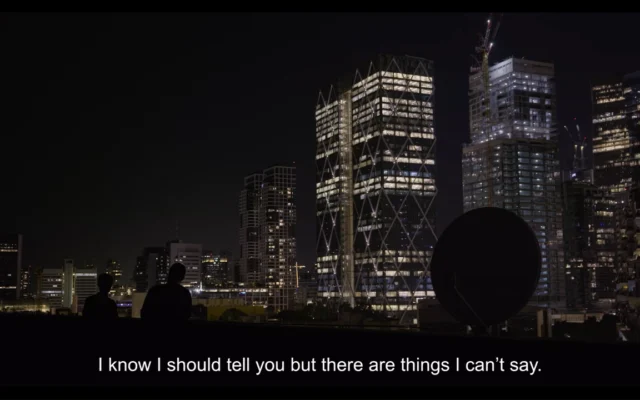
The Israel Defense Forces on Thursday published a 10-page English response to the film “NAZA,” which is centered on allegations that Israel intentionally killed tens of thousands of civilians in the Gaza Strip using artificial intelligence, among a slew of other war crimes, after a military representative was finally able to view the documentary almost three weeks after it premiered.
In response, the military said the film “presents a distorted, misleading and disingenuous picture of the IDF’s target planning and striking process” and that its narrative is “based on substantial factual errors stemming from manipulative misrepresentations of reality.”
The military said that contrary to the film’s claims, the “binding IDF directives explicitly, comprehensively and clearly distinguish between military operatives and uninvolved civilians in Gaza,” and that the processes for attacks “are fundamentally based on this distinction, prohibit intentionally directing strikes against civilians, and require mitigating the possibility of harm to them to the greatest extent feasible.”
The IDF said that it “has never planned, approved or carried out any strike in Gaza in which 500 civilians or anything close to that number were expected to be killed,” an allegation brought up in the film, adding, “nor has anyone seriously alleged that an IDF strike caused deaths on that scale or anything close to it.”
On claims of using AI to selects targets and approve strikes, the IDF said, “artificial intelligence has never independently selected targets to strike in the IDF,” and “the identification of targets to strike is done only by authorized intelligence officers, strikes are planned by relevant professionals, and the decision whether to strike is made by operational commanders.” The military also said its directives “have never granted automatic authorization for strikes against targets placing a fixed number of civilians at risk,” such as 20 civilians in an attack on a junior operative or 200 civilians in an attack on a senior commander, as claimed in the film.
On Lavender, described in the film as a tool used by the IDF to identify Hamas members and recommend them for strikes, the military said that Lavender “is not a database of targets approved to strike, but a database that assists intelligence analysts.”
On claims that the IDF carried out strikes in areas after issuing evacuation warnings, even if civilians were still there, the military said that its directives “do not permit an evacuation warning for an area to be treated as authorization to carry out strikes there while disregarding civilians who remain.”
The IDF said that, contrary to claims made in the film, it “does not ignore the aftermath of its strikes but acts to assess them, including with regard to unintended civilian harm,” adding that “these assessments have prompted reviews of hundreds of incidents during the hostilities and provide a basis for lessons learned.”
“Had the filmmakers conducted adequate verification and corroboration of facts in good faith, as professional standards require, they could have identified the substantial errors presented in the film. The end result shows that they did not,” the military said.
The IDF said that many errors in the film arise because “the interviewees, described as having served in IDF intelligence roles, usually refer to only limited, initial stages dealing with intelligence, rather than the much broader process of planning and approving strikes.”
“That [broader] process is not the responsibility of intelligence, but of operational bodies that manage and carry out targeting processes. Accordingly, it is apparent that in various cases interviewees raise speculation and assumptions without a factual basis,” the military said.
The IDF accused the filmmakers of not showing “many of the other individuals involved in the full targeting process,” including those “responsible for planning that mitigates civilian harm, legal advisers who review proposed strikes, and commanders responsible for approving or rejecting them.”
“To fit the narrative the film seeks to promote, the filmmakers also omit context essential to understanding the war in Gaza and the IDF’s conduct during it,” the military said, adding that the film “does not give due weight to Israel’s security reasons for operating in Gaza and the October 7 massacre; to Hamas’s deliberate strategy of embedding itself within the civilian population, which is the root cause of harm to civilians; or the countless actions and methods the IDF employed to mitigate civilian harm, including warnings before strikes, selection of munitions and appropriate strike planning, facilitating humanitarian aid and more.”
The IDF also said that “particularly troubling is the film’s further distortion of reality through manipulative editing of interviews, irresponsible allusions to historical atrocities, and its false and baseless attribution of malicious intentions to the IDF.”
On the title of the film, “NAZA,” a Hebrew acronym meaning collateral damage, the IDF said that “this is a professional term used by every law-abiding military worldwide to describe incidental harm to civilians resulting from a strike on a military objective, which serves commanders to assess the lawfulness of the strike and adopt measures to mitigate harm to civilians to the greatest extent feasible.”
“Paradoxically, the film portrays the exceptional effort and detail the IDF devotes to estimating civilian harm in strikes as indifference to civilian lives,” the military said.
The IDF noted that several interviewees describe “the moral weight that comes from the participation in targeting procedures.”
“That weight is real, and the IDF does not dismiss it: decisions that may cost civilian lives are among the hardest soldiers and commanders face, and the IDF expects its soldiers to feel that weight and act accordingly. Yet that moral burden is not evidence that decisions were unlawful or indifferent to civilian lives; it reflects the seriousness with which they were made,” the army said.
“The tragic consequences of wars do not justify distorting the facts. Serious discussion of civilian harm requires a serious account of how decisions were actually made,” the military said, adding that “the film does not provide one.”
“Instead, it offers a simplistic manifesto driven by a clear agenda. It seeks to create the impression that the IDF acts in an inhumane manner. In reality, the filmmakers can create that impression only by distorting facts, omitting essential context, ignoring previous IDF publications and explanations, and adding emotional manipulation and scripted effects,” the military said. “The IDF has acted and continues to act humanely, even if the filmmakers have done everything they can to conceal that fact.”
The IDF said it is “open to hearing genuine criticism of its conduct and attaches importance to learning from substantiated allegations and continually improving its practices,” and that it is “bound by and committed to international humanitarian law, its operational procedures are designed to implement those legal obligations, and it operates dedicated units and mechanisms to mitigate civilian harm.”
The military said it does not “disavow deficiencies and errors that occurred during the war; they do occur in complex combat situations,” and suspected war crimes or violations of army protocol “are examined and, where warranted, addressed through disciplinary action, criminal investigation or other measures.”
The IDF lastly accused the filmmakers of not following proper journalistic practice by submitting their allegations to the IDF for examination and response before publication, “nor did they provide a copy of the film after its screening, although the IDF requested it.”
“Therefore, in assessing the film’s contents, the IDF relied on a detailed breakdown compiled by a [military] representative who attended a public screening, as well as other public accounts,” the military added.
The IDF also published a 17-page Hebrew-language response to the film. PJC
comments