
Discovered time capsule connects Tree of Life Congregation’s past, present and future
Capsule included photo of congregation officers, a prayer book, a yarmulke and tallit, a calendar of events and a wire recording of a recent Rosh Hashanah service
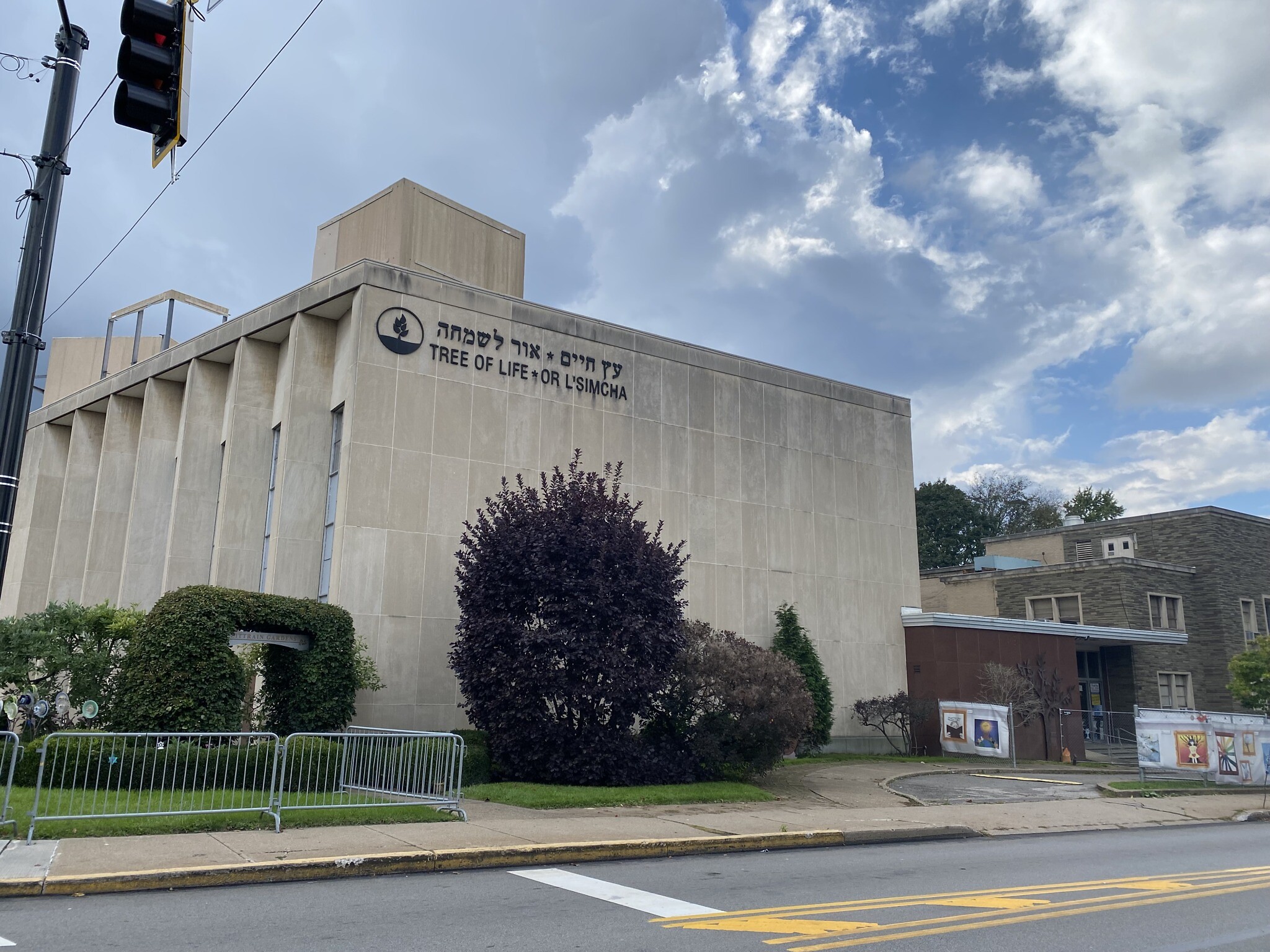
On Oct. 19, 1952, members of Tree of Life Congregation gathered to dedicate their new synagogue at Wilkins and Shady avenues in Squirrel Hill.
It was the Sunday of a three-day celebration that would culminate with the placement of a time capsule in a cornerstone of their spiritual home — a monumental structure with striking stained glass windows.
They couldn’t have imagined that on another October day 66 years later, the new house of worship that filled them with such joy would become a scene of horror and heartbreak with the murder of 11 congregants from three congregations: Tree of Life, Dor Hadash and New Light.
Not on this day, when artifacts of their growing religious community — a photo of congregation officers, a prayer book, a yarmulke and tallit, a calendar of events and a wire recording of a recent Rosh Hashanah service — were tucked into a metal container about the size of a shoebox and buried in the cornerstone with no idea when they would be seen again.
An obscure clue to the capsule’s existence was discovered in 2023 as the congregation was preparing for demolition of the synagogue to make way for construction of a new building, said Eric Lidji, director of the Rauh Jewish History Program & Archives at the Heinz History Center.
His colleague Catelyn Cocuzzi stumbled across the reference while poring through old sisterhood documents, in what Lidji calls “a moment of cosmic grace.”
“If it had been six months later, it may never have been discovered,” he said. “I felt like God was giving us a gesture.”
Further research led Lidji to later locate the box in a post of Jerusalem limestone still standing amid the demolition debris. “The top of the post was knocked off, so we could sort of slide the box out,” Lidji said. “It was exciting.”
In the presence of a few longstanding Tree of Life members, Lidji and Cocuzzi spent more than an hour opening the capsule with a Dremel saw, exposing a glimpse into the congregation’s past and releasing the odor of decades-old air.
“It’s an interesting window into what people were thinking and how they saw themselves in 1952,” said Lidji. “It allows us to communicate with people who died before we were born, and let’s them extend their reach beyond their lifetime.”
It is also a humbling reminder, Lidji said, that “none of us knows what’s going to happen in the future.”
Between 10,000 and15,000 time capsules are believed to exist worldwide, according to the International Time Capsule Society, and about 95% of them are lost track of by the fifth decade after their burial.
While many organizations are explicit in directing when their time capsule should be opened, others, like the one at Tree of Life, have no apparent instructions.
Time capsules containing religious artifacts — sometimes called votive deposits — traditionally were buried in the hope they would never be disturbed, according to an article in Jewish Times of South Africa, which cites research published by the University of Victoria in British Columbia, Canada.
The Tree of Life capsule may have been a formal way congregants chose to express love for their institution, Lidji said. “It may have been to provide some sort of spiritual energy that would make its way through the building.”
In this regard, the metaphorical meaning of a capsule can be far more powerful than its physical contents, which are often unexceptional, said Lidji. “And there’s something profound about that.”
One of the more interesting objects in the Tree of Life capsule is the Rosh Hashanah service captured on a relatively rare wire recording, which is sound etched onto a thin strand of steel. Although wire is inherently fragile because it can easily kink, Lidji said, “magnetic tape would not have survived.”
That a recording of any kind was made is remarkable in itself, since all forms of recording are traditionally prohibited on Shabbat and Yom Tov, said Alan Hausman, immediate past president of Tree of Life.
“It shows how important the time capsule was that the congregation would have allowed it.”
Hausman was not surprised by the discovery of the capsule since an earlier Tree of Life congregation had buried one at its former synagogue on Craft Avenue in Oakland in 1906. Discovered in 2019 when the building was razed, it included more personal items, such as a white seashell, business cards and a Heinz pickle pin.
Hausman is confident that the capsule tradition will continue when the new building is dedicated as the Tree of Life Center for Humanity in 2028 — its fifth structural iteration in the congregation’s 162-year history. “We’ll have to look carefully at what we are putting in because the technology to access, say, a thumb drive, may not exist in 50 years,” he said. “We had to find someone who could deal with the wire recording.”
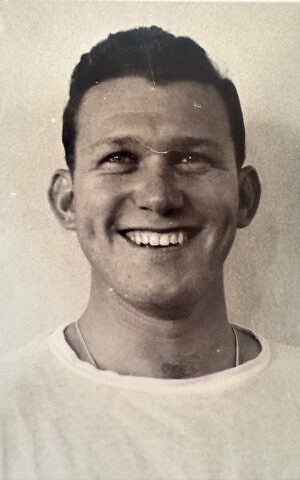
He lost sons Cecil, 59, and David, 54, in the 2018 attack.
“Those were my boys,” said Rosenthal, who keeps a poster of the pair in his Squirrel Hill apartment. “I miss them very badly.”
In 1952, Rosenthal was a 20-year-old U.S. Army recruit stationed at a base in Kentucky.
His father, he recalls, was “the backbone” of the congregation for many years in that he taught Hebrew, led Torah readings and performed other functions.
Today, Rosenthal’s daughter Diane Rosenthal serves on the Tree of Life Center for Humanity board and his daughter Michele Rosenthal is a board member of Eradicate Hate Global Summit.
The next time capsule should reflect the congregation’s history, as well as the significance of its rebuild in the context of heightened, worldwide antisemitism — for whatever future generation finds it, Elie Rosenthal said.
“It would be a tool for education. Understanding history is so important to how we live our lives in the present.” PJC
Deborah Weisberg is a freelance writer living in Pittsburgh.
comments