
CMU defends Fence restrictions amid free speech, anti-Zionism dispute
“The goal is always to safeguard the community while preserving, where possible, the opportunity for students to continue academic progress during an ongoing investigation.”
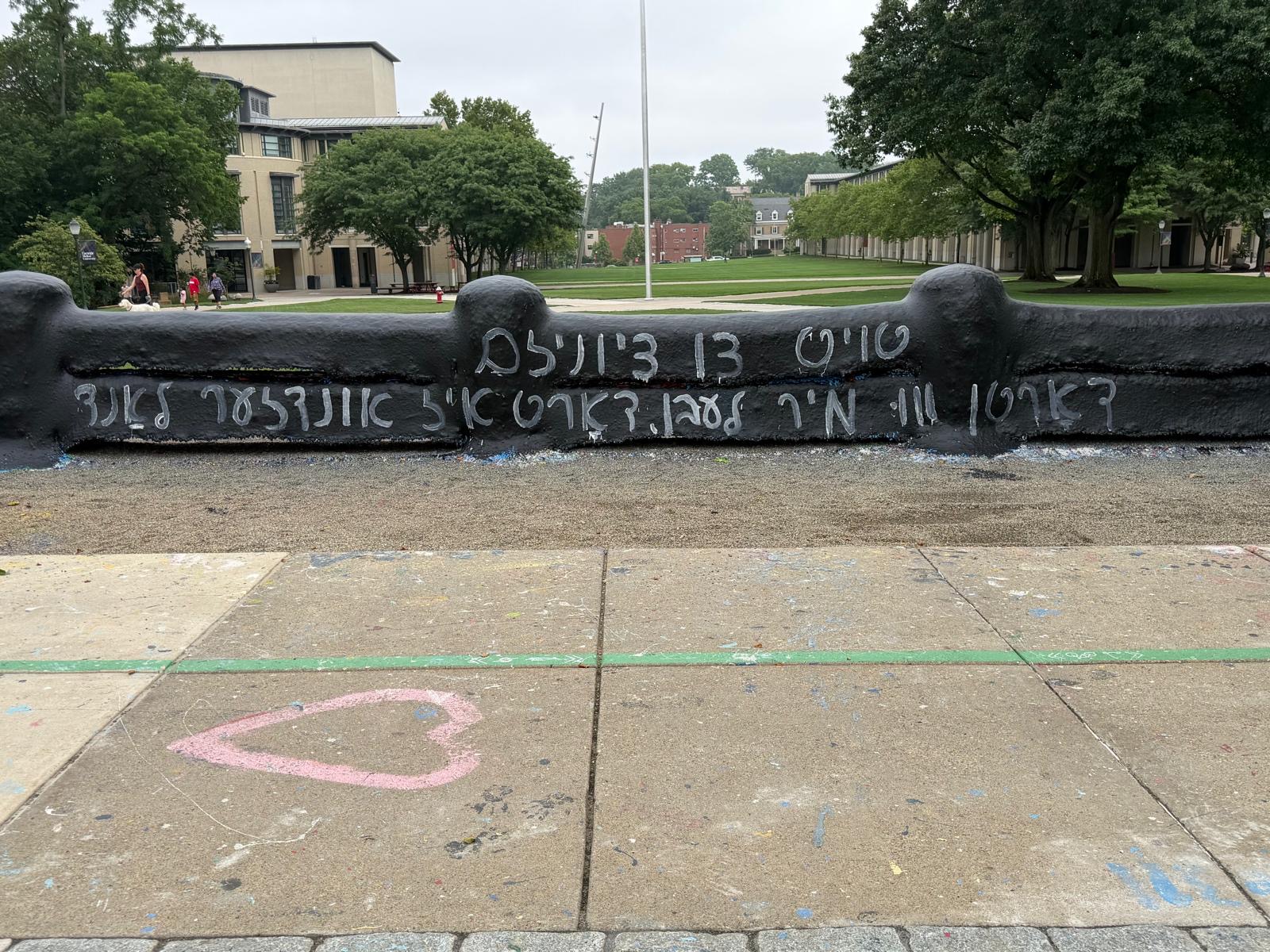
The fallout from anti-Zionist messages painted on The Fence at Carnegie Mellon University continues.
For more than a century, CMU’s Fence has served as a “student-centered” space for expression and community. This summer, a series of anti-Zionist messages painted on The Fence ignited a debate over free speech, student safety and the university’s role in stewarding one of Carnegie Mellon’s oldest traditions.
On July 27, CMU officials issued a statement titled “Safeguarding a CMU Tradition After Acts of Vandalism and Non-Student Paintings at the Fence,” meant to serve as a reminder of the “longstanding traditions and expectations governing the Fence.”
The university, according to the statement, received “multiple reports of vandalism and reports of non-CMU students and individuals unaffiliated with the university participating in painting the Fence.”
It went on to say that officers, who routinely patrol the campus, could request valid CMU identification from those painting The Fence going forward.
A day after CMU’s statement was issued, several far-left groups — including Jewish Voice for Peace, Palestine Legal, Institute for the Critical Study of Zionism, National Faculty and Staff for Justice in Palestine, Concerned Jewish Faculty and Staff, Coalition for Higher Education and the American Association of University Professors — issued a joint letter criticizing the university’s stewardship of The Fence and its handling of anti-Zionist messaging. The letter accused CMU of unfairly disciplining 10 students allegedly responsible for painting messages — including “Free Palestine by any means necessary” and “Death to Zionism” — and stifling free speech.
CMU officials responded to the criticism, saying it “grossly mischaracterized” the university’s actions and omitted important context regarding its “community standards, legal obligations and responsibility to ensure the safety and well-being of all members of our community,” while honoring The Fence’s traditions.
The university said it remains “firmly committed” to protecting freedom of expression and “fostering a campus environment that is safe, respectful and welcoming.” It noted that it doesn’t view those commitments in conflict with one another.
CMU’s statement explained that a series of messages on The Fence “crossed the bounds of our community norms” and “threatened to create a hostile environment for members of our Jewish community.” The messages, CMU said, undermined constructive dialogue.
“[R]epeated instances of non-CMU and non-student individuals participating in painting the Fence heightened those concerns and accelerated the need for action,” the university said, adding that language that incites or implies violence “will not be tolerated.”
“We are deeply concerned that these external groups, rather than encouraging civil discourse and constructive dialogue on our campus, appear to be endorsing rhetoric that has been heard by some members of the CMU community as implying the threat of violence,” university officials wrote.
Recalling the Pittsburgh synagogue shooting, CMU officials said that “history reminds us that words matter and that threats, whether explicit or implied, cannot be viewed in isolation from their broader context.”
On July 29, CMU’s student newspaper, The Tartan, reported that a total of 10 students have been accused of painting the anti-Zionist messages.
Nine of those students, according to The Tartan, were placed on interim partial campus access restriction, and one student may face expulsion.
A CMU spokesperson told the Chronicle in an email that while the university would not comment on the specifics of any individual student’s interim access restriction or any active investigation, any restrictions placed on campus access are “individually determined based on the circumstances of each situation.”
“The goal is always to safeguard the community while preserving, where possible, the opportunity for students to continue academic progress during an ongoing investigation,” the spokesperson said.
David Knoll, the Jewish Federation of Greater Pittsburgh’s associate vice president of public affairs, said CMU’s Fence has been “a significant point of concern for many in the Jewish community over the last year.”
Federation, Knoll said, has worked closely with the university to help ensure the safety and well-being of Jewish students on campus, and strongly opposes any “threats, intimidation, harassment or acts of violence directed at the Jewish community or individuals because of their support for Israel.”
“We appreciate the university’s ongoing commitment to fostering a safe and welcoming environment for all members of its campus community,” Knoll said.
While Jewish community members hold a wide range of views on many issues, including Israel, Knoll said, “the overwhelming majority of mainstream American Jewish organizations and institutions share a fundamental belief in the legitimacy and continued existence of the State of Israel, and oppose boycott, divestment, and sanctions (BDS) campaigns as counterproductive, harmful, and, in many cases, contributing to antisemitic climates.”
While acknowledging Jewish Voice for Peace’s right to advocacy, Knoll said the group’s “support for BDS and its opposition to the existence of Israel place it outside the mainstream of American Jewish organizations and institutions.”
“JVP,” he said, “represents a minority viewpoint within the broader Jewish community.”
Last fall, CMU convened a Fence Working Group to review The Fence’s governance. It engaged with the university’s student government and other campus stakeholders. Its recommendations, the university said, will “inform the implementation plan for The Fence and its protocols and governance this fall.” PJC
David Rullo can be reached at drullo@pittsburghjewishchronicle.org.
comments