
Chronicle poll results: Tisha B’Av
We asked our readers how they typically observe Tisha B'Av. Here's what they said.
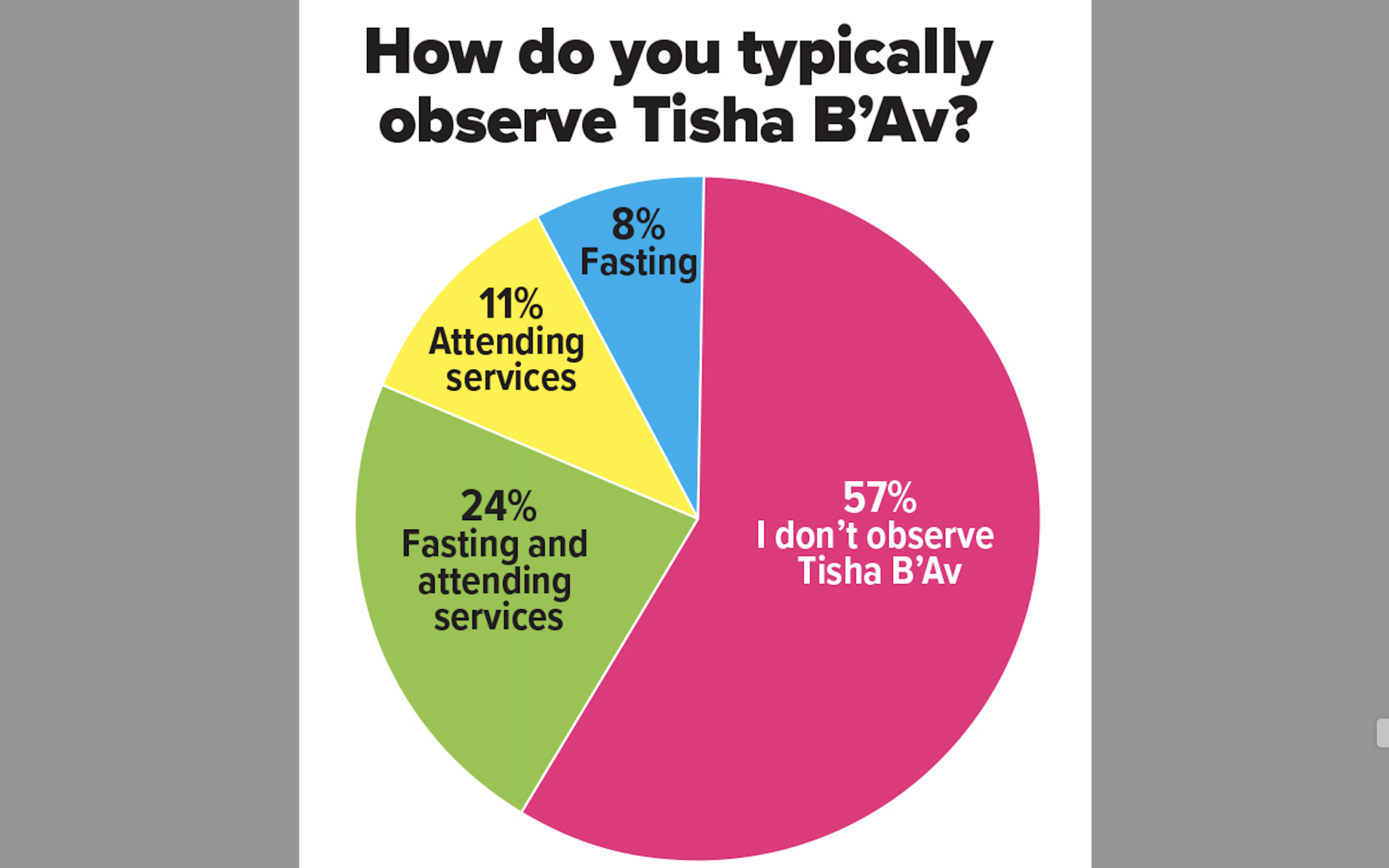
Last week, the Chronicle asked its readers in an online poll the following question: “How do you typically observe Tisha B’Av?” Of the 141 people who responded, 57% said “I don’t observe Tisha B’Av; 24% said “fasting and attending services”; 11% said “attending services”; and 8% said “fasting.” Comments were submitted by 17 people. A few follow.
I observe Tisha B’Av privately, just by reading something meaningful and thinking about Jewish tragedies over time, and giving tzedakah; but neither reading Lamentations at shul nor fasting feels like significant commemoration to me.
We attend the community services erev Tisha B’Av, and do our best to greatly restrict traveling.
The local communitywide service in Squirrel Hill, this year at Congregation Beth Shalom, is always compelling. I’m hoping that more people turn out to get a better understanding of the gravity of this commemoration. This year I will be in a village in Israel and am curious to see how it is handled there.
I always take a moment to lament the destruction of the Temples in Jerusalem. Am Yisrael chai!
We do not do any of the above activities. We observe the day connecting and reflecting on current social challenges, environmental concerns and interpersonal ethics. Instead of limiting reflection, strictly to ancient historical losses, we expand the narrative to address modern day tragedies and societal challenges.
I read relevant articles about Tisha B’Av during the week before it occurs to further understand the importance of this sad holiday.
The trope for Eicha is really beautiful, and we only hear it once a year, so despite the tragic subject of the tzom, I look forward to hearing the haunting chant of Eicha.
This is the hardest fast. Yom Kippur is easier because you daven the whole day and you feel like you are in a spiritual world. On Tisha B’Av you do nothing productive.
What’s Tisha B’Av? PJC
comments