
Century-old Torah ark finds new home in JAA’s Squirrel Hill care complex
The art deco-style JAA ark dates to at least 1933.
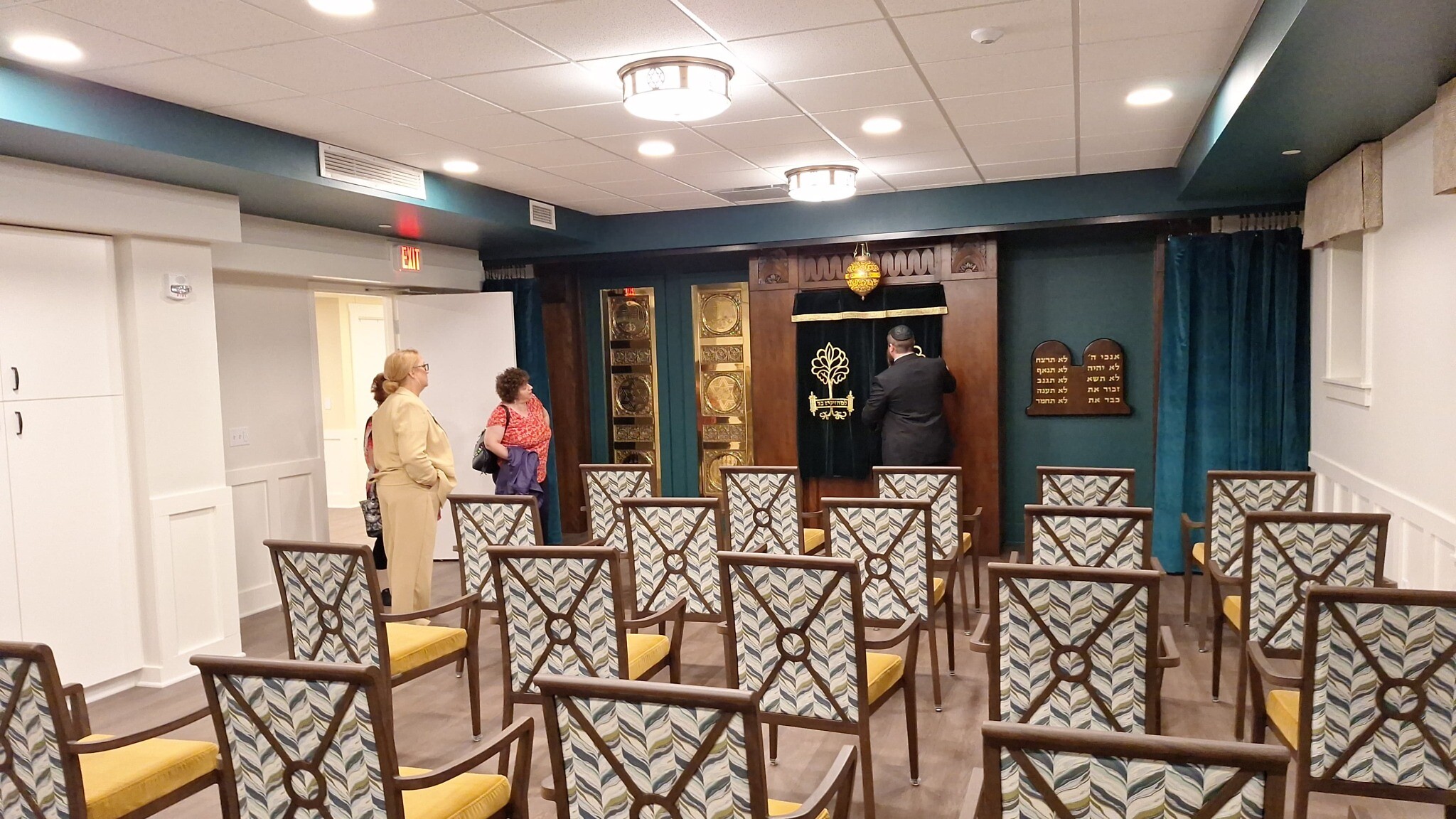
A Torah ark that has been with the Jewish Association on Aging for nearly a century has been installed in the organization’s new personal care complex set to soon open in Squirrel Hill.
The ark was salvaged from the former Charles Morris Nursing and Rehabilitation Center during its transformation into new living quarters, and is the focal point of the building’s worship and connection space.
Like Torah arks universally, it is modeled after the biblical Ark of the Covenant, which contained the stone tablets of the Ten Commandments. The Ark of the Covenant, or Aron Kodesh, was stored in the Holy of Holies in the inner sanctuaries of both the ancient Tabernacle and the Temple in Jerusalem. After the Temple’s destruction, the Torah ark became a focal point in synagogues. Arks vary widely in design, but all have the same spiritual significance.
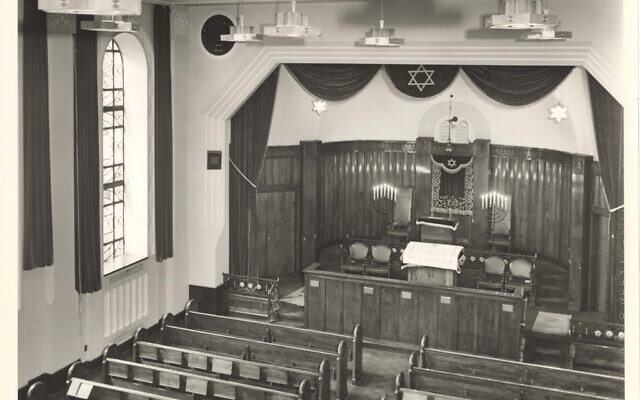
The art deco-style JAA ark dates to at least 1933, when the Jewish Home for the Aged — the precursor to JAA — opened its doors in Squirrel Hill, after nearly three decades in the Hill District, said Eric Lidji, director of the Rauh Jewish History Program & Archives at the Heinz History Center.
“The Home was the second Jewish institution to leave the Hill for Squirrel Hill which, in the 1920s, became the largest Jewish population center in the city. Poale Zedeck was the first to migrate, in 1928.”
The Home might have moved sooner but an effort to purchase the lot where John Minadeo School eventually was built encountered pushback from neighbors, Lidji said. “(The Home) found the property off Browns Hill Road where JAA is today.”
Over the past nine decades, the 15-acre JAA campus has expanded and evolved into an urban village that provides a range of social, wellness and spiritual services to residents and to the broader community. Besides the new personal care complex, the campus includes memory care and The New Riverview independent living and affordable apartments. There are plans to build additional independent living units.
The ark has had several different homes on the campus and, through it all, has been an enduring spiritual presence, said Rabbi Dovid Small, JAA’s director of pastoral care.
“It has a rich history of continuity. It’s like the ark of the temple that traveled with the Jewish people on their journey. This ark traveled its journey, too.”
Small is the fourth rabbi to serve at JAA since its founding in 1905 by Rabbi Aaron Mordecai Ashinsky. Small’s other predecessors were Rabbis Mordechai Leib Glatstein and Eli Seidman, who retired in 2020.
Seidman helped design the shul at Charles Morris that housed the ark and that also included stained glass windows, which will be preserved, too, said JAA president and CEO Mary Anne Foley.
“It was a beautiful shul and we did not want to demolish it. We worked with contractors to save the ark because it is part of our 100-year history. We also moved the shul’s eternal light and menorah into the worship center.
“Where we could, we’ve included the old with the new.”
Plans are to repurpose the stained glass windows when JAA’s independent living facility is built.
The Columbus, Ohio-based pH7 Architects, a firm that specializes in senior living communities, designed the new personal care complex and sought input from Small in creating the building’s worship space, where the dominant color is green. The parochet, or ceremonial curtains covering the scrolls, are emerald velvet, as they were in the old shul.
“The ark fits beautifully,” Small said, noting that it will house three Torahs. “The constant light shining on the ark reminds us that God is always present.”
Although it is obviously a shul and will be used for Shabbos and all Jewish holiday services, the space is referred to as a flex worship and connection center because not all personal care residents will be Jewish, Foley said.
It is designed to seat 58, which is the resident capacity of the personal care complex.
The worship space also could be used for other special occasions, she said, recalling when the daughter of a memory care patient got married in a courtyard on campus.
JAA’s decision to keep the ark conveys “a sense of continuity,” Lidji said, noting that not all arks can be conserved when synagogues remodel, downsize, or shutter their doors.
A 2020 Pew Research Center study indicates that in the preceding 20 years more than one-third of Conservative synagogues and one-fifth of Reform synagogues closed.
“There are more arks that need a home than there are homes for them,” Lidji said. “Only a few survive.”
In a perfect world, an ark no longer used would be dismantled and buried, but all too often they wind up, forgotten, in storage, he said.
The Georgia-based Jewish Community Legacy Project helps congregations place their arks and other ritual objects with synagogues in need. The project has worked with several congregations in western Pennsylvania.
That JAA has continually made a place for its ark is significant, said Legacy president and CEO Noah Levine. “What’s beautiful about it is that, as needs change, what becomes constant is this ark. The spirit of God is with this ark wherever the worshippers are.”
“The ark is going to the people, not the other way around.” PJC
Deborah Weisberg is a freelance writer living in Pittsburgh.
comments