
Celebrating our community’s 18 Difference Makers
Difference Makers was created to honor the extraordinary individuals whose passion, dedication and service are strengthening our Jewish community.
The Chronicle’s staff and board are delighted to celebrate our inaugural class of 18 Difference Makers, those whose dedication, compassion and commitment to others exemplify the powerful Jewish imperative of tikkun olam — repairing the world.
Difference Makers was created to honor the extraordinary individuals whose passion, dedication and service are strengthening our Jewish community and creating a lasting, meaningful impact throughout southwestern Pennsylvania. Their commitment inspires others, brings people together and helps to shape a stronger, more vibrant community.
Several months ago, we put out a call for nominations. They in came in by the dozens, and we were not surprised. Caring for others is a hallmark of our community.
“Jewish Pittsburgh is enriched by countless talented and compassionate people who generously give their time and energy in service to others,” said Jim Busis, the Chronicle’s publisher and CEO. “We’re honored to celebrate 18 individuals nominated by their peers and to recognize the meaningful difference they continue to make in our community.”
The criteria for Difference Makers were as follows: They had to be at least 18 years old by April 26, 2026, and have made a difference in southwestern Pennsylvania’s Jewish community. All our Difference Makers have taken an active role in the community, whether through a nonprofit organization, volunteer group or professional endeavor, and all have demonstrated “mensch-like” characteristics, those of honor and integrity.
Additionally, in recognition of a lifetime of community service, the Chronicle created the Lifetime Achievement Award, which is proudly bestowed this year on Karen Wolk Feinstein, immediate past president and CEO of the Jewish Healthcare Foundation.
Below, you will learn a bit about each of our Difference Makers. Read about our Lifetime Achievement Award honoree here. We find their stories inspiring, and hope you will, too.
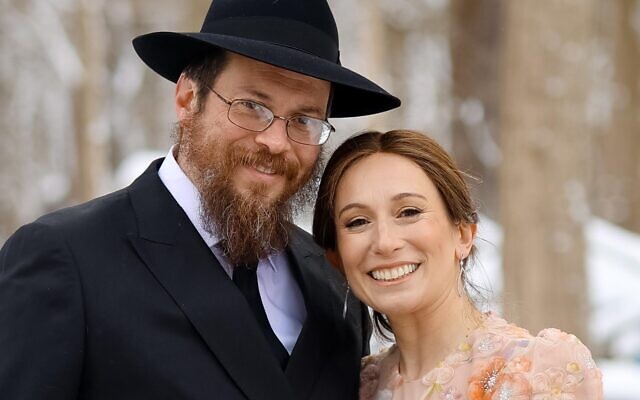
Rabbi Yisroel and Chani Altein
Rabbi Yisroel and Chani Altein are the co-directors of Chabad of Squirrel Hill. Their nomination read, in part: “They run so many outstanding programs that include everyone from all walks of life, bringing people together. It’s such a kiddush Hashem! These two special people exemplify how Jews have a love for one another, and they are difference makers in our community.”
Another nominator praised Chani’s weekly Torah classes, monthly Lunch and Learn sessions — which attract more than 75 women — and periodic challah baking sessions.
Chani, wrote another individual “has brought together every part of this community…from every walk of life, from every Jewish persuasion, with no judgement or care about your level of observance. She brings joy and happiness to everyone she meets.”
How long have you lived in Pittsburgh?
23 years
What advice would you give your 16-year-old self?
Never let discomfort keep you from doing what’s kind or right. — Chani
What does tikkun olam mean to you?
Revealing the Divine spark within everything we do and encounter. — Chani
As we say at the end of every prayer in the “Aleinu,” our goal is “to perfect the world under the sovereignty of G-d.” — Yisroel
If you could have dinner with one person, living or deceased- who would it be and why?
Esty Heller, an author whose writing I really enjoy. — Chani
No quite dinner, but a farbrengen with the Rebbe. — Yisroel
Dean Aseef
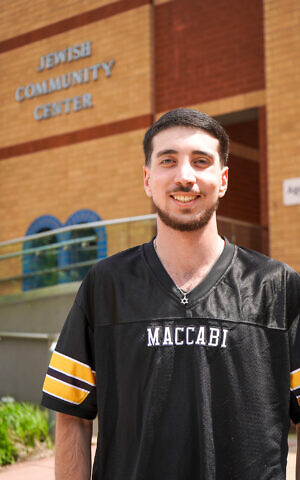 Dean Aseef is the community shaliach at the Jewish Community Center of Greater Pittsburgh. “Dean embodies the very purpose of shlichut: to build deep, lasting relationships between Israeli and American Jews. Through the JCC’s Israel engagement initiatives, he has created meaningful opportunities for people across the community to connect with Israel’s culture, people and lived experience,” reads his nomination. “From the moment he arrived, Dean immersed himself fully in the community. He has played a central role in organizing Israel engagement programming, educational initiatives, and large-scale community events, helping ensure that connection to Israel is not abstract, but deeply personal and human.
How long have you lived in Pittsburgh?
I have lived in Pittsburgh for about a year and a half. I am originally from Haifa, Israel, but Pittsburgh already feels like a second home to me.
What advice would you give your 16-year-old self?
Listen to yourself more and worry less about what other people think. Trust your own path, even when it looks different from the path others expect you to take.
What does tikkun olam mean to you?
To me, tikkun olam means trying every day to become a better person, do good, and have a positive impact on the people and communities around me. It means helping make the world a better place by leading by example, being a role model and spreading kindness wherever I can.
If you could have dinner with one person — living or deceased — who would it be and why?
I would have dinner with my grandfather, Ze’ev. It has been almost a decade since he passed away, and I miss him deeply. I would love to talk with him about Maccabi Haifa, the soccer team he taught me to love, hear one of the many jokes he always had ready, and simply have a few more hours to sit with him and enjoy his company.
Michael Bernstein
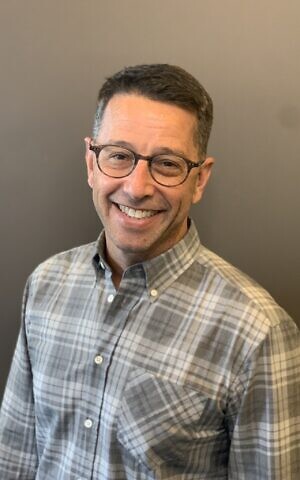 Michael Bernstein is board chair of The Tree of Life. His nomination reads: “Michael ‘s combination of vision, patience, collaborative spirit and business acumen enables him to lead The Tree of Life to build a locally-grounded institution with broad national impact and reach. … Michael combines humility, intellect and passion for what The Tree of Life stands for and can be in a way that makes him an inspirational force in our wonderful community.”
How long have you lived in Pittsburgh?
All of my 59 years, except for four years of college.
What advice would you give your 16-year-old self?
Show up. Most of my success has come from simply showing up and doing the work. Little victories, day after day, add up to huge successes over time. And be patient.
What does tikkun olam mean to you?
Be sensitive to the world around you and try to give more than you take. For me, this starts with trying to be a good husband, father, son, brother, friend and colleague. I’m blessed to have the time and means to broaden this circle to include my community, but it really does start with trying to be a positive force to those closest to you.
If you could have dinner with one person — living or deceased — who would it be and why?
My sister Marci, who passed away when I was 5 and she was 8. I’ve spent a lifetime missing the warmth of an older sister’s love and would want to experience it just one more time.
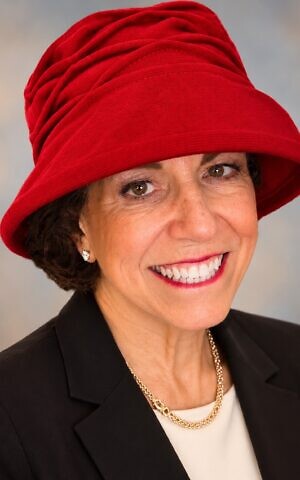 Nina Butler
“As the driving force behind the Bikur Cholim of Pittsburgh, Nina has taken on the sacred responsibility of ensuring that no one in our community faces illness alone,” writes her nominator. “With remarkable sensitivity and unwavering dedication, she orchestrates a vast network of care. When someone is hospitalized, recovering at home, or navigating a medical crisis far from their support system, Nina is often the first call — and the steady presence that follows.
“She coordinates meals for families in crisis, organizes transportation to and from medical appointments, arranges housing for out-of-town families, and connects individuals with resources they didn’t even know existed. Her ability to anticipate needs is nothing short of extraordinary.”
How long have you lived in Pittsburgh?
I’ve called Pittsburgh home for 49 years, ever since my new husband — a proud third-generation Pittsburgher — brought his new bride here the morning after our wedding. Nearly five decades later, what started as our story has become a multigenerational one: We now have a sixth-generation Pittsburgh crew carrying the legacy forward!
What advice would you give your 16-year-old self?
Although your outstanding 2,000-plus student public high school in Southfield, Michigan, offers an incredible range of academic, athletic and extracurricular opportunities, NCSY is providing something you won’t find in any classroom: the chance to explore Judaism in a deeper, more meaningful way. The ideas, friendships and experiences you’ll discover through NCSY will transform not only your own life, but the lives of your future family. Investing in your Jewish journey today is giving you — and one day your children and grandchildren — a sense of purpose, identity and meaning that many people spend a lifetime searching for. Jump in with both feet; don’t hesitate!
What does tikkun olam mean to you?
Tikkun olam is typically translated as “repairing the world,” but I prefer to think of the world not as broken, but as unfinished. Rabbi Jonathan Sacks taught that God invites us to become His partners in completing creation. Partnering with God? What a concept!
As I work to support patients and families, I often face challenges that seem impossible — until, somehow, the right person, resource, or solution appears just when it’s needed. My role is to channel the kindness and generosity of others where it can do the most good. But there’s no doubt in my mind that God is blowing wind into my sails.
If you could have dinner with one person — living or deceased — who would it be and why? Without a doubt, I dream of having just a few more hours with our late son, Mikey. Mikey had a rare and magical ability to inspire ordinary people to behave in extraordinary ways. The lessons I learned from him became the foundation for my desire to “pay it forward” by building Bikur Cholim/Friends of Jewish Patients. Mikey treated everyone he encountered — from world-renowned specialists to hospital janitors — with the same warmth, respect and genuine appreciation. He offered a smile, a joke, a compliment, or a story to each, bringing a little sunlight into people’s days, regardless of how much he himself was struggling. When you asked Mikey how he was feeling, his answer was always, “Day by glorious day.” Those words have become a guiding principle for me, and I strive every day to live up to the example he set.
Debra Caplan
Debra L. Caplan is “a visionary leader whose decades of service have made a profound impact on the Jewish community,” her nomination reads.
As immediate past chair of the Jewish Healthcare Foundation’s board of trustees, and founding chair of WHAMglobal, “she has advanced initiatives in community health, workforce development, and women’s leadership. Her decades of involvement have helped ensure JHF remains a driving force for innovation and community health in the region.
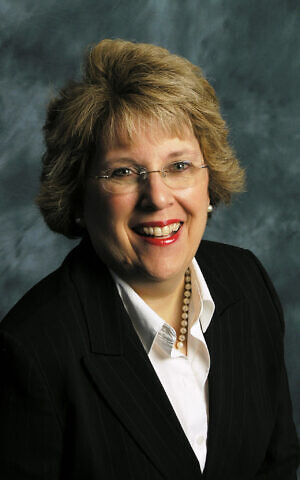
“She has served on the boards of the Jewish Community Center of Greater Pittsburgh and UPMC Health Plan, as chair of the WQED board, and as president of the Pittsburgh Chapter of the International Women’s Forum.
“Debra has held senior leadership roles at Brigham and Women’s Hospital and Allegheny Health Network, and served as Interim CEO of Partner4Work, advancing workforce development across Allegheny County. Today, as executive-in-residence at The Forbes Funds and Principal of HobartHumphrey LLC, she advises nonprofit leaders in governance and strategy, mentoring the next generation of civic leaders.”
How long have you lived in Pittsburgh?
I grew up in Squirrel Hill and for approximately 20 years I lived in western Massachusetts and Boston for college, graduate school and work. The time away helped me gain a broader perspective on the world and also appreciate how special Pittsburgh truly is.
What advice would you give your 16-year-old self?
Be kind, curious and adventurous. Take risks and enjoy your youth!
What does tikkun olam mean to you?
Social justice and repairing the world take many forms. Giving back and taking action to support one’s community always resonated with my family. I have tried to carry that philosophy forward in my professional and communal work.
If you could have dinner with one person — living or deceased — who would it be and why?
This is a tough question as there are so many people who I would love to have dinner with — one of the people that stands out for me is Marie Curie. The only person to receive a Nobel Prize in two different scientific categories, her pioneering work on radioactivity laid the groundwork for modern radiation oncology, not to mention being a woman in science. She also strongly advocated for scientific research to be a public good and that the resultant advances should benefit as many as possible. Of course, I’d love it if her husband Pierre joined us, as well!
Avi Cohen
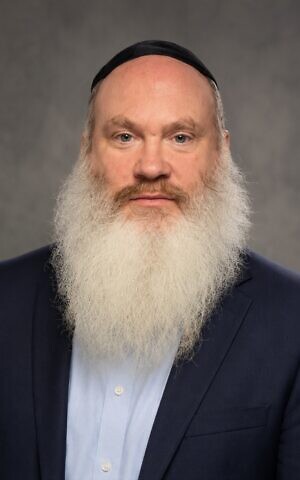 Avi Cohen manages a medical equipment gemach and “personally delivers equipment all around the area to hundreds of people,” his nomination reads.
“I suspect virtually no one realizes just how much stuff he has loaned to people. And it’s not just that: People donate old equipment to him, sure, but he also uses his own money to purchase equipment when stock runs low or to repair things. Some medical items are one-time use, and he just buys a replacement
when someone borrows the item, but you would never know it from the website; it looks to the borrower like a loan.”
“When the old location for the heating and AC gemach was not available, he stepped up to take it on … . “
How long have you lived in Pittsburgh?
About 11 years. We’ve been in the Pittsburgh area for around 20 years altogether, but spent about nine of those years living on a farm in Fayette County before moving back.
What advice would you give your 16-year-old self?
I’m not sure my 16-year-old self would have listened, but I would have told him to focus on developing the skills you’ll need for life, and let growing up happen naturally. The rest tends to fall into place.
What does tikkun olam mean to you?
My personal take on “tikkun olam” means doing my part to leave the world a little better than you found it. For me it’s not about grand gestures; if it was, I would be lost. It’s as simple as treating people with kindness, helping where you can and making a positive difference in the lives of those around you.
If you could have dinner with one person—living or deceased—who would it be and why?
My mother. She was a truly special person who always had time for everyone, no matter who they were. As I’ve gotten older, I’ve come to appreciate even more how rare and meaningful that quality is. I’d love the chance to sit down with her again.
Rebecca Elhassid
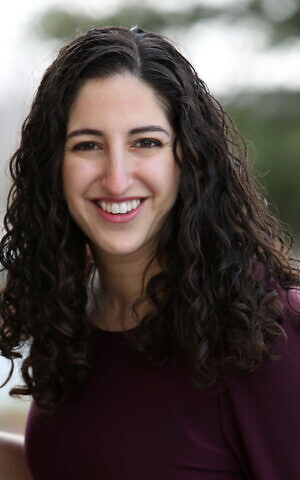 “Across Pittsburgh’s Jewish community and beyond, Rebecca has become a force for connection, resilience, and principled action — someone who not only envisions change, but rolls up her sleeves to make it happen,” writes her nominator.
“As a founder and ongoing leader of Beacon Coalition, Rebecca has created a platform for meaningful engagement and communal responsibility. She is not a figurehead; she is the engine. Whether organizing, strategizing, or doing the unglamorous logistical work, she consistently leads from the front, modeling a standard of commitment that inspires others to follow. This same hands-on leadership was evident in her work supporting weekly “Bring Them Home” rallies, where her presence was both steadying and galvanizing.
“At Congregation Beth Shalom, Rebecca serves as a dedicated lay leader, including as a gabbai, and plays a vital role in sustaining a vibrant, egalitarian Conservative Jewish community.”
How long have you lived in Pittsburgh?
13 years
What advice would you give your 16-year-old self?
I would tell her to spend less time worrying about having the right answers and more time asking good questions. The people I’ve learned the most from are the ones who stay curious, listen carefully and are willing to rethink their assumptions. And I would tell her she is never going to make it as a freelance writer.
What does tikkun olam mean to you?
I have always understood tikkun olam through the lens of Rabbi Isaac Luria’s teaching of the shattering of the vessels. I’ve always imagined it as a puzzle with pieces scattered throughout the world, waiting for someone to put them back into place. To me, our responsibility is to be on the lookout for those pieces and do what we can to restore them – whether that means shoveling a neighbor’s walkway, making a meal for someone during a difficult time, or using your own skills to strengthen the broader community.
For me, tikkun olam is the understanding that each of us has both the ability and the responsibility to put some of those pieces into place, even though none of us will ever see the complete picture.
If you could have dinner with one person—living or deceased—who would it be and why?
I would choose Jacob Birnbaum. He made it his mission to recruit American Jews to the cause of rescuing Soviet Jewry and accomplished what many believed was impossible. He never became the public face of the movement he devoted himself to building. He believed in uncompromising grassroots organizing while also recognizing that lasting change required bringing the established Jewish and non-Jewish leadership along with him. He understood that asking American Jews to take responsibility for Soviet Jews would also strengthen American Jewry itself. Guided by a deep belief in Klal Yisrael, he built a movement that changed the future of both Soviet and American Jews without fame, wealth, or political office.
I’d love to ask him how he balanced urgency with coalition-building, how he inspired people to dedicate years to a cause whose outcome was anything but certain, and whether, looking back, he believed the movement strengthened American Jewry in the ways he hoped it would.
Meyer “Skip” Grinberg
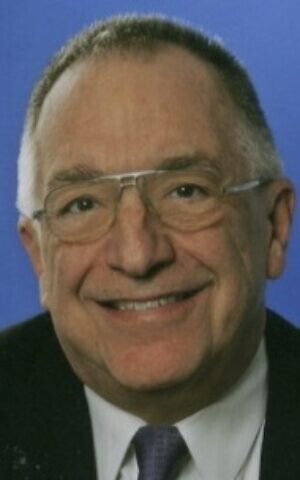 Skip Grinberg has taken on a host of volunteer roles form more than 40 years, including president of the Pittsburgh Marathon; Jewish Cemetery and Burial Association: Jewish Assistance Fund; and Community Day School. He has chaired the Jewish Federation of Greater Pittsburgh’s Community Relations Council and Partnership2Gether initiative, and was executive director of the Jewish Education Institute. He was a recipient of the Jefferson Award from the Pittsburgh Post-Gazette as an “Outstanding Citizen of Pittsburgh,” and has been recognized by the Jewish National Fund and the ZOA, among other organizations.
His nominator listed several of the groups and projects that Grinberg has assisted, and added that he “has raised funds for special needs children in Israel” and “has served on the board of directors of Yeshiva Schools of Pittsburgh and many other community organizations.”
“Through all these organizations he has served, Skip has made a meaningful contribution to both the Jewish and Pittsburgh communities.”
How long have you lived in Pittsburgh?
I have always lived in Pittsburgh, except for 15 years for college, law school and military service.
What advice would you give your 16-year-old self?
Be true to yourself. Align your actions with your values and personal beliefs
What does tikkun olam mean to you?
Tikkun olam is our responsibility to improve the world through charity, kindness and social action.
If you could have dinner with one person—living or deceased—who would it be and why?
President Teddy Roosevelt I admire him because he advocated progressive reforms that raised the standard of living for the immigrants and underprivileged. He protected citizens from corporate exploitation. He was a strong supporter of conservation and championed food and drug safety.
Tsipy Gur
Tsipy Gur is the founder and executive director of Classrooms Without Borders.
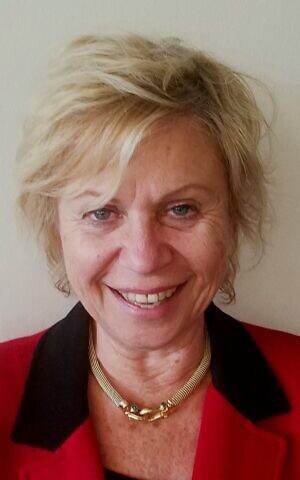 “She moves mountains to ensure history isn’t just something we read about, but something we truly feel,” her nomination reads. “She has spent decades proving that to change the future, we must change how we teach the past.
“And how better to do that than by taking educators to the places where history was made? Since 2011, she has personally led over 2,500 educators through Poland, Germany, Israel and the U.S. South. She knows you cannot fully grasp the weight of the Holocaust or the Civil Rights movement from a textbook — you must stand on the ground where history happened.
“When the pandemic hit, Tsipy was undaunted, pivoting to global Zoom programming to help educators understand the instruments of bigotry. Again, following the events of Oct. 7, she recognized a critical gap in day school education. While many felt paralyzed, Tsipy launched intensive seminars that served as teacher lifelines, focusing on the unbreakable bond between the Jewish people and the Land of Israel.”
How long have you lived in Pittsburgh?
I came in 1974 to Pittsburgh to do a Ph.D. with my husband.
What advice would you give your 16-year-old self?
Don’t be afraid and believe in yourself .
What does tikkun olam mean to you?
Changing the world one person at a time ( my Classrooms Without Borders mission) through education.
If you could have dinner with one person — living or deceased — who would it be and why?
Janusz Korczak, who devoted his life to children and education. He believed that children deserved dignity, respect and a voice. During the Holocaust, he refused opportunities to save himself and stayed with the children of his orphanage until the very end.
Rachael Heisler
Rachael Heisler is Pittsburgh’s City Controller. But, as her nominator writes, “in the deepest sense, is a mensch” and “has great compassion and affinity for her many Jewish friends, going back to her college years, even though she’s not Jewish herself.”
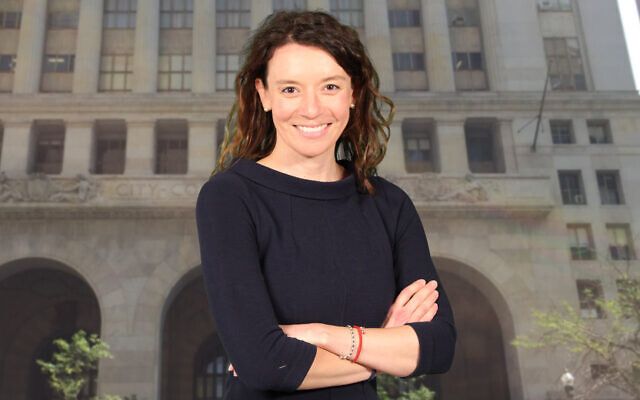
It’s in her public service role “that Rachael most embodies tikkun olam, striving daily to make Pittsburgh a better city. She actively works as well for the betterment of Pittsburgh’s Jewish community. As a top elected official, she’s spoken out against prejudiced, anti-Israel and antisemitic statements and policy, even as other elected officials shied away from speaking up.
Rachael leads by example. She played a key, public role combatting the ill-conceived ballot initiative that would have prohibited the City of Pittsburgh from doing business with Israel or any entities tied to Israel. She joined Jewish leaders and the Jewish Federation in opposition, filing a lawsuit against the ultimately failed initiative. Pittsburgh’s Jewish community can count on Rachael being a staunch ally and friend. She does so not because it’s politically expedient (sometimes the opposite), but because she deeply believes it’s the right thing to do. It’s in alignment with her upbringing and values.”
How long have you lived in Pittsburgh?
I moved to Pittsburgh in 2003 to attend Pitt. I stayed after graduation but went to D.C. from 2011 to 2017. I moved back to Pittsburgh in 2018 and will never leave.
What advice would you give your 16-year-old self?
I am so happy with how my life has played out and where I am now. I don’t know that’d I want to alter the trajectory of this very blessed life. So, perhaps, “You have a lot of fun ahead of you!”
What does tikkun olam mean to you?
Tikkun olam instructs me to live my values and work, every day, to make the world around me better.
If you could have dinner with one person — living or deceased — who would it be and why?
I was very close with my maternal grandparents, Mary Alice and Jim Dykstra. I was so lucky to have my grandma until 2020, but my pappap died when I was 13. My memories of him, and of them together, are limited. I would love to have dinner with them now.
Jeff Herzog
For more than two decades, Jeff Herzog served with distinction as the executive director of Rodef Shalom Congregation, “where his dedication, leadership, vision and steady guidance strengthened the organization’s impact and outreach,” wrote his nominator. “He also taught Sunday/Religious School at Rodef Shalom for many years.”
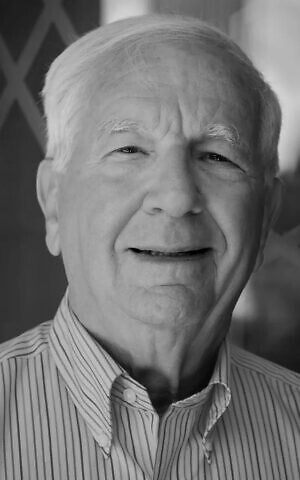 Since his retirement, Jeff has continued to demonstrate his passion and devotion to improving the lives of others. He has contributed countless volunteer hours, creative energy and commitment to a wide range of community programs and charitable causes, including: East End Cooperative Ministry, the Sharpsburg Food Pantry, the JFCS Refugee Program, the Squirrel Hill Food Pantry, Riverview Apartments/Jewish Association on Aging, Global Links, The Branch, the Rotary Club and other initiatives/programs that promote community well-being, inclusion and collaboration. and demonstrate his ongoing commitment to the community.
How long have you lived in Pittsburgh?
I was born and raised in Pittsburgh but left the city to attend undergraduate and then graduate school. Later, I served as a Peace Corps volunteer for two years in Costa Rica and then as a Peace Corps director in Honduras for an additional two years until 1977.
What advice would you give your 16-year-old self?
Travel often and learn from every culture and individual you meet. Each person has worth and insights and there can much to be learned from each, no matter their age or socio-economic status. Secondly, you only truly give, when you give of yourself. Lastly, your true wealth is not the money you have but is your family and friends.
What does tikkun olam mean to you?
Tikkun olam means to me being an active partner with G-d in improving the world. It is the seeking out of social justice through civic engagement . More importantly, it is the essence of my Judaism.
If you could have dinner with one person — living or deceased — who would it be and why?
I would choose to have dinner with President John F. Kennedy. With demonstrated culture, intelligence and wit , he was a president that most Americans were very proud to call him our leader. What I really admired most about him, however, was his vision for the future — whether that be a space program to reach the moon within a decade or challenging citizens to do more for their country rather than asking what it could do for them. Great vision is a characteristic that few people have! I wonder what he would say about this country today.
The Rev. Jonathon Jensen
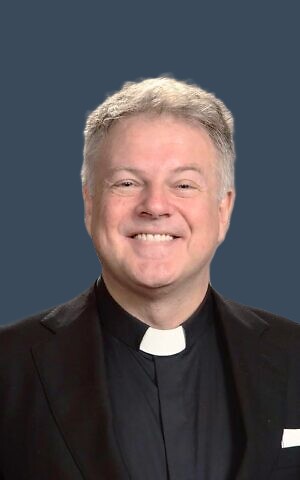 The Reverand Jonathon Jensen is rector of Calvary Episcopal Church. “In the aftermath of the Pittsburgh synagogue shooting,” his nominator wrote, “he extended an open invitation to the Tree of Life congregation: Come. Use our sanctuary, our offices, whatever you need. We are here.”
His invitation was immediate and for seven-plus years has been enduring.
The Reverend Jensen embodied that same impulse when he invited Rabbi Aaron Bisno, in his “time of need,” to serve as Calvary’s first rabbi-in-residence, “modeling what it means for Christians and Jews to be there for one another and to share in religious life.”
“And Jonathon’s vision extends further still. Through ‘Faith Night,’ a multi-year interfaith skating event, he brings together Christians, Jews, and Muslims — just to enjoy sharing an evening of fun together.
“Jonathon Jensen doesn’t just speak about world repair. He actively engages in it.”
How long have you lived in Pittsburgh? How long have you lived in Pittsburgh?
Since 2014 when I moved to Pittsburgh to become Rector or Senior Priest at Calvary Episcopal Church.
What advice would you give your 16-year-old self?
Do the best you can with the best information and resources you have at the time.
What does tikkun olam mean to you?
Tikkun olam means joining God in the work of restoring what is broken. A great lesson of ministry is that loving your neighbor takes the initiative and bears the burden of imagination. After a tragedy, it’s easy to say, “Let me know if there’s anything I can do.” But that places another burden on someone already overwhelmed. Instead, ask, “What can I offer that I know how to do well?” At Calvary, we know how to share our space. When Tree of Life needed a place for their High Holidays, we simply said, “Our home is your home.” Strangers became neighbors, and neighbors became friends.
If you could have dinner with one person — living or deceased — who would it be and why?
Not counting the obvious one for me of Jesus, it would be C.S. Lewis. He wrestled with questions that matter and endure. How does suffering change a person? What makes someone a saint or a monster? How does grace work in ordinary lives? I would also ask what he believed at the end of his life that he wished he had known at 30.
Rona Kaufman
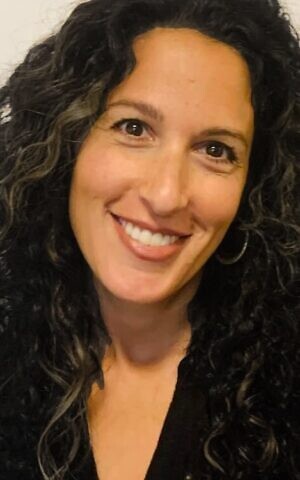 A professor at Duquesne University School of Law and co-founder of the Center for Jewish Legal Studies, Professor Rona Kaufman is “widely recognized as an expert in gender and the law and civil rights,” her nomination reads. “She has brought that expertise to one of the most pressing and underdeveloped areas in legal academia: the study of antisemitism and its modern manifestations.
“Through her scholarship, teaching, and institutional leadership, she is helping define antisemitism as a serious subject of legal inquiry, one that demands doctrinal clarity, historical grounding, and real-world application. … She has emphasized that the rise of anti-Zionism within academic spaces is not merely rhetorical — it has real legal consequences, influencing how discrimination claims are evaluated and often dismissed. Recognizing the absence of a coherent body of scholarship addressing these issues, she co-founded the Center for Jewish Legal Studies to build exactly that: an intellectual infrastructure capable of integrating doctrine, history, and lived experience into a durable field of study.
Her leadership of the national Law and Antisemitism Conference further reflects this mission. The conference has become a central forum for developing this emerging field — bringing together scholars, litigators, and policymakers to engage rigorously with the legal dimensions of antisemitism and to build a community dedicated to this work.
How long have you lived in Pittsburgh?
In one sense, since 2010 — I moved here to join the law faculty at Duquesne and never left. But my Pittsburgh story really begins in 1993, when I arrived as an undergraduate at Pitt. Those years shaped me. I found a second home with Shmuel and Sara Weinstein at what is now Chabad on Campus, I served as a USY advisor at Beth Shalom, and I taught Hebrew school at both Rodef Shalom and Tree of Life. My love for Squirrel Hill took root then and has only deepened in the decades since. Coming back in 2010 felt less like moving to a new city than returning home — and there is little I’m more grateful for than having raised my children in this beautiful, tight-knit Jewish community.
What advice would you give your 16-year-old self?
So much. Learn Torah, and learn it young, so that it can be your compass for the rest of your life. Find the work that sits at the intersection of your particular gifts and your deepest passions, and do that. Surround yourself — always, and only — with the people you love most. Do yoga. Eat well. And don’t be afraid to use your voice, or to stand unapologetically for who you are and what you believe. The truth is, these are all things I do now; it simply took me years to arrive here. If I could, I’d spare her some of that wandering. But I’ve also made my peace with the fact that the wandering is the point — that becoming who you are is meant to take a whole life.
What does tikkun olam mean to you?
For me, tikkun olam is a Jewish value — not a secular one — and I hear it as a specifically Jewish call. The phrase means “repair of the world,” and its roots are in our texts, not in a generic ethic of doing good. The repair is inseparable from Judaism and from God; it is about ordering the world toward the Divine, not toward whatever any of us happens to decide is good. We say it in the Aleinu, at the close of every prayer service: l’takken olam b’malchut Shaddai — to repair the world under the sovereignty of God. The phrase lives in the Mishnah, too — mipnei tikkun ha-olam, “for the sake of the repair of the world” — where the rabbis enacted concrete laws (Gittin, chapters 4–5) to keep society just and functioning: protecting the vulnerable and redeeming captives, for example. And in the Kabbalah, tikkun is the gathering of the divine sparks scattered when the vessels shattered, a cosmic repair we accomplish through the mitzvot. So I push back, gently but firmly, on the way the phrase has been universalized into “do whatever you’d like to make the world better.” That is not what it means. Tikkun olam is the obligation to repair the world according to Jewish thought, through the commandments we were given. As it says in Pirkei Avot, “It is not upon you to complete the work, but neither are you free to desist from it” (Avot 2:16) — and, especially as I get older, I realize that the specificity is what gives it meaning.
If you could have dinner with one person — living or deceased — who would it be and why?
My savta, Etel Weinberg. She was a Holocaust survivor, and I held my questions back — I didn’t want to reopen wounds or cause her pain, so I listened to whatever she shared, but I didn’t ask too many questions. I would love to sit with her now and ask everything I never asked: what her life was like before and during the war, how she understood her place in the world, the roles Judaism, secularism and Zionism, and feminism, played in her upbringing, what it meant to be a Jewish girl and young woman in the 1920s and 1930s. I’d ask her about making aliyah in 1948 and about immigrating to the United States later in life. My grandmother was extraordinarily intelligent, independent and capable at a time when women didn’t have the opportunities to reach their full potential. I wonder who she might have become had she enjoyed the opportunities I’ve had. I’d ask her about feminism, motherhood, marriage, love, and friendship. Even as a young child, I felt a deep connection to my savta. I think that if I knew the answers to all the questions I never asked, that connection would be even deeper and it would be a source of insight into my own life as well.
Eric Lidji
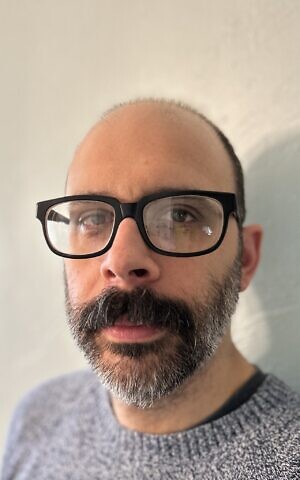 Eric Lidji is the director of the Rauh Jewis Archives at the Senator John Heinz History Center. Since 2017, he has gathered and maintained the history of the Jewish community of western Pennsylvania, making it freely available throughout the world. He curates “The Jewish Encyclopedia of Western Pennsylvania” and oversees the Rauh Jewish Archives Small Towns Jewish History Project. He also initiates and runs extensive programming and outreach in the greater western Pennsylvania area.
“In addition to his book about Rabbi Walter Jacob and his pivotal role in preserving, protecting and archiving materials” following the Pittsburgh synagogue shooting, “his efforts to reach out to the broader western Pennsylvania Jewish and non-Jewish groups in our region makes him truly worthy of this recognition,” wrote one of his nominators.
How long have you lived in Pittsburgh?
I moved to Pittsburgh in October 1995. The week I arrived happened to be the week when the Torah portion of Noah is read. There was a major rainstorm on Friday night. Everyone got to shul wet from the knees down.
What advice would you give your 16-year-old self?
Pay close attention to everything and take good notes.
What does tikkun olam mean to you?
Everyone wakes each day to a world filled with opportunities to help, right at arm’s reach. It can be easy to miss these moments, and easier still to ignore them. Helping others requires perceptiveness, creativity and even some risk taking. When someone makes the effort, that to me is tikkun olam.
If you could have dinner with one person — living or deceased — who would it be and why?
Every night when I have dinner with my family, I feel grateful to have them in my life from day to day. Any unexpected guest at the table is a bonus.
Fraidy and David Nadoff
Fraidy and David Nadoff have “made service not an occasional act, but the very rhythm of their lives,” writes their nominator.
“Their generosity begins with the most basic essential human need: nourishment. Week after week, they stock a public walk-in freezer with kosher food, ensuring that individuals and families facing food insecurity can find dignity, sustenance and relief. Their home, too, is a haven. They regularly welcome boarders who need a kosher Shabbos environment or a place for out-of-towners to stay while caring for loved ones in the hospital, offering warmth, stability and genuine hospitality. This has often resulted in their acquiescing to being surrogate parents for those children needing a temporary break from a disruptive situation in their own home.
“They prepare and deliver home-cooked kosher meals to those who would otherwise do without. Fraidy crafts professional-quality sheitels, often below her cost, for women battling cancer who cannot afford them, restoring comfort during unimaginably difficult times. David builds caskets for families unable to bear the cost, honoring the deceased with dignity and compassion. …With humility and respect, they drive to New York airport — often on short notice and at personal inconvenience — to transport the deceased so they may be buried in Israel according to their wishes.
“When a person’s home needs a critical repair and they are without adequate funds, David steps in, tools in hand, asking for nothing in return. Several times he has employed the unemployed who are desperate for income but even more in need of self-esteem.”
How long have you lived in Pittsburgh?
David has been living in Pittsburgh his whole life and Fraidy has been here since the early 1980s.
What advice would you give your 16-year-old self?
Pay attention to your life today because much of your experiences become the blueprint for your future.
What does tikkun olam mean to you?
Each of us has the obligation to bring awareness of G-d into this world in his own unique way.
If you could have dinner with one person — living or deceased — who would it be and why?
There is always one more question I could ask my mother.
Julie Paris
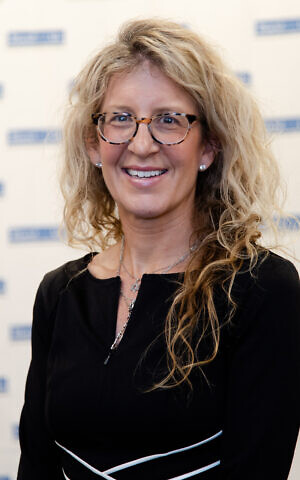 Julie Paris is the Mid-Atlantic regional director of StandWithUs. “In an era defined by unprecedented challenges to Jewish identity and safety, Julie has been more than a leader; she has been a tireless strategist, an educator, and a courageous defender of our community’s right to exist without apology,” her nomination reads.
“When a divisive anti-Israel referendum threatened to appear on the 2024 ballot, Julie didn’t just voice opposition—she mobilized. Through StandWithUs, she worked in lockstep with legal experts and local coalitions to ensure that the discriminatory policy initiative was defeated before it could fracture our city — not once, but twice!
“She has mentored dozens of Pittsburgh students, giving them the knowledge needed to face hostility on campus. By providing these young leaders with facts, history, and the confidence to speak their truth, she is ensuring the continuity of Jewish pride in western Pennsylvania.
“From her advocacy at the East End Food Co-op to her collaboration with the District Attorney’s office on antisemitism training for law enforcement, Julie has proven that she will show up wherever Jewish people are being marginalized. She understands that silence is not an option.”
How long have you lived in Pittsburgh?
I was born and raised in Fox Chapel and moved back to Pittsburgh in 2004. I’ve been living in Squirrel Hill ever since!
What advice would you give your 16-year-old self?
I’d tell her to trust her gut, throw herself into what she loves, and stop worrying about pleasing everyone. I was so lucky to have parents who backed me completely and gave me the space to see the world. Having that support gave me the safety net and confidence to step outside my comfort zone, think bigger and truly discover who I was.
I’d also tell her to embrace the unknown, stop letting the fear of failure hold her back, travel every chance she gets, and get to Israel sooner! That was around the time I first started feeling a real pull toward the Jewish community, so I’d tell her to lean right into those roots; that’s where her purpose lies. Oh, and I’d definitely tell her to buy Apple stock, and not wait so long to try guacamole and Indian food!
What does tikkun olam mean to you?
To me, tikkun olam (repairing the world) is a call to leave our communities better than we found them through our daily choices. It means taking responsibility, fighting indifference with education, and talking to one another.
I’ve always seen Israel, a country built by refugees and survivors, as a living example of this. It’s a place that takes its own hard-won lessons and turns them into tools to help the world, whether through medical breakthroughs, agricultural tech, or disaster response. It shows us what repairing the world looks like when put into practice.
If you could have dinner with one person — living or deceased — who would it be and why?
On a personal note, it would be my mom, Dede Fink (z”l), who passed away five years ago. She was my inspiration and the person who taught me what unconditional love and strength look like. If I could have just one more dinner with her, I’d love to tell her about my family, share the work I’m doing today and just feel the warmth of her presence again.
On a broader level, inspired by the work I’ve done over the last 25 years, I’d love to have dinner with Golda Meir, Israel’s first female prime minister. She stood strong in the face of immense international pressure and remains a symbol of resilience, wit, and conviction. She lived by a quote that was also a motto my mom lived by: “Pessimism is a luxury that a Jew can never allow herself.”
Bassie and Rabbi Chezky Rosenfeld
Bassie and Rabbi Chesky Rosenfeld are the founders and directors of Our Giving Kitchen, a volunteer-powered nonprofit based in Squirrel Hill, dedicated to addressing food insecurity. Recognizing the stark disparities in food access and founded during pandemic, “Chesky and Bassie have built an organization grounded in compassion, dignity and action,” their nominator writes.

“At any given cooking session you can hear upbeat, inspiring Jewish music mixed with talking and laughing from volunteers of all ages from across Pittsburgh as they come together to prepare fresh, nutritious meals which are distributed through a discreet and dignified storefront, ensuring that neighbors in need are supported with both care and respect.
“OGK is driven by their belief that giving has a transformative ripple effect. By creating hands-on, meaningful volunteer opportunities, the organization fosters a lasting culture of Tikkun Olam with generosity and purpose. OGK is a place where differences fade, unity grows, and a shared commitment to helping others takes center stage.
“In 2025 OGK mobilized over 1,850 volunteers and more than 25,000 meals — an extraordinary testament to the impact of Chesky and Bassie’s leadership.”
How long have you lived in Pittsburgh?
Chezky: I was born and raised in Squirrel Hill.
Bassie: I moved here about 14 years ago after we got married.
What advice would you give your 16-year-old self?
Take advantage of the time you have during these years to learn and grow as much as you could and don’t be afraid to take on big challenges before you feel ready.
What does tikkun olam mean to you?
Tikun olam means helping reveal the goodness and holiness that already exists in the world. We do that through acts of kindness and inspiring others to do the same.
If you could have dinner with one person — living or deceased — who would it be and why?
Rabbi Levi Yitzchak of Berdichiv, who was famous for seeing the good in every person. I would love the opportunity to learn from him how to see every person through that lens.
Kelly Schwimer
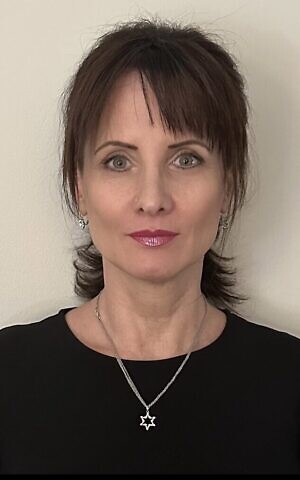 Kelly Schwimer has focused her career in Jewish communal service, including roles with the Jewish National Fund, the Pittsburgh Jewish Chronicle, and now as executive director of the Jewish Cemetery & Burial Association of Greater Pittsburgh, where she has served since 2022.
“Kelly leads with vision, compassion and an unwavering commitment to Jewish values in work that is essential yet often overlooked,” her nominator wrote. “She is deeply passionate about preserving the dignity and sanctity of Jewish cemeteries across southwestern Pennsylvania, ensuring each is maintained according to the highest standards of Jewish law and custom. Her impact extends beyond Pittsburgh to communities including Beaver Falls, Hopwood, New Castle, White Oak, McKeesport and Johnstown.
“Under Kelly’s leadership and vision, the JCBA has moved toward a sustainable, forward-looking model. She has strengthened organizational infrastructure that includes a team of talented staff and a dedicated working board of directors, enhanced the unrestricted endowment, and prioritized engaging youth and young adults — recognizing they will steward this sacred mission into the future. She also established the Orphaned Cemetery Fund to care for abandoned sites and is currently launching a paid internship program to cultivate the next generation of Jewish communal leaders.”
How long have you lived in Pittsburgh?
I’ve called Pittsburgh home for nearly my entire life. The only exception was a wonderful 10-year chapter in the Detroit area, where I built my career before returning home. Pittsburgh has always been where my heart, my family and my commitment to serving the Jewish community have been rooted.
What advice would you give your 16-year-old self?
I would tell my 16-year-old self: “Through all the highs and lows, the victories and disappointments, the joys and sorrows, everything is going to be OK. You are stronger and smarter than you think you are.”
What does tikkun olam mean to you?
To me, tikkun olam is sharing your inner light with others every day, even in the smallest ways. Just as importantly, it’s helping people recognize the light within themselves. When we lift one another up, we don’t just change individual lives, we help repair the world, one act of kindness and one human connection at a time.
If you could have dinner with one person, living or deceased, who would it be and why?
Without question, my older brother. He was just 31 years old when he died tragically, and I was only 23. We were robbed of decades we should have shared. As I’ve grown older, I’ve realized how much we have in common, and I’m convinced we would have become the closest of friends. I’d treasure the chance to hear about the life he never got to live and to tell him about mine. Without a doubt, we would do things we would never want our parents to know about. My only hesitation is knowing how difficult it would be to say goodbye all over again. PJC
comments