
Banned Book Bingo shines spotlight on censorship
'It will be fun-heavy with a dash of education'
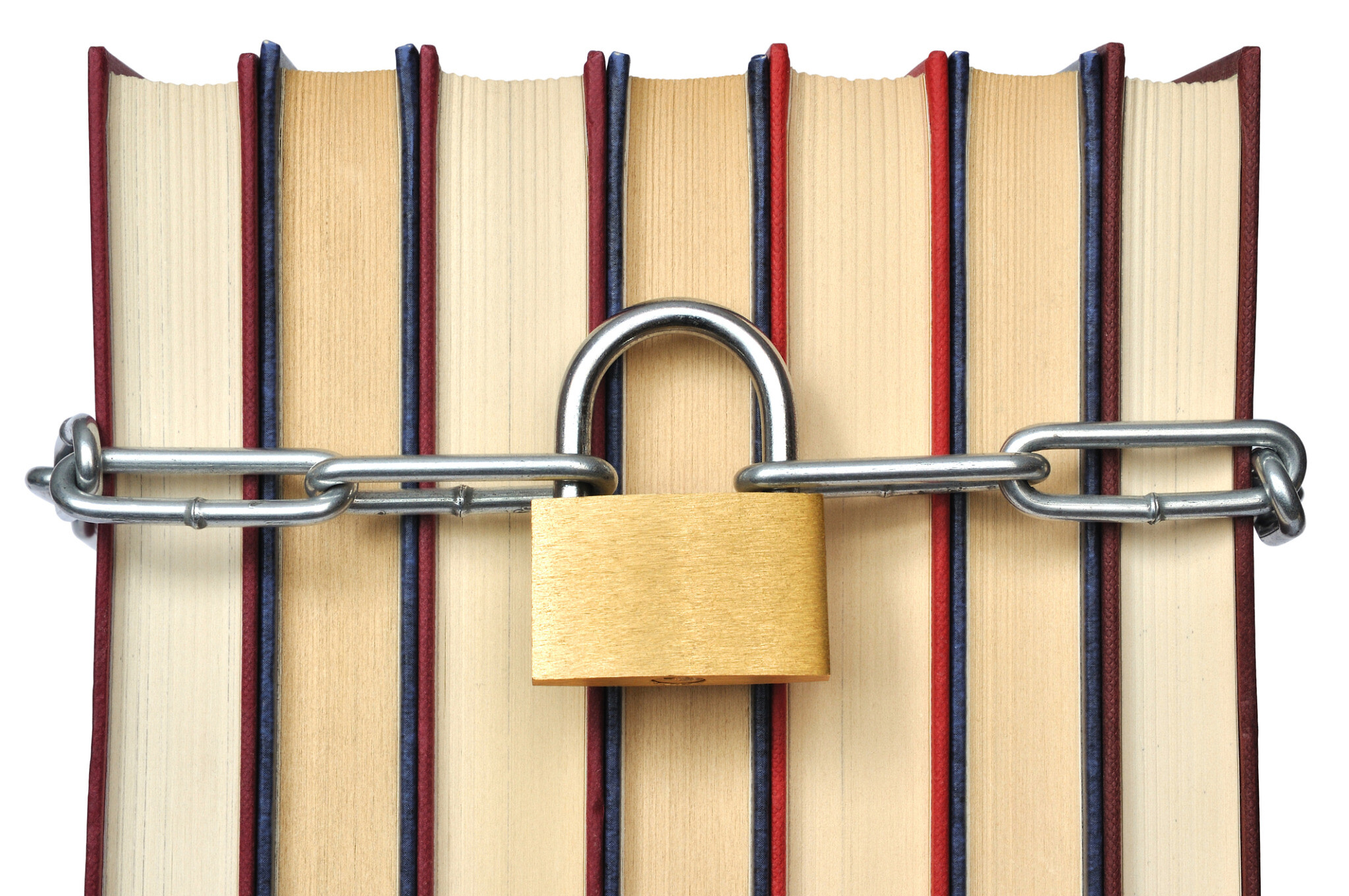
Jews for a Secular Democracy will be calling out literary censorship Sunday, Nov. 23, when it brings Banned Book Bingo to the Carnegie Library of Pittsburgh in Squirrel Hill.
As part of the Jewish Women and Religious Freedom in Pittsburgh Project, the event will use a parlor game to make a serious point — that a surge in banned and challenged books at public schools and libraries over political and religious ideologies is an ever-increasing threat to First Amendment rights.
The family-friendly bingo will be free and open to the public, with registration required.
“It will be fun-heavy with a dash of education,” said Jews for Secular Democracy national director Katie Reiter, of Tucson, Arizona. “We want to put the issue of book bans in front of people, especially young families, in an easy, accessible way.”
The game will be played like traditional bingo, with prizes, except that banned book titles instead of numbers will be called. Between rounds of marking their cards, participants will hear brief explanations of why specific titles were targeted, as well as how communities can stand up to book bans by local school boards and other entities, Reiter said.
As a case in point, she noted that a controversial new library policy supported by the board of Pine-Richland School District, which opponents equated to book bans, was overturned after the Nov. 4 election.
In the Upper St. Clair School District, a battle was waged in 2021 over “Just Mercy,” a book about racial bias within the criminal justice system that critics decried as pushing critical race theory.
Banning books can be unconstitutional and cuts to the core of the First Amendment, which guarantees fundamental freedoms, including religion, speech, and the press, asserted Alliyson Feldmann, who lives in Upper St. Clair, and is an on-the-ground organizer for Jews for Secular Democracy.
“Banning books is the beginning stage of fascism,” she said. “We want people to understand this and fight against it.”
Feldmann helped plan the upcoming bingo and said hundreds of titles will be included in four games. They range from the Holocaust-related “Maus: A Survivor’s Tale,” and “Anne Frank’s Diary: The Graphic Adaptation,” to “1984” (banned for anti-government and sexual content), and “The Handmaid’s Tale” (banned for negative depictions of Christianity and profanity).
They represent a fraction of the 2452 unique titles that were challenged in 2024, according to census data from the American Library Association.
That number is an eight-fold increase over the 273 titles annually challenged, on average, from 2001 to 2020.
Targeted books typically relate to sexual identity, race, racism, sexuality, profanity and graphic violence.
Pressure groups and government entities involving elected officials, board members and administrators initiated 72% of demands to censor books in school and public libraries, while parents accounted for 16% of censorship demands, the American Library Association reported.
Pennsylvania has more banned books than any other state except Florida or Texas, according to a 2022 report by PEN America, a century-old nonprofit that advocates for literary freedom and free speech.
PEN America identified at least 50 groups involved in pushing for book bans at the national, state, or local levels, with some sharing lists of targeted books among themselves and using a variety of tactics to further their agenda. They include “swarming school board meetings, demanding newfangled rating systems for libraries, using inflammatory language about ‘grooming’ and pornography, and even filing criminal complaints against school officials, teachers, and librarians,” PEN America reported, noting the majority of groups appear to have formed in 2021.
“Some of the groups espouse Christian nationalist political views, while many have mission statements oriented toward reforming public schools, in some cases to offer more religious education,” according to PEN America.
In at least a few documented instances, including in Pennsylvania, the individuals lodging complaints about books did not have children attending public schools when they raised objections, PEN America reported.
For Stefanie Maclin-Hurd, a librarian and the mother of a young child, targeting books over politics and faith is deeply concerning.
Maclin-Hurd, of Canonsburg, is on the steering committee of the Jewish Women and Religious Freedom in Pittsburgh Project and will emcee the bingo.
“If you look at commonly targeted books, they show non-Christian holidays, queer families, biracial families, main characters who aren’t white, or they teach about things like menstruation and sexuality,” she said. “But books are also banned for showing history graphically, as in ‘Maus,’ where the suicide of the main character’s mother is described in detail.”
The expectation is that such books are being taught responsibly in age-appropriate curricula, but if a parent objects, she said, they can explore options, other than bans, with teachers and principals.
“Heavily faith-based groups think that if they need to protect their children from being ‘indoctrinated’ because ‘Oh, this character uses same-sex pronouns’, then all children should be protected.
“But they don’t get to decide what my child does or doesn’t read,” Maclin-Hurd said. “That’s up to me.”
Her hope is that bingo participants will be made more aware of literary censorship, “and if they encounter it in the wild will say, ‘Maybe this isn’t something we’ll accept.’”
Literary censorship has particular meaning for Jews, who are all too familiar with photographs of books being set afire in Germany during Hitler’s rise to power, Reiter said.
“We know what happens when one religion is favored over another in public policy and education. We know the ending of that story.
“If you start banning books, you go down a slippery slope,” she said. “It becomes a slow drift to the destruction of our democracy.”
The bingo is being sponsored by the Jewish Women’s Foundation of Greater Pittsburgh, underwritten, in part, by trustee Nancy Weissman in memory of her mother-in-law, trustee Jackie Wechsler. Co-sponsors are the National Council of Jewish Women – Pittsburgh, and Pittsburgh Women for Democracy.
“The bingo is a welcoming way to capture a broad audience for a serious topic,” said Judy Cohen, executive director of the Jewish Women’s Foundation. “We want to get more community engagement so people can use their voices to effect change.”
Registration for the event can be found at bit.ly/bannedbingo. PJC
Deborah Weisberg is a freelance writer living in Pittsburgh.
comments