
16 years in Venezuela: A Jewish story of faith amid fear
Two realities coexisted: extreme insecurity and a deeply supportive community

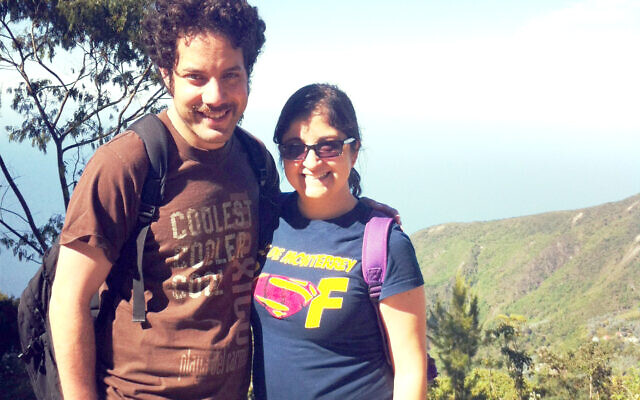
My two brothers and I were born in Mexico City. My older brother, Yair, was born in 1972; I followed in 1981, and our younger brother, Dany, was born in 1983. In 1991, when I was 10 years old, Yair made a decision that would shape the rest of his life: He made aliyah to Israel. There, he became a rabbi, built a family and put down roots. He married in 1999, and in 2001 he welcomed his first child, his daughter Miriam.
I later made my own journey north. In 2016, I moved to Pittsburgh with my husband, who came to pursue a doctorate at Carnegie Mellon University. Recently, I had a long and intimate conversation with Yair. An Israeli citizen at the time, he spent 16 years serving as a rabbi in Caracas, Venezuela, from 2005 to 2021. As he spoke, his memories unfolded into a portrait of Jewish life in Venezuela and of a country in the midst of profound collapse. He left Venezuela during the COVID outbreak and now lives in Netivot, Israel, but carries with him the meaning of those years.
The main Sephardic community in Venezuela is the Asociación Israelita de Venezuela, and the main Ashkenazi community is the Unión Israelita de Caracas. Other smaller communities include Maguen David (Orthodox), Bet Shmuel, Or Torah (serving Syrian, Halevi Jews) and Bet El. My brother was part of the Maguen David synagogue. Together, these communities maintained a network of institutions, traditions and mutual support that sustained people even in the most difficult moments.
But the country’s overall situation was devastating. According to my brother, the government turned into an authoritarian regime, changed laws to remain in power indefinitely, repressed protests, imprisoned opponents and generated fear. Government officials took opponents to subterranean jails; nobody knew what happened there. There were open expressions of antisemitism: invasions of synagogues, hateful graffiti and symbolic acts of aggression against the Jewish community. Meanwhile, those in power lived in luxury, while ordinary people survived by standing in endless lines just to obtain basic goods. Some people, including those who supported the government, died of starvation, while others died in hospitals because there was not enough medicine available.
Insecurity also shaped daily life. Caracas became one of the most dangerous cities in the world. Many buildings installed electric fences, the sound of gunshots became common and violence was constant. My brother often heard shootings very close to his home; fear became part of his everyday routine.
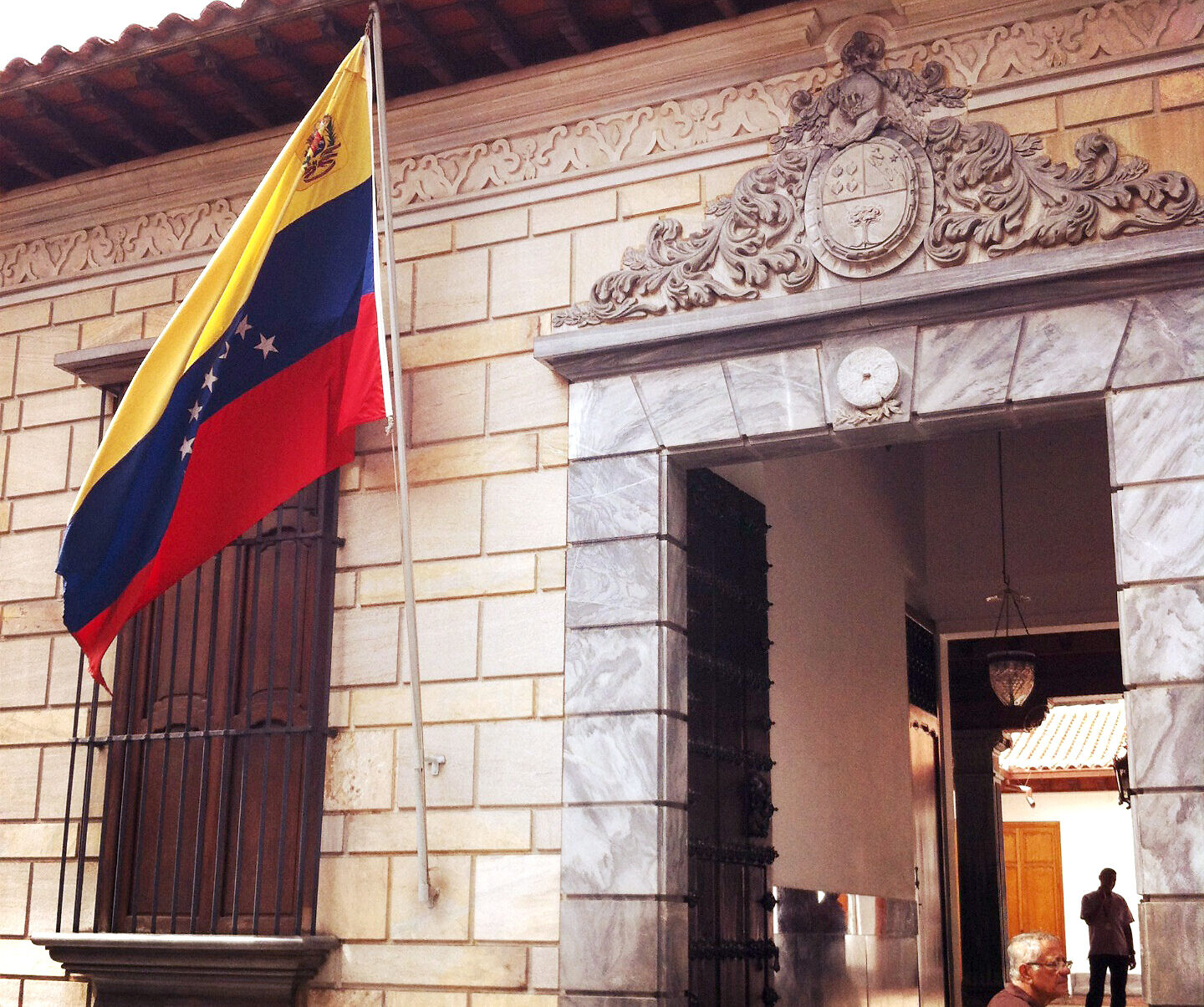
Yair’s second son, Abraham, was born in Israel in 2003, but when he was 18 months old, the family moved to Venezuela. Israel’s embassy in Venezuela ended operations in 2009 when then-President Hugo Chávez expelled the Israeli ambassador and diplomatic staff, severing diplomatic relations. For a time, there was an Israeli consulate inside the Canadian embassy, which provided a certain sense of security. However, during the pandemic the consulate was also shut down. Abraham’s passport needed to be renewed, but traveling to Colombia or another country was impossible because the borders were closed. Eventually, the passport was renewed at the Israeli embassy in Panama and arrangements were made for someone to send a clothing package from Panama, hiding Abraham’s passport inside the box. After that, the family returned to Israel. It was a period filled with anxiety and uncertainty. Yair’s third son, Aharon, was born in Venezuela in 2006.
The community had to create its own protection systems. After a certain hour, it was dangerous to go out; people organized in groups, and there was coordination with Israeli security specialists to accompany those going to and from the synagogue, especially on Shabbat.
At the same time, two realities coexisted: extreme insecurity and a deeply supportive community. Weddings, bar mitzvahs, brit milot and classes continued to take place. There was support, warmth and chesed. However, poverty reached terrible levels. My brother saw entire families eating from garbage bins — painful scenes that gradually became commonplace. Part of the community organized aid efforts, distributing food whenever possible. My brother says that one day he saw a girl who looked like a university student and was well-dressed; she was looking for food in a garbage bin, and he gave her a plate of food. After Shabbat, people in his synagogue put their Shabbat leftovers on plates to give to the people on the streets.
The Jewish community was shrinking dramatically. Many families emigrated to Miami, Panama, Argentina, Mexico, Israel and Spain. From nearly 20,000 Jews at one point, by 2021 — when my brother finally left Venezuela — only around 2,000 to 4,000 remained. Even so, community life never disappeared entirely: synagogues, schools, religious activities and social support continued to function.
The government promised prosperity through oil, but that promise was never fulfilled. Some individuals managed to get by thanks to income in dollars, but overall, the population lived in severe hardship. In my brother’s words regarding the capture of Nicolás Maduro: “What President Trump did was a mitzvah, an empathy for humanity.”
Today, Venezuela still has Jewish institutions and community life, although much smaller. What is clear from my brother’s account is that Venezuelan people are warm, kind and dignified; the suffering came from a system of government that led the country into a tragic situation. PJC
Yafa Negrete is a graphic designer and visual artist whose work explores identity, migration and Jewish experience through drawing and design. She lives in Pittsburgh.
comments