
With federal grant, Pitt initiative aims to move campus dialogue beyond polarization
While people are widely urged to celebrate “diversity,” that often does not extend to diverse views. The new program aims to broaden understanding and acceptance.

Although calls to promote civil discourse on college campuses have intensified since Oct. 7, 2023, the University of Pittsburgh began working on the issue long before then.
Now, Pitt’s Center for Governance and Markets will be able to strengthen those efforts through a four-year, $2.7 million grant from the U.S. Department of Education.
The new initiative, called Pluralism360, is aimed at bolstering civil discourse not only across the university, but across the region.
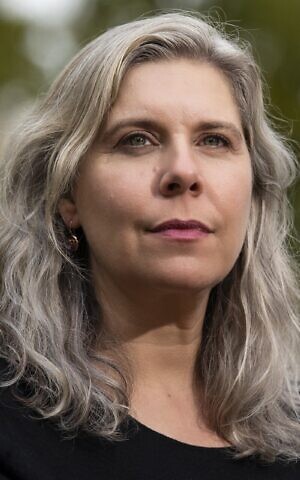
The program will be led by Jennifer Brick Murtazashvili, the founding director of Pitt’s Center for Governance and Markets and a professor at Pitt’s School of Public and International Affairs.
Murtazashvili has been working on issues related to civil discourse since she was in graduate school.
“For me, it’s a method of how you think about the world,” said Murtazashvili, a member of Congregation Beth Shalom. “I work on different topics, but what I try to bring to everything that I do is what we call ‘value pluralism,’ or ‘viewpoint diversity.’”
Recent events have amplified the need to improve civil discourse and invest in more substantive efforts, she said.
As an example, she pointed to typical programs that bring two people with opposing views together, where “everybody kind of walks away and feels good that they were exposed to different perspectives.”
That doesn’t go deep enough, she said.
While it is not uncommon for people to change their views about a particular issue, she explained, “changing your values is not as frequent. And when people have values that are very clearly important to them, and they’re in a room with someone who has very, very different values that don’t seem to reconcile, how do you deal with this?”
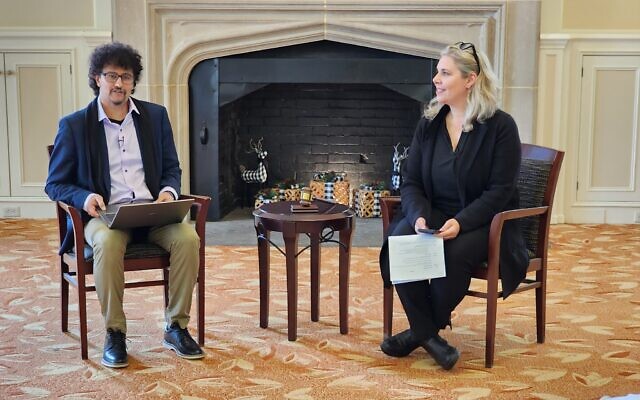
That’s the meat of the issue, Murtazashvili said, and something she has focused on through various undertakings, including the Compassion Project, in which she and Abdesalam Soudi, an associate professor in Pitt’s linguistics department, co-moderated conversations centered around open and compassionate dialogue in the months following Oct. 7.
Since Oct. 7, she also has worked with the University of Haifa on issues of religious pluralism in Israel, concerning how societies govern themselves when they’re polarized.
“And not just polarized on who the next presidential candidate will be,” she said, “but really on different values, ranging from views on LGBT issues, or what is the role of government in society, or religion.”
Striving to move beyond polarization at the university level is important, Murtazashvili said. While people are widely urged to celebrate “diversity,” that often does not extend to diverse views.
“To me, a lot of the problems that we’ve seen on our campuses — over the past two years especially — that have put this into stark contrast, is that there isn’t a lot of nuance,” she said. “There’s a lot of loud voices who tend to dominate, and that crowds out a lot of other people. We want to bring those other voices to center university life around conversations without the thinking that you’re going to convince someone else, but instead understand where they’re coming from.”
Pitt’s new program is called Pluralism360, Murtazashvili said, “because we’re providing kind of a wraparound for the student experience, and meeting students where they are.”
The effort will engage students online, in classrooms, in extracurricular experiences and through community partnerships. The project will support several initiatives in the David C. Frederick Honors College, including visiting scholars who will teach courses in politics and philosophy and discuss contested issue.
Pluralism 360 is intended to eventually reach beyond the university community and across Pennsylvania, Ohio and West Virginia through two complementary regional networks. One will be a network of faculty working on civil discourse and bridge building, Murtazashvili said, and one will be a regional civic leadership network of bridge builders.
She stressed that the most common model of bridge building — uniting people of different identities who share political or social values — “is not sufficient for our current moment.”
“At different periods in our history, this may have been enough,” she said. “But at this time, it is imperative that people who share very different values begin to get together and work things out. This is the kind of bridge building — or value pluralism — that our time calls for.”
The intention, Murtazashvili said, is to “create a regional network of civic leaders who are really focused on value pluralism.”
“We’re going to engage with them, and then we’re going to give small grants to students and faculty to work with some of these organizations on projects,” she said. “So students are going to get hands-on experience navigating the complexity of the real world with people who are trying to tackle issues, to see that it’s not black and white.”
The project is especially resonant as the United States approaches its semiquincentennial, she said. “We want to celebrate the pluralism and the democracy that is this country at a time when people from the right and the left feel that it’s in peril.”
She hopes to engage interested community members, civic organizations and local political leaders, and to assemble a “panel of people just to show students how to do it.”
Murtazashvili was awarded a Fulbright Distinguished Scholar fellowship, which will take her to the University of Tel Aviv where she will focus on issues related to the Abraham Accords. She will work remotely on Pluralism 360 until she returns to Pittsburgh in a few months.
Pluralism 360 will advance Pitt’s longstanding commitment to advance civil discourse, said Carissa Slotterback, dean of the School of Public and International Affairs.
“There are divisions across our communities,” she said. “In many cases, we don’t have day-to-day opportunities to be interacting with people who might think differently, and there are barriers to doing that. And so we really wanted to be intentional and proactive in thinking about the ways that we can build capacity across the university — for students, for staff, for faculty — to engage across difference.” PJC
Toby Tabachnick can be reached at ttabachnick@pittsburghjewishchronicle.org.
comments