
The origins of Purim
“These days are recalled and observed in every generation: by every family, every province, and every city…”
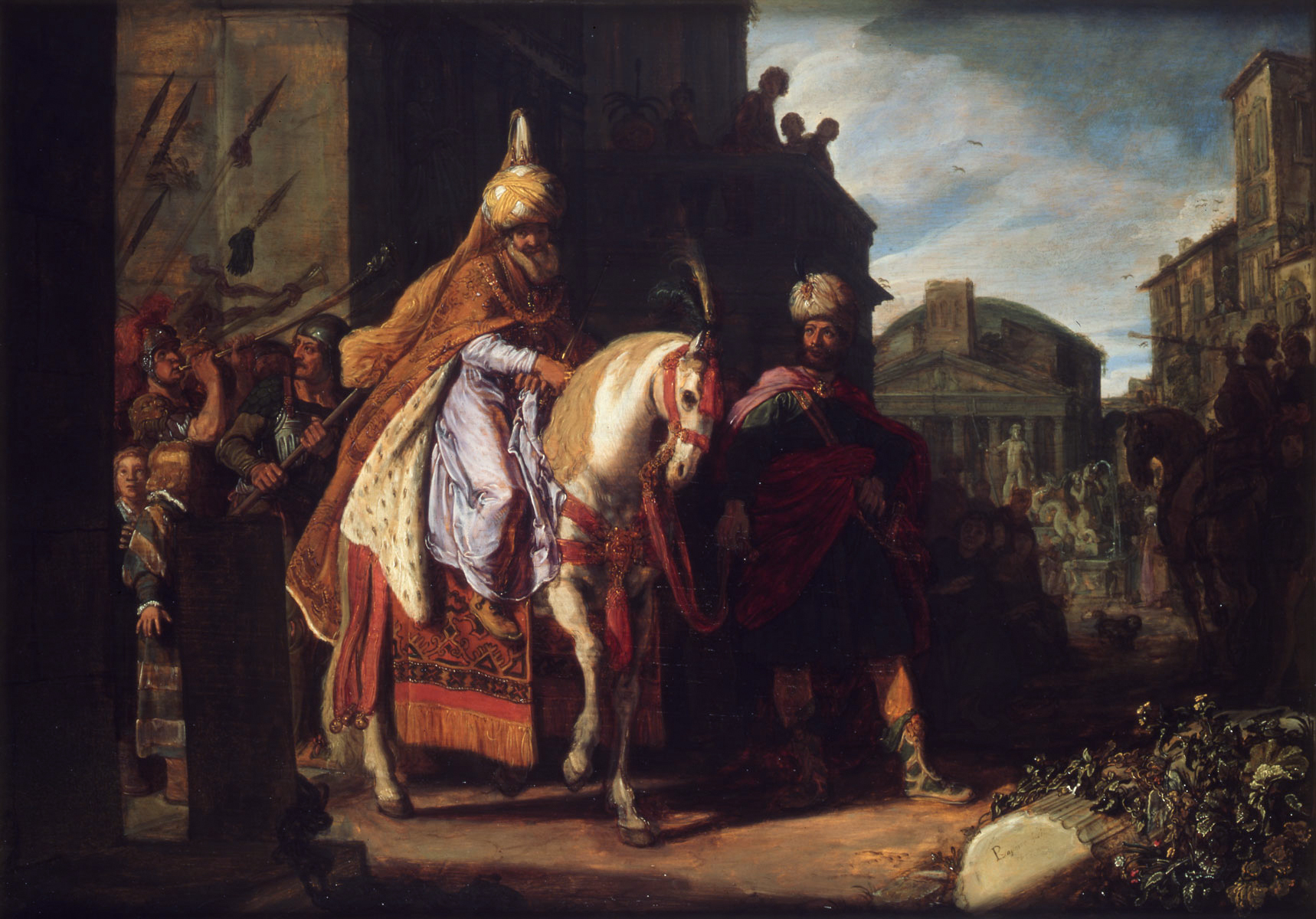
What is a holiday like Purim doing on the Jewish calendar? What is a book like Esther doing in the Tanakh? Was the holiday really established the way that the book of Esther describes, following intrigue at the Persian court and the last minute intervention of a Jewish queen that saved her people from massacre? (And let’s not forget the massacre of Persians that happens instead.)
The story itself belongs to a genre that stretches back to Joseph’s time in Egypt, that of the Jewish courtier ensconced in a foreign court, and it is a genre that continues today wherever a Jew is portrayed as a fish out of water in the Diaspora and ends up in a position of influence. Another early story of this type, Daniel, has its protagonist trying to survive in the court of Babylon, and some scholars have guessed (because we can only guess) that the story of Esther began circulating around the same time as Daniel, perhaps during the fourth century BCE. The author of Esther was also familiar with the conventions of Greek literature at the time, which are replete with disguised identities, rivalries at court, and depictions of the Persians as decadent and ridiculous. However one understands the historical dimensions of the story of Esther, it has been retold in ways that Jewish audiences at the time would have recognized, and been buried under comedy and the carnivalesque.
Some scholars suggest that a spring festival involving intoxication and excess was probably already popular in the Persian Empire in the sixth or fifth centuries BCE, and Jews living there took part in it. Over time, these Jews may have added their own touches to it, and at some point modified an existing story associated with the festival — or created their own — that included Jewish protagonists.
Get The Jewish Chronicle Weekly Edition by email and never miss our top stories Free Sign Up
Perhaps the downfall of the Persian Empire in 331 BCE at the hands of Alexander the Great was an impetus to Jews living in formerly-Persian lands to truly make the festival their own. Whatever the case, modern historians of Persia are divided over whether anything like the story told in Esther ever happened, even as they readily admit that whoever did write the story got many of the Persian details correct. The author also got the essence of Jew-hatred down correctly, too, and it is still astonishing to see Haman, in Esther 3:8, basically laying out the accusations against us that still appear on social media today.
There is no direct reference to Purim and its observance on the 14th of Adar until the time of the Maccabean War in the mid-second century BCE. Following the war, a holiday was instituted called Nicanor Day, which celebrated the victory of the Maccabean general, Nicanor, over the forces of Antiochus. 2 Maccabees 15:36 says that Nicanor Day was to be observed on “the thirteenth day of the twelfth month — which is called Adar in the Syrian language — the day before Mordecai’s day.” Since the writing of 2 Maccabees can probably be dated soon after the war, this passage tells us that the observance of Purim on the 14th of Adar must have been widespread in Judea at the time.
Just as Chanukah came to focus on the miracle of the oil and downplay the holiday’s militaristic context, it is assumed that Nicanor Day was looked down upon for the same reason. Eventually Nicanor Day’s proximity to Purim allowed the latter holiday to overshadow it, and it no doubt helped that, unlike the Maccabean War, the story of Esther took place in a foreign land far in the past, and that whatever was potentially subversive about it was undercut by its tone. By the eighth century CE, the 13th of Adar was given over to the Fast of Esther, and Nicanor Day disappeared from our calendar altogether.
The immediate afterlife of the story and the festival is just as fascinating: As we all know, the book of Esther never mentions God, and perhaps for this and other reasons it is the only Biblical book not found among the ascetics at Qumran. In the midrash, we are assured that Esther’s marriage to a gentile was never actually consummated, and in the Greek and Aramaic versions of the story (which are more retellings than translations), Esther makes sure to keep kosher, and mention is made of God, prayers and even circumcision. Just as we might imagine the original version of the story developing in the hands of something like a comedy troupe, with different people adding more outlandish details and double entendres, so the later retellings were embellished with more piety.
The rabbis, then, had misgivings about Purim, and yet in the century before the destruction of the Second Temple they became fastidious in its observance. According to the Talmud (Megillah 3a), the priests of the Temple were instructed to “cancel their service in the Temple and come to hear the reading of the Megillah,” and the reading of the Megillah even took precedence over the reading of the Torah. It is in the Talmud, too (Megillah 7b) where we are told to get so drunk on Purim that we no longer know the difference between “cursed be Haman” and “blessed be Mordecai.”
The Purimspiel seems to have grown out of public reenactments of the story during or just after the Roman period. These performances ended with the hanging of Haman in effigy, which often got Jews in trouble during the Middle Ages when Christian rulers assumed it was a covert way of mocking the crucifixion of Jesus. The tradition of giving food and other gifts to the poor was there from the beginning (Esther 9:22), while Hamantaschen, groggers, and much else came later, but the entirety seems to have become a proper prelude to the seriousness of Pesach, and a counterpoint to always mourning the destruction of the Temple.
Most moving of all, a midrash to Esther 9:28 (“these days are recalled and observed in every generation: by every family, every province, and every city…”) goes so far as to say that this verse means that “all the festivals will one day cease, but the days of Purim will never cease.” In other words, while the Messianic Age will have no need for Pesach or even Yom Kippur, no limit can be placed on our need for Purim. PJC
Tim Miller is a poet and writer living in Pittsburgh. He is online at wordandsilence.com.
comments