
NFL leaders urge local Black and Jewish students to build connection
Unity dinner, shared experiences, encourage young leaders to talk and grow
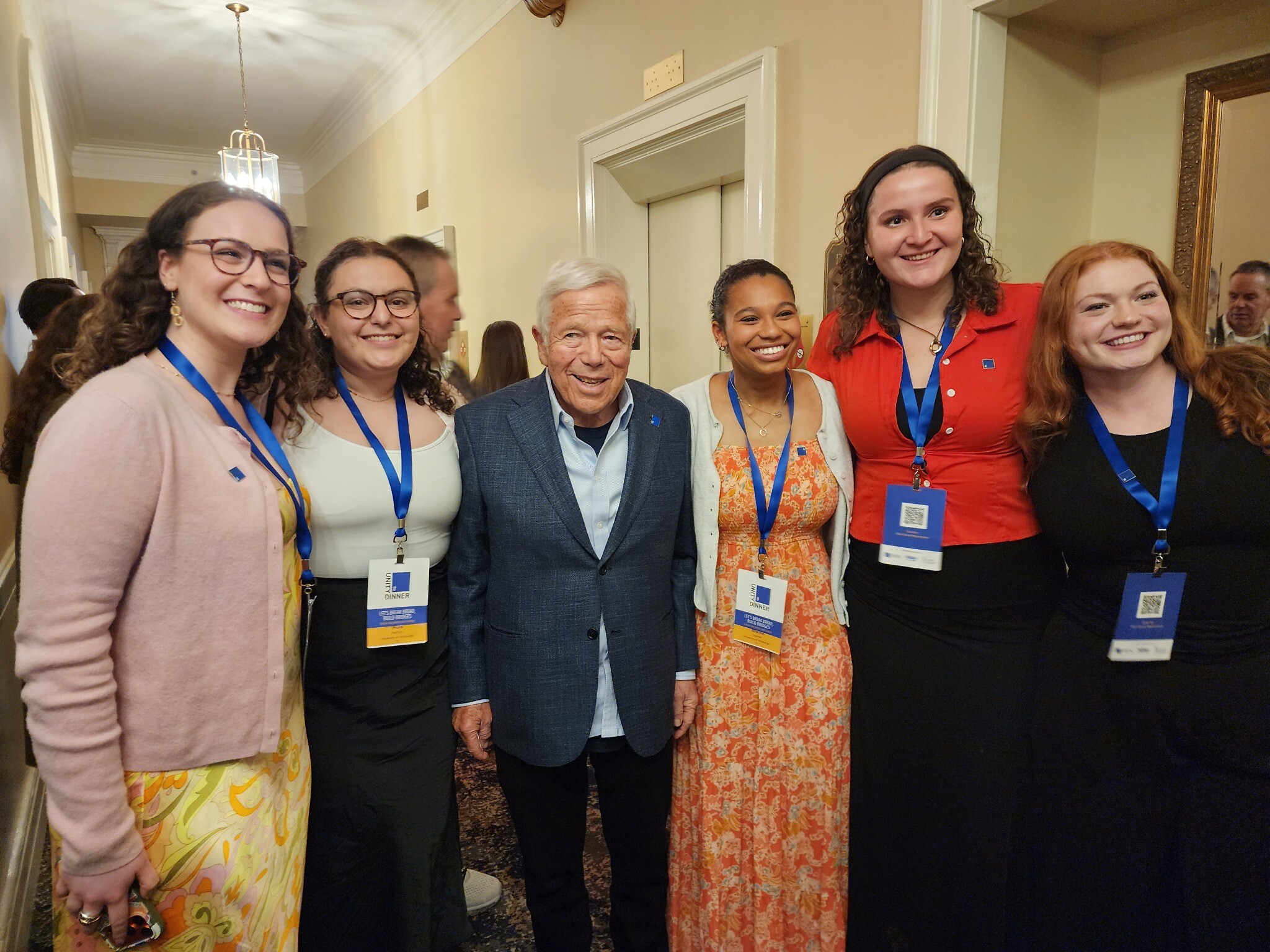
A long-term assignment was delivered to area college students inside Oakland’s University Club last week. The task, as explained by figures nationally celebrated for their athletic and civic contributions, demands patience, perseverance and using sports as a model for social progress.
Speaking to local student leaders from the Black and Jewish communities on April 22, Robert Kraft, owner of the New England Patriots, Pennsylvania Gov. Josh Shapiro and two-time Super Bowl champion Charlie Batch invoked a common trope.
“Sports is the one thing that builds community and builds those bridges,” Kraft said.
At games, fans sit together and “don’t really focus on how they worship, or whether they went to college or what their job is,” Shapiro said. “You are rooting for your team — or if you’re an Eagles fan like me, you’re rooting against the other team.”
With the NFL draft drawing an estimated 805,000 visitors to Pittsburgh, Batch saw more than a celebration of football. The former Steelers quarterback urged students to treat the moment as a starting point for lasting social change — not an endpoint.
“What are the lessons that you’re learning here, when everybody leaves Pittsburgh and now it’s up to us to continue what we’re trying to do?” he asked.

Hosted by Kraft’s Blue Square Alliance Against Hate, the fireside chat and dinner was held in partnership with the NFL, Hillel International, UNCF (United Negro College Fund) and the Steelers. Organizational representatives, including NFL Commissioner Roger Goodell, Hillel International President and CEO Adam Lehman, Stillman College President Yolanda Page, and Jim Rooney, son of the late Steelers Chairman and President Dan Rooney, attended the program and reinforced the panel’s central message of perseverance and unity.
Encouraged by the directive, student leaders sat together inside an ornamented dining room at the Henry Hornbostel-designed club, ate a kosher catered dinner and shared experiences, worries and hopes for a better future. The exercise sparked both intimate table discussions and larger group presentations.
“I know how hard it can be to stand up against hate on campus,” Molly Peters, 20, said. “Each community can be even stronger if we come together and work together.”
“Sometimes it’s easy to feel alone in this world with everything that’s going on; but when you see all these people in this room here for one same goal, I think that just goes such a long way in reassuring me that we’re all going to be OK,” Jonah Geisner, 22, said.
Students told the Chronicle the event fostered meaningful connection between peers.
“I grew up in a place where there was a lot of Jewish individuals, but I never really knew a lot about their experiences and their culture,” Temi Oladeji, 20, said. “Being able to talk about it with them today and learn more about it was really amazing.”
“This is something that I don’t get to do enough,” Avery Brown, 20, said.
Reflecting on the event the following day, Goodell praised the gathering and said, “Respect for everyone is really important in today’s world — appreciating our differences and appreciating what we can do together.”
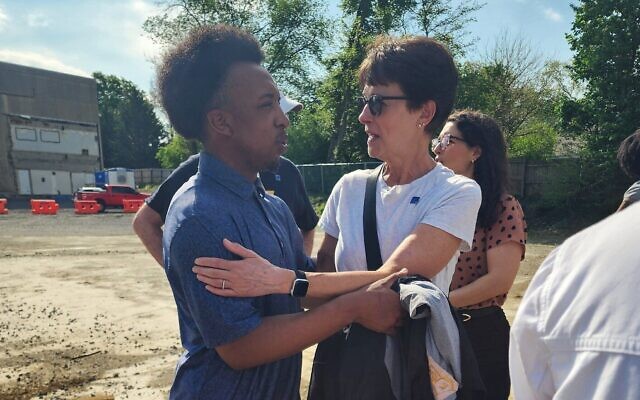
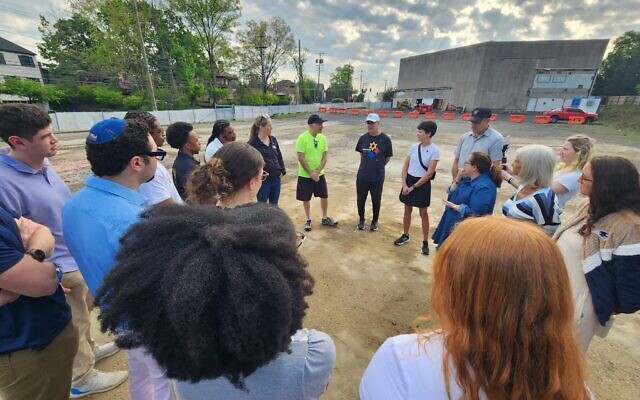
A follow-up event on April 24 gave several student leaders the opportunity to travel through Pittsburgh with organizers and Anti-Defamation League representatives. After exiting a bus near a vacant lot in Squirrel Hill, the students were met by members of the Mallinger family and representatives of The Tree of Life, an organization committed to uprooting antisemitism by “remembering those taken from us and building relationships across difference to repair our world.”
“You’re standing on sacred ground,” Carole Zawatsky, The Tree of Life’s CEO, said over the sound of excavators. Rebuilding the site of the most violent attack on Jews in U.S. history has begun.
As workers cleared portions of The Tree of Life building several hundred yards away, Stanley Mallinger and Alan Mallinger joined relatives in describing their mother, Rose Mallinger — a staple of the Tree of Life Congregation and one of 11 people murdered on Oct. 27, 2018 — and the efforts to heal and educate in the years after the Pittsburgh synagogue shooting.
Andrea Wedner, Rose Mallinger’s daughter and a survivor of the attack, recounted the events of that Shabbat morning and sitting beside her mother during services.
Ron Wedner, Andrea Wedner’s husband, told students that when he speaks with younger people he often stresses communication, concern and responsibility.
“If you see someone going down a rabbit hole, report it to a trusted adult. Try to emphasize that,” he said. “You guys are our future.”
A focus on youth emerged as a common thread at the April 22 and 24 events, as organizers and speakers repeatedly pointed to the draft as a model for building a greater team through shared purpose.
After hearing about the murders of Joyce Fienberg, Richard Gottfried, Rose Mallinger, Jerry Rabinowitz, Cecil Rosenthal, David Rosenthal, Bernice Simon, Sylvan Simon, Dan Stein, Irving Younger and Melvin Wax, and communal efforts to persevere, student leaders headed toward the bus.
Jaden Weems, 22, paused and hugged Andrea Wedner.
Having participated in several events with Black and Jewish student leaders, Weems said next steps involve “reading more, definitely, and definitely talking about it more.”
Since Wednesday’s dinner with national figures, Weems has realized how significant the assignment is. Fulfilling its requirements may involve reconnecting with high school friends “and really bringing them in, in light of this situation, and helping them understand. I know we can all talk about it,” he said.
A commitment to moving forward together generates outcomes even greater than championships. Echoing that pledge, Weems stopped before boarding the bus and told the Chronicle, “I’m ready to make a change.” PJC
Adam Reinherz can be reached at areinherz@pittsburghjewishchronicle.org.
comments