
JCLP guides congregations through sustainability, mergers and last chapters
Several congregations in western Pennsylvania are in transition. The Jewish Community Legacy Project is there to lend a hand.
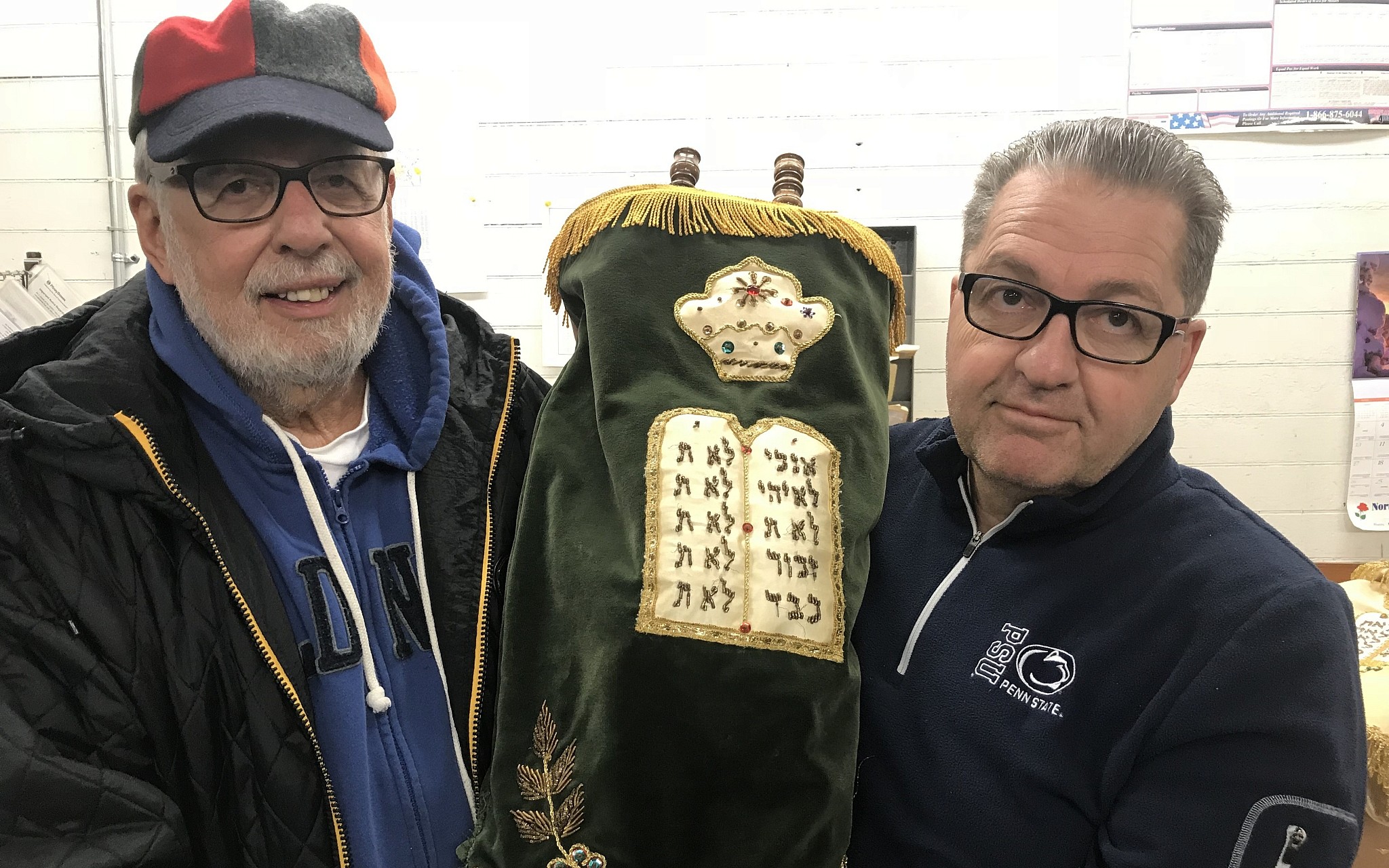
When the heartrending decision was made to close Temple Hadar Israel — Lawrence County’s last synagogue — the congregation turned to a Georgia-based nonprofit for help in navigating the emotional as well as logistical challenges.
The Jewish Community Legacy Project spent two years guiding the congregation through its transition from a bricks-and-mortar entity to a far-reaching philanthropic presence.
“The goal is to keep Jewish life vibrant in Lawrence County and beyond,” said congregation past President Sam Bernstine, 69, of the scholarships and social service programs that define Hadar’s legacy locally and in Israel.
“JLCP was so holistic in their approach. There was no ‘doom and gloom’ about shutting things down. It was a realistic and optimistic planning for the future, and it happened in stages.”
It also was done with sensitivity, given Hadar’s 130-year-old roots.
“Closing is such an emotional roller coaster you need a neutral third party to help you make the best, rational decisions,” Bernstine said. “It’s not a complex process, but it can be difficult.”
Several western Pennsylvania synagogues, in Jefferson Hills, Latrobe, Monessen, Oil City, Uniontown and White Oak, sought JCLP’s guidance through their final chapters.
Others currently are receiving help to stay open, whether through reorganizing, downsizing or merging. They are in Ambridge, Bradford, Butler, Carnegie, DuBois, Eastmont, Erie, Greensburg, Indiana, Johnstown, Meadville, Washington, White Oak (Gemilas Chesed), and Pittsburgh (Young People’s Synagogue).
“We meet congregations where they are,” said Bernstine, who is now president of the JCLP board. “We work to extend life until it’s not sustainable.”
JCLP was founded in 2010 by David Sarnat, retired president of the Jewish Federation of Greater Atlanta, who saw the need for an organization that could help demographically challenged congregations all over the country.
“We work exclusively with small congregations, one on one,” said JCLP president and CEO Noah Levine, of Marietta, whose staff includes three part-time planners.
In 2017, 89 congregations across the country sought JCLP assistance. Since then, the number has nearly tripled.
“Some want help with sustainability. Some have a specific request, like where to donate their Torahs,” Levine said. “And some will tell us ‘We know we have to close but we don’t want it to be chaotic. We want the dissolution to be done in a respectful, planned way.’”
Besides helping congregations define action steps, JCLP provides follow-through “so the burden of implementation is not solely on the congregation,” Levine said.
Tasks include donating important documents and other items to the Rauh Jewish Archives at the Heinz History Center or the American Jewish Archives in Cincinnati, finding new homes for Torah scrolls and other sacred items, and guiding congregations in how best to spend leftover funds, including those from the sale of their synagogue.
“We suggest setting up endowments that reflect the congregation’s values, whether it’s supporting a food bank or sending kids to Israel,” Levine said. “Recycling assets perpetuates the congregation’s legacy and helps Jewish communities going forward.”
An important consideration is the perpetual maintenance of graveyards.
“Most synagogues in small towns have cemeteries, and so there’s often the question, who will take care of them,” said Jeff Finkelstein, president and CEO of Jewish Federation of Greater Pittsburgh, which has partnered with JCLP and the Jewish Cemetery and Burial Association of Greater Pittsburgh to ensure that funding is available for preservation and care.
Western Pennsylvania, with its historical proliferation of small towns, has served as a blueprint for JCLP’s mission, said Finkelstein, who is a member of the JCLP board.
“Given the number of small Jewish communities in our region, we are a model for what JCLP can do in the rest of the country to keep struggling synagogues afloat. When the time comes to think about legacy, Noah and the team at JCLP work with congregations in a beautiful way.”
With encouragement from JCLP, Parkway Jewish Center in Eastmont found an unconventional way to sustain itself and even attract a couple of new members.
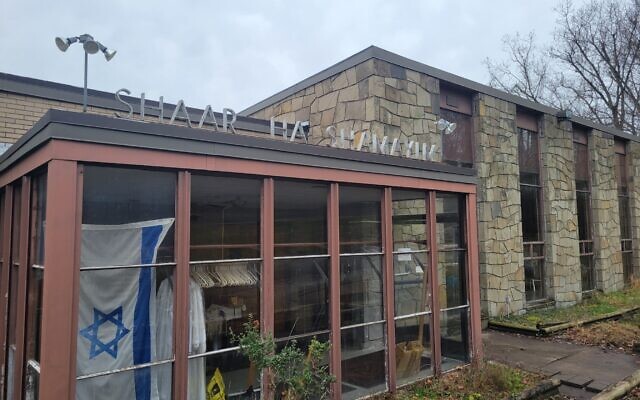
The congregation sold its building to lease space in an office complex at Penn Center West that includes a worship area with Torah ark, access to extra room for High Holiday services, and a small kosher kitchen. The congregation also is permitted to set up a sukkah.
“Noah guided us through uncharted waters,” said the congregation’s President Lynda Heyman. “He has a sweet demeanor … never telling us what to do … but making suggestions and acting as a sounding board as we explored multiple options.”
In Washington County, Marilyn Posner began working with JCLP a decade ago in her role as president and legacy chair of Beth Israel Congregation.
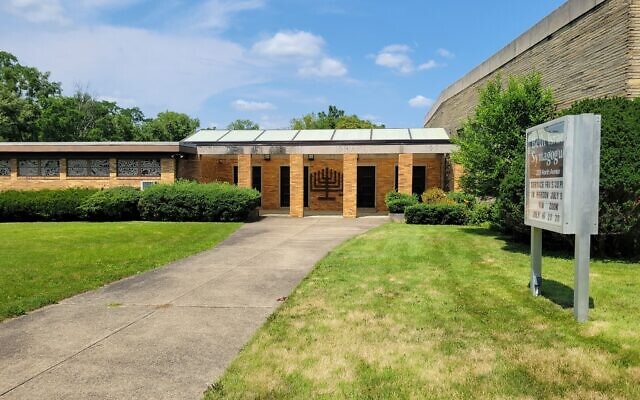
“We’re both sustaining and dissolving,” said Posner, of what has been a gradual process involving the sale of the synagogue and rabbi’s residence, and the particularly painful disbursement of artifacts and artwork.
“I knew in my heart that all these objects would continue to live; they just weren’t going to live here. That was very hard for me. We worked with Noah and his team for five years to ensure they would go to new homes where they are needed and appreciated. Our bimah went to Illinois.”
A scholarship has been established for Jewish students at nearby Washington & Jefferson College, and Friday night services, conducted via Zoom, consistently attract about 15 worshippers.
“Noah was great in that, whenever we came up with a problem or concern, we had someone to use as a sounding board,” Posner said. “He’d say ‘These are all the options in the world and we are here for you for all of them.’ We felt confident that JCLP would tell us the right way to go.” PJC
Deborah Weisberg is a freelance writer living in Pittsburgh.
comments