
Fine Fellow Levitt highlights how objects help us heal from tragedy in upcoming talk
"Offerings of Grief, Offerings of Rage: Revisiting Tree of Life Synagogue and the George Floyd Square"
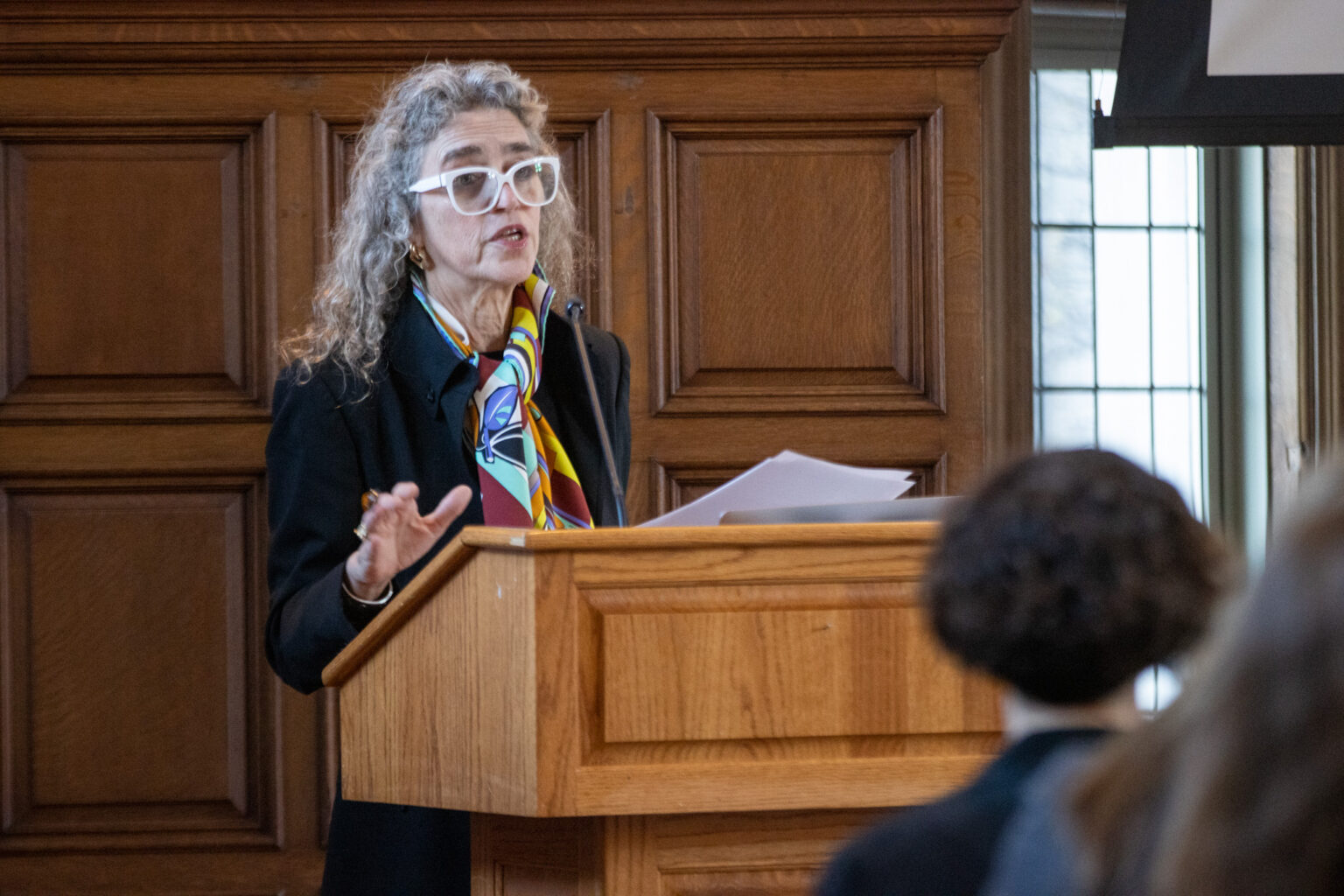
Hand-woven quilts, teddy bears, baseball caps, votive candles and white paper stars are just a few of the things Laura T. Levitt uses in her research. In her Sept. 14 presentation “Offerings of Grief, Offerings of Rage: Revisiting Tree of Life Synagogue and the George Floyd Square,” the Temple University-based writer and professor will be presenting her work on objects left behind after unspeakable tragedies.
But this is no jargon-laden academic talk. Though Levitt is the inaugural recipient of the Fine Fellowship — a $4000 grant from the University of Pittsburgh given to a scholar to work with the 10/27 Collection at the Heinz History Center — part of the fellowship’s goal is to create an accessible way for people to grapple with tragedy.
“I hope [attendees] come away feeling like researchers are approachable,” said Rachel Kranson, associate professor and director of Jewish Studies Pitt. “All of the scholars we select for this fellowship understand that engaging with the public — and in particular, being in conversation with the people of Pittsburgh — makes their work richer and more impactful.”
Kranson hopes the talk is the first of many expressions of “community-engaged scholarship” in the field. “While we had a number of thoughtful applications, Dr. Levitt’s previous research on objects of trauma as well as the work she was already undertaking at George Floyd Square convinced us that she was the right person to inaugurate the fellowship,” she said.
Maggie Feinstein, executive director of the 10.27 Healing Partnership at the Squirrel Hill JCC, where the talk will be held, agreed.
“I think that this work is particularly relevant today as I recognize the fatigue that so many of us are experiencing when it comes to seeing so much suffering and trauma in the world around us,” Feinstein said. “We are not sure we can keep up the energy of feeling the deep empathy and that is reasonable. On the other hand, to be a resilient community we cannot lead with apathy, we have to continue to try to find empathy for one another.”
Levitt’s interest in dealing with painful archival materials stems, in part, from a personal reckoning with how evidence is used in crimes. Her 2020 book “The Objects That Remain” tells her own story of having to provide physical evidence after she was raped in graduate school. The evidence was never formally processed.
“Even for those of us who experience violence in this culture and have evidence taken, it doesn’t mean that those cases will ever go to court,” she said. “I wrote about how engaging with those material objects is a way of telling those stories, and in the process of telling those stories we do a bit of justice.”
Levitt was already researching objects left behind at George Floyd Square in Minneapolis when she was accepted as a Fine Fellow.
“Part of the argument I’m making in the talk — that I hope to expand into a scholarly publication — is that these objects have a lot to teach us about people making connections across differences,” she said.
She was touched by the care taken both by local youth in Minneapolis and the Rauh Jewish History Program & Archives at the Heinz History Center in Pittsburgh. “I ask myself ‘What is the value of these objects people bring or send to these sites of violent enactments?’ I was really struck by the fact that there are people that tend to these objects, and that in Pittsburgh the 10/27 collection is a very careful attempt to gather the things left after the synagogue shooting.”
Materials from the Holocaust also inform Levitt’s understanding of offerings of grief. She pointed to the fact that a pair of shoes becomes a fine art object in the United States Holocaust Memorial Museum in Washington, D.C., but when viewers see it, they can identify with its ordinariness. Mundane objects like shoes and clothes ground the tragedy of history in an observable reality.
Those impacted by the Pittsburgh synagogue shooting continue to receive objects in the mail. Levitt argues that the offerings form a “civil expression of religion” that allows people to get in touch with complex emotions in a way that’s easier to access. Objects like those left at George Floyd Square and Tree of Life are physical — things you can touch and feel with your body, rather than emotions bottled up intangibly inside of you.
“We need a visceral way to express these emotions, not an abstract one,” she said.
By making pilgrimages to both Tree of Life and George Floyd Square, Levitt hopes to highlight the inter-connectedness of racism and antisemitism — and the ways that each community has shown up for each other.
“It’s a way of saying this terrible thing happened and I want to be present there. It’s a way of recognizing the hurt of other people,” Levitt said. “Part of what I found so moving is these were expressions of acknowledgments, listening and hearing.”
She hopes people come away from hearing her speak knowing “to value these smaller moments of human connection, of kindness, of care, of listening.”
Levitt’s talk, “Offerings of Grief, Offerings of Rage: Revisiting Tree of Life Synagogue and George Floyd Square,” is free with registration at JCC Squirrel Hill, 5738 Forbes Ave, running from 5-6:30 p.m. on Sept. 14. PJC
Emma Riva is a freelance writer living in Pittsburgh.
comments