
Why ‘Les Misérables’ still matters: A timeless story returns to Pittsburgh
“The story, the main points that it hits every time, is the endurance of the human spirit, and I think that is extremely necessary to hear in today’s day and age."
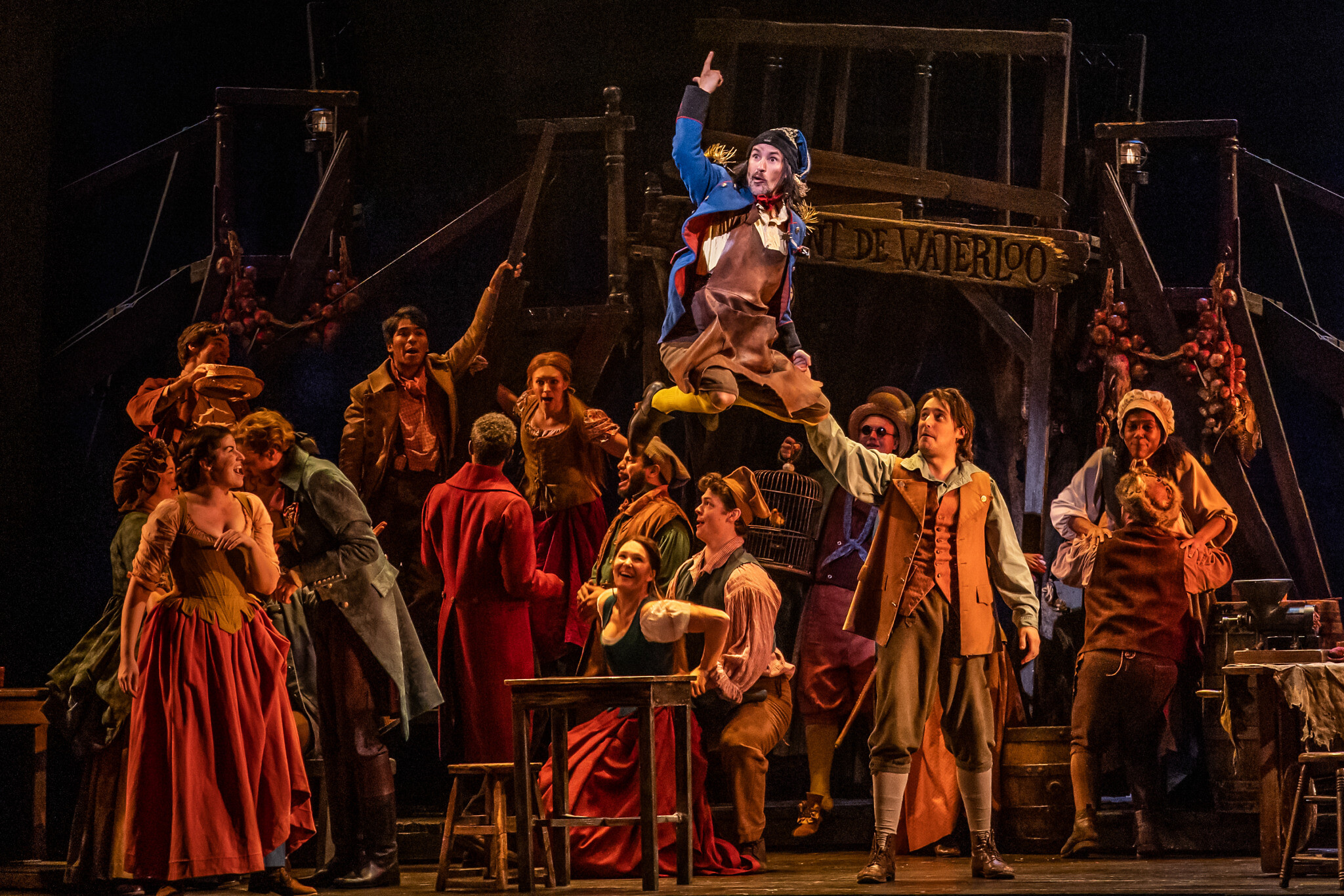
In the preface to his 1862 novel “Les Misérables,” Victor Hugo presciently declared, “So long as ignorance and poverty exist on earth, books of the nature of Les Misérables cannot fail to be of use.”
Time has proven him right: His sweeping saga of resilience, redemption and love in 19th-century France continues to resonate with audiences today.
The sprawling novel was adapted into a musical by Jewish composers Claude-Michel Schönberg and Alain Boublil, premiering in France in 1980. An English version opened on the West End in 1985 — where it is still playing — and came to Broadway in 1987. The show has won eight Tony Awards and is the sixth longest-running show on Broadway. It’s been seen by more than 130 million people worldwide in 53 countries, 438 cities and 22 languages.
Get The Jewish Chronicle Weekly Edition by email and never miss our top stories Free Sign Up
Its touring production will run at the Benedum Center from Nov. 25-30, part of the Pittsburgh Cultural Trust’s 2025-2026 PNC Broadway in Pittsburgh Series.
“Les Misérables” tells the story of Jean Valjean, imprisoned for 19 years for stealing a loaf of bread. When he’s finally released from prison, he is shown profound mercy and inspired by a bishop, breaks parole, changes his identity and adopts an orphan. But he is relentlessly pursued throughout his life by a police inspector, who is driven by strict adherence to the law.
“The story, the main points that it hits every time, is the endurance of the human spirit, and I think that is extremely necessary to hear in today’s day and age,” said Daniel Gerard Bittner, who was born and raised in Pittsburgh and recently graduated from Carnegie Mellon School of Drama. He has been touring with the production since 2022 as a member of the ensemble.
“On top of that, you have song after song about love, about persevering through difficult times,” he continued. “I mean, this story — there’s a reason that it’s been relevant since it came out, not just the book, but the musical too.”
“Les Misérables” is “one of the best adaptations of a novel onto stage,” said Bittner, who grew up in Shaler and resides in Pittsburgh when he’s not on the road. “And I think that it and the story that it tells is beautiful. I think that it’s so important for everybody to see, just because times can get tough and you’ve got to understand that it’s worth pushing forward.”
People worldwide have found solace and inspiration in the music as well as the story. After Hamas’ Oct. 7, 2023, attack on Israel, one particular song from the show, “Bring Him Home” — which Jean Valjean sings as a prayer that his prospective son-in-law safely returns from the barricades of the French revolution — was recorded by soloists from the Israeli Opera in Tel Aviv as an expression of solidarity with the hostages kidnapped and held in Gaza. It was also performed by the chief cantor of the Israel Defense Forces, Shai Abramson, at the March of the Living in Poland in December 2023.
The Forward reported that while most of the Israeli versions were sung in Hebrew or English, there was also one in Yiddish, performed at the Jerusalem Music Center, sung by tenor Eliezer Henig and accompanied on piano by Avi Silas, both raised in the Hasidic community.
The creators of the show could not foresee its music becoming an anthem of redemption for Israeli hostages 40 years later, but it’s not farfetched that it happened. While not overt, there is a Jewish sensibility to the show.
Composer Schönberg told the Jewish News of Great Britain in 2020 that he and lyricist Boublil “both feel special about Jewish people and when I’m writing a show there is always a part that is typically Jewish.”
“Just listen to the introduction of ‘Master of the House,’” he said. “It is completely Jewish.”
Schönberg’s relatives were among the 437,000 Hungarian Jews gassed at a concentration camp during the Holocaust. He and Boublil also wrote “Miss Saigon,” which, he said, was “a statement against war, all wars, which was another way of showing who we are and what we think.”
That hunger for peace, integrity and righteousness is at the core of Hugo’s story, and likewise fundamental to the stage show.
“So long as there shall exist, by virtue of law and custom, decrees of damnation pronounced by society, artificially creating hells amid the civilization of earth, and adding the element of human fate to divine destiny,” Hugo wrote in his preface, “… so long as social asphyxia is possible in any part of the world … books of the nature of Les Misérables cannot fail to be of use.”
Adding to that, Bittner said, the show is pure entertainment.
“I’d say, if you want to have a wonderful experience, come and see a show with beautiful music, a beautiful story and incredible people telling it. Come see ‘Les Mis.’ It’s a wonderful night.” PJC
Toby Tabachnick can be reached at ttabachnick@pittsburghjewishchronicle.org.
comments