
Wexner alumni with Pittsburgh roots wrestle with program’s legacy
“My first thought was, ‘I’ve got to give all that was invested in me back to the victims,’” she said.
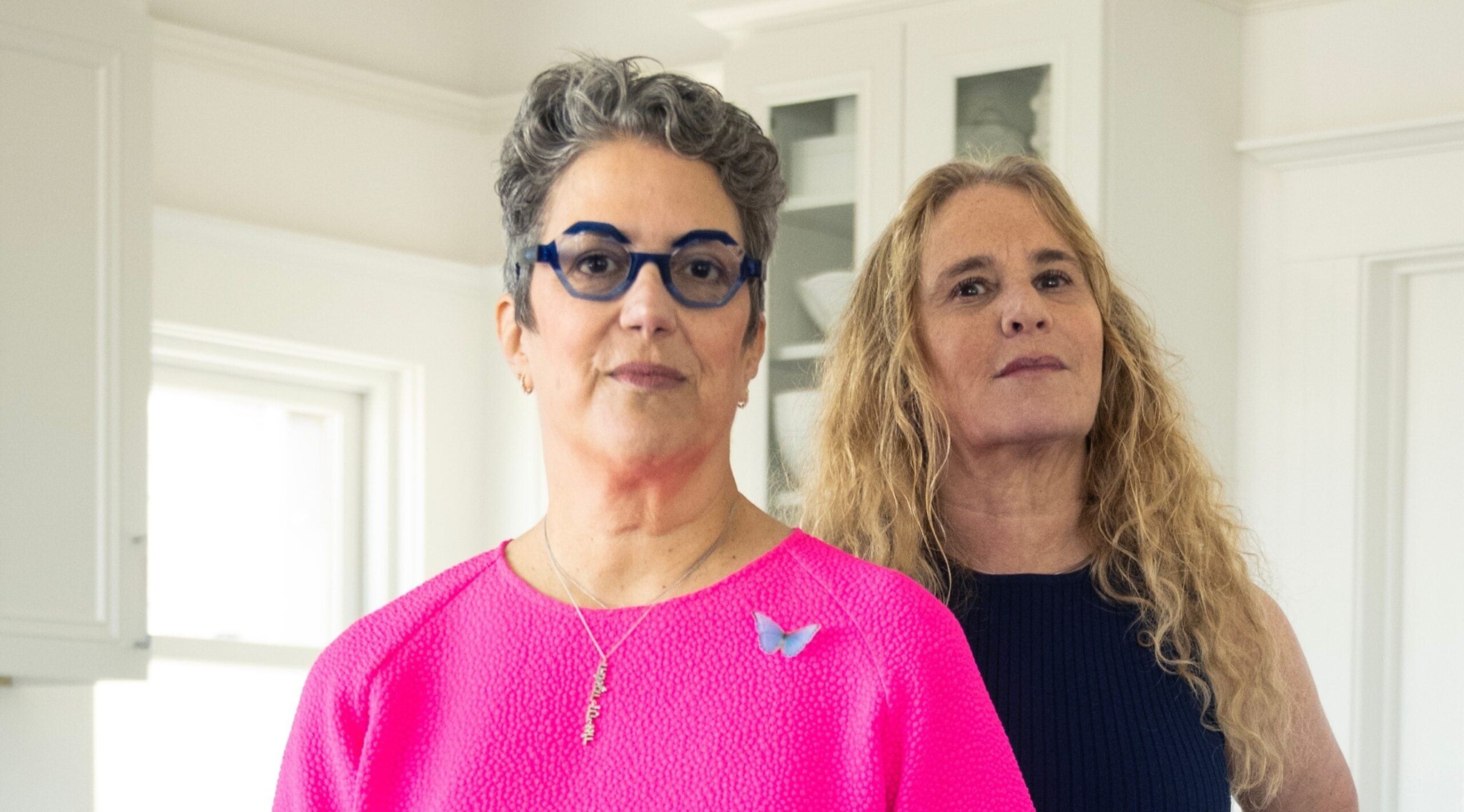
Jan Reicher said she was thrilled to participate in the Wexner Heritage Program from 2003 to 2005.
“It was definitely a huge honor for me to be accepted into the program,” she said. “My cohort was incredible and we continue to be very close. It added a lot to my life and the Jewish community.”
And while she was aware the program’s namesake, Leslie Wexner, founded Victoria’s Secret — a company that has been accused of misogyny and exploiting women — she said she had no idea of his relationship with American financier and convicted pedophile Jeffrey Epstein.
Reicher was unaware, she said, that Jeffrey Epstein had served on the board of directors of the Wexner Foundation. Nor did she know about the extensive business connections between the two — Wexner was the primary client of Epstein, who served as his financial manager from 1987 to 2007.
Wexner cut ties with Epstein in 2007, shortly before he was convicted of soliciting a minor for prostitution in 2008. He has denied having any knowledge of Epstein’s crimes.
In 2026, several women claiming to be victims of Epstein filed lawsuits against Wexner and the Wexner Foundation, alleging he helped fund Epstein’s sex trafficking network. In unsealed Epstein files, survivor Virginia Giuffrey said she was trafficked by Ghislaine Maxwell to Wexner for sex at least two times.
Reicher is a former Pittsburgher who now lives in California. She said it was her nephew, who still lives in Pittsburgh, who sent her a series of clips and articles in January of 2026, bringing to her attention the relationship between the Wexner and Epstein and advising her to remove any connection to Wexner and the Heritage program from her LinkedIn page.
“My first thought was, ‘I’ve got to give all that was invested in me back to the victims,’” she said.
Reicher began having conversations with Debbie Findling, who took part in the Wexner Heritage Program three decades ago. Both women wanted to do something that would speak to their concerns and raise awareness of the victims. Findling wrote an open letter urging accountability and the two worked together to get signatures– more than 80 Wexner alumni have signed on, six of whom are from Pittsburgh.
And while the letter was a good start, Reicher said it wasn’t enough for her. So, the pair created Tikkun Funds — a site that directs donations that are distributed directly to three organizations: World Without Exploitation — which supports Epstein survivors through advocacy, legislative action and public awareness campaigns; Shalom Bayit — a leading Jewish voice on gender-based violence prevention and response; and the Association of Rape Crisis Centers in Israel — the national umbrella organization for Israel’s nine rape crisis centers. The fund has already raised more than $370,000 and the pair have set a goal of $500,000. Reicher and Findling have both donated the cost of the education they received in the program — approximately $36,000, each.
Reicher, who said that she, too, is a victim of sexual abuse, feels that accountability is important, which she believes has not happened to date.
The Foundation, though, is planning to spin off the Wexner Heritage Program. That new program will start with a $40 million grant from Abigail and Leslie Wexner.
Reicher views that grant as problematic.
“That’s why we decided we’re not waiting for them to do the right thing,” she said. “Our education was all about Jewish values, ethics and morals. That’s what we learn tzedakah, teshuva, tikkun [olam], Kavod HaBriyot— they’re values that called us to action.”
Evan Segal is a Pittsburgh native who now lives in California. He was part of the Wexner Heritage Program in 2007 but couldn’t complete it after being asked by then-President Barak Obama to serve as the chief financial officer at the United States Department of Agriculture.
When word came out about the Wexner-Epstein connection, Segal wrote his fellow Wexner class members urging them to take the program off their resumes.
“It should be a shanda,” he said. “It’s not to take away from the experience that people had together, but the Wexner name should be thought of like Sackler family with OxyContin.”
He said that while he would like to see the Heritage program separated from the Wexner Foundation, he doesn’t think it should use any money from the Foundation.
“That money should be going to survivors because it’s tainted money,” he said. “Wexner built his empire on the backs of women. It started with women in third world countries working in slave-like conditions to make his clothing, then it went to stores where women worked crazy hours and weren’t paid well. Models were treated poorly and then the entire sexualization of women. His entire empire was built by men taking advantage of women.”
Social justice, Segal said, is a responsibility of the Jewish community. He’d like the community to look in the mirror at its own values and beliefs and ask how they reconcile that with inaction when there is injustice.
“The stories of Oct. 7 are very painful,” he said. “I supported the the Civil Commission on Oct. 7 Crimes Against Women and Children. To hear Jews not believing the stories of the Epstein survivors, I have a hard time reconciling that.”
Becca Hurowitz and Marla Werner are two longtime Pittsburghers who both took part in the Wexner Heritage Program. Four years ago, they started Givver, a woman-led consulting company that works with philanthropists and nonprofits, helping them to achieve strategic goals.
“Many of our nonprofit clients are in the Jewish and Israel space,” Hurowitz said. “One of our clients is World Without Explanation — World WE — which is one of the recipients of the funds that Debbie and Jan are raising.”
World WE, Werner explained, is working with Epstein survivors.
“The organization is representing and convening many of the Epstein survivors,” she said. “They have deep relationships with several survivors and therefore we have created deep relationships with several of the survivors.”
Werner said that allegations against Wexner began to leak when she and Hurowitz were in Israel as part of the program.
“We were there with five other cohorts, and all six cohorts were told the story by Wexner leadership,” she recalled.
And while the two give credit to the program for relationships built in Pittsburgh and across the nation, as well as lessons in leadership, Werner said it was the program’s emphasis on moral clarity that ultimately inspired them to launch the business.
“We know that some of these survivors have spoken certain alleged perpetrators’ names out loud, but as a society, we are still not believing or accepting it. It’s important to look at the facts that are publicly available and for each person to make informed choices based on them,” Werner said.
Hurowitz added: “The bottom line is that we believe women, and we believe these women and want to support them in their pursuit of justice.”
Sue Berman Kress said that the time she spent in the Wexner Heritage Program was a “transformational” learning experience and colleague-building experience.
“We learned from amazing scholars. We built really great relationships, and I thought it was a tremendous asset to my community participation,” she said before adding, “but there’s a lot of pain associated with finding out there’s a lot we didn’t know.”
She thinks the Foundation should transfer funds to the program when it spins off.
“I think the Foundation understands that they can’t just cut ties without giving the new entity a financial runway,” she said. “Without that, it would just crumble because they couldn’t keep staff and wouldn’t have an office. The $40 million will give them enough time to build their own fundraising and an organizational model.”
The Wexner program, she said, taught that one has to prepare for the hardest moments, and this, she acknowledged, is the hardest moment.
Despite that, she said, there’s still worth in the program and the way it operates.
“The concept of going into different communities in different years and building a cohort — a generational cohort of leaders — has value,” she said. “It’s a really worthy goal.”
For Reicher, the future should be about accountability and helping the survivors.
“I’m really motivated by love for the Jewish community and by a belief that we’re all capable of living our highest values,” she said. “I have a lot of faith in people. I’m doing this because I care deeply about the Jewish community. The community has given me so much and I feel the need to live my Jewish values and give back to the victims of these crimes.” PJC
David Rullo can be reached at drullo@pittsburghjewishchronicle.org
comments