
The origins of Chanukah
A history of the Festival of Lights
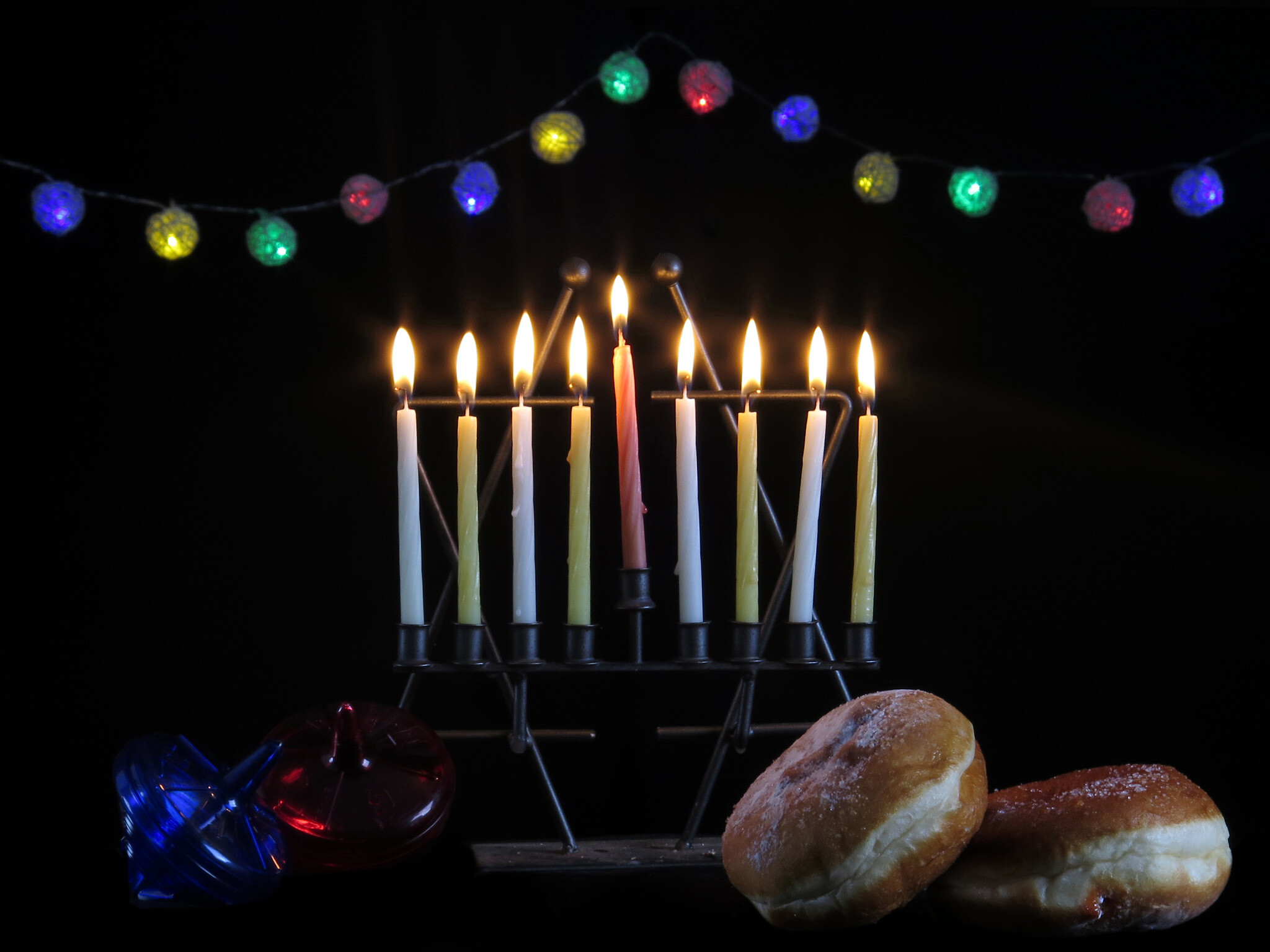
When Alexander the Great burst onto the scene in 336 BCE and quickly conquered much of the known world, he could not have guessed that one of the peoples swept into his orbit would make a point of refusing what he had to offer. Unlike the Persian Empire, which in the centuries before Alexander largely left their subject peoples alone, Alexander’s conquests went hand in hand with a conscious effort to spread Greek culture.
Following his death in 323 BCE, the vast territory Alexander ruled was split between his generals, the Seleucids of Syria and the Ptolemies of Egypt. By 200 BCE the province of Judea, while technically under the control of the Seleucids, was nevertheless able to play the two empires off of each other for its own potential gain.
Jerusalem was also becoming a commercial hub, and the position of Temple high priest was being transformed into a political as well as a religious office. The combination of these factors led many elites in Jerusalem to adopt Greek manners of dress, diet and social interaction — a process known as Hellenization — while disregarding aspects of their Jewish identities.
Get The Jewish Chronicle Weekly Edition by email and never miss our top stories Free Sign Up
To sum up an incredibly complex situation, Hellenizing Jews were eventually able to install a high priest named Jason, who was sympathetic to their interests. Jason was also able to bribe the new Syrian King, Antiochus IV (crowned in 175 BCE), to support him. In only a few years, however, war broke out between him and the Jewish adherents of an even more Hellenizing high priest, Menelaus. Because Menelaus offered Antiochus even larger sums of money, he got the king’s support. Menelaus also allowed Antiochus to enter the Temple and walk away with many of its riches, an act that wouldn’t have been news at any pagan temple at the time, but which caused great offense in Jerusalem.
In 167 BCE, after false rumors of Antiochus’ death inspired the Jews to rally back to Jason, Antiochus attacked Jerusalem and instituted bans against burnt offerings, circumcision, the observance of the Sabbath, the possession and study of “the books of the law” and so on. Finally, a statue of Zeus was placed in the Temple. This was Antiochus’ way of ensuring, as 1 Maccabees puts it, “that all people should be one people, and that all should give up their particular customs.” Anyone who refused assimilation was to be killed, and in scenes that were to be repeated down to the Shoah, some of the Jews’ gentile neighbors took advantage of the situation and began attacking them as well.
Syrian soldiers spread out into the Judean countryside to enforce these new practices, and the atrocity stories recorded in 1 and 2 Maccabees were the result, in part, of the malleability of paganism. In the ancient world, adding foreign gods to your own local pantheon was not an imposition at all, and before this point the inability of Jews to do the same was merely quaint and bizarre. Now it was a threat, and the Jews’ refusal to give up on their religion was pushback that no other empire in the ancient world ever had to face before.
After the first organized band of Jews to oppose the Syrian army refused to fight on Shabbat and were slaughtered, a family of priests from the village of Modin enter the story. Led by an aging father named Mattathias, he and his five sons (Judah Maccabee among them) organized their own fighting force. They had no qualms about fighting on Shabbat, or about punishing Jews who took up paganism, and they soon strung together a series of victories.
Indeed, any one of their military triumphs against the Syrians could have been considered the “miracle of Chanukah,” but it was the retaking of Jerusalem and the rededication of the Temple that ended up becoming central to the story. It did not mark the end of the war, but it did spell out what was truly at stake.
Since the rededication of the Temple took place three years to the day after the statue of Zeus was placed there, on the 25th of Kislev, an annual holiday was established to celebrate the event. And since relentless campaigning kept the Maccabees and their army from observing Sukkot, Chanukah was established from the beginning as an eight-day festival, like Sukkot. It is sometimes even called “Second Sukkot” or “the festival of booths in the month of Kislev.”
This is the story, anyway, as recorded in the two books of Maccabees. 1 Maccabees was written anywhere from 50 to 75 years after the Maccabean War, while 2 Maccabees was written much closer to the events it narrates. Both indicate that the observance of Chanukah was popular in Judea immediately after the war.
But scholars have noted something strange: Very little writing survives about the holiday until the closing decades BCE, when the Houses of Hillel and Shammai are shown, still debating how many candles to light on each night. By the late first century CE, the Jewish historian Josephus could refer to Chanukah and say, “From that time to this we celebrate this festival, and all it Lights.” The “miracle of the oil” isn’t mentioned in writing until much later in the Talmud.
What is going on here? Perhaps there is a clue in a curious story told at the beginning of 2 Maccabees. The entire book is addressed to Jews living in Egypt who aren’t convinced that the Maccabean War or the new holiday of Chanukah have anything to do with them. To convince them otherwise, the story is told of the survival of a miraculous fire, remnants of which lasted from the destruction of the First Temple back in 587 BCE to the dedication of the Second Temple more than 50 years later.
When we learn that, according to this story, the dedication of the Second Temple is also associated with the 25th of Kislev, it is hard not to see a connection between it and Chanukah’s “miracle of the oil.” Even if it doesn’t survive in writing, then, perhaps the miracle entered the Chanukah story fairly early, maybe even as a companion to the story in 2 Maccabees.
The word Chanukah, of course, means “dedication” (see Psalm 30:1, where the word appears), and a good guess as to what happened to the holiday was that, soon after the Maccabean War, Jews realized that its focus could not be on military victories. Indeed, this has been the issue with Chanukah for centuries, since how can Jews living under the control of Romans, Muslims or Christians, celebrate their ancestors’ victory over their rulers? And since the descendants of the Maccabees — the Hasmoneans — were disliked by just about everybody, there was even more reason to not emphasize them.
Making the focus on the holiday the rededication of the Temple also solved the problem for Diaspora Jews, like the ones living in Egypt. Since even at this early date the Jews of the Diaspora sent regular contributions for the upkeep of the Temple, the rejuvenation of Jewish sacrificial worship and the rededication of the Temple was a victory for Jews everywhere, and for all time.
Finally, 1 Maccabees reports that following the ban on Jewish practice, the pagan Seleucids also “built altars in the surrounding towns of Judah, and offered incense at the doors of the houses and in the streets.” It is suggested that when these altars were destroyed, they were replaced by lighted candles. This is a beautiful, if unconfirmed, origin story of the injunction many of us still follow today, of placing a lit chanukiah in a window or doorway as a public declaration that we are Jews and proud to be so.
Of course, we shouldn’t forget that the Maccabean war was also nearly a civil war, and that many Jews of the time were willing to give up some or all of their Jewishness for just a bit of somebody else’s culture. We can also wonder what this has to do with why 1 and 2 Maccabees were left out of the Tanakh. As usual, it isn’t so much what has happened to us over the millennia that matters but how we interpret it, how we tell it and retell it. But the Jew-hatred, the infighting, the pull of assimilation and the tug of tradition — and the outbreak of extreme versions of both — and our ability to fall back on communal rituals and household rites … it all sounds very modern.
Or does what is happening now sound very old? And if we pause before placing our chanukiah in our windows today, fearing for our safety in Pittsburgh in 2025, have we also inherited this hesitation from Jews in the Judean countryside, so many years ago? PJC
Tim Miller is a freelance writer living in Pittsburgh. He is online at wordandsilence.com.
comments