
Righteous Among the Neighbors 2025
Mt. Lebanon High School students wrote about this year's honorees, their support of the Jewish community and their efforts to uproot antisemitism.
Righteous Among the Neighbors is a project of the Holocaust Center of Pittsburgh that honors non-Jewish Pittsburghers who support the Jewish community and take action to uproot antisemitism. In partnership with the LIGHT Education Initiative and Mt. Lebanon High School, student journalists interview honorees and write profiles about their efforts.
Joel Benson
By Scarlett Sweeney
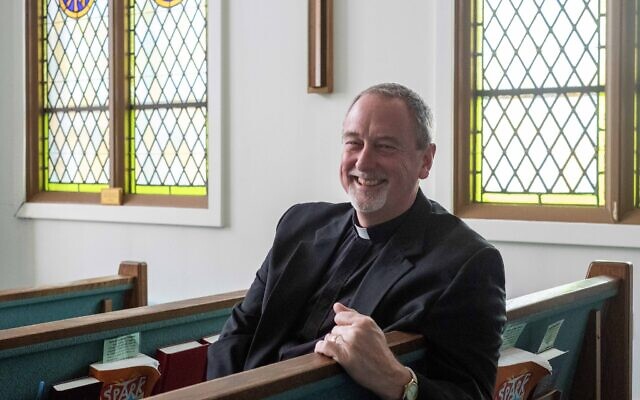
After the Oct. 27, 2018, synagogue shooting, the Butler Clergy Network was created to encourage interfaith cooperation and support among religious leaders. Several weeks later, the network planned a vigil to send a public message of Christian support to the Jewish community.
Benson was moved by the silent candlelight walk down Main Street that followed the vigil.
“It was a powerful witness that we weren’t going to let what happened to Tree of Life define us,” he said.
Following that gathering, the network asked how it could support Cantor Michal Gray-Schaffer, spiritual leader of B’nai Abraham, and her congregation. They decided that individual congregations would visit B’nai Abraham, one at a time, attend a Friday night service and stay afterward for the oneg.
Benson brought almost 40 people from his congregation. This moment stuck out to Cantor Gray-Schaffer, who nominated Benson for this award.
“Joel bringing almost 40 people showed to me that he really must have pushed it and marketed it and made it an important thing for his congregants to do,” she said. “They were so respectful — they stood when we stood, joined in on the English when they could. We almost had to kick them out two hours after the service ended because everybody was just having such a good time getting to know each other.”
Benson and Gray-Schaffer have been meeting monthly alongside other Lutheran pastors to study and develop a deeper understanding of each other’s faith. Benson believes building this relationship is crucial, especially with the surge in antisemitism locally and around the world.
“As a Christian, it is important to stand up and say this does not represent what we believe about loving our neighbors as God loves us,” Benson said. “You cannot, as a Christian, denounce our Jewish neighbors in any way, shape or form; they are our sisters and brothers.”
Mariace Dancisin
By Sam Palmerine
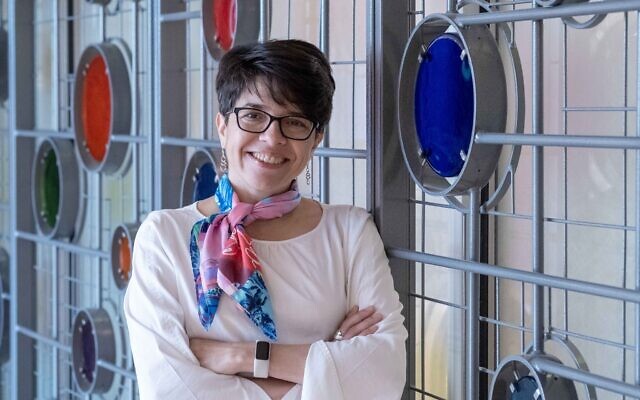
Dancisin said her passion for supporting diverse cultures in health care began years ago, when she was assigned to help an Orthodox Jewish family from Mexico receive treatment at UPMC Children’s.
“This family spoke Spanish, they didn’t speak English, so I was a medical interpreter for them,” Dancisin said.
That experience left a lasting mark.
“We became very close,” she said. “At the end of the experience, I wanted to hug them … but couldn’t because females who are not part of your family cannot touch [the men]. So we virtually hugged. But that really marked me. We speak the same language, share the same Hispanic culture, but because of religion, we are still so different.”
That moment of recognition became the foundation of Dancisin’s work at Children’s Hospital.
“Our infrastructure is not built for them,” she said. “We live in a Christian world. There are no barriers for people who are Christian, or we don’t see them because the world is designed around that.”
Dancisin wanted to change that reality. She and a colleague began discussing how to make Children’s Hospital a more inclusive place for patients and providers of all faiths.
“Throughout the years, Dr. [Michael] Moritz and I kept talking about how we needed to get people from the Jewish community together at Children’s to see if we could do something,” she said. “Finally, one day that happened, and that’s how we started working on it.”
Collaborating with Moritz and members of the Jewish community, Dancisin offered to lead the effort.
Under Dancisin’s leadership, the committee has made measurable strides: securing kosher food options in the cafeteria; obtaining a grant from the Jewish Federation of Greater Pittsburgh to buy resources for in-patient Jewish observances; and inviting speakers to educate hospital staff on Jewish identity and religious needs.
Natan Cramer, who nominated her for recognition, emphasized the impact she has had.
“Mariace has devoted countless hours fighting against roadblocks and bureaucracy within the hospital system, often harder than we ourselves as Jewish people, and on behalf of Muslims as well,” Cramer said. “She’s a fighter, but also compassionate. She stands up for us.”
Joe Harmon
By Alyson Lushko
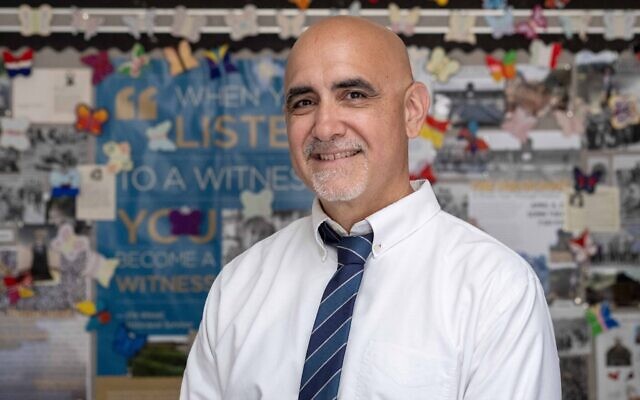
Harmon has been named as Righteous Among the Neighbors for his longtime support of the Jewish community. He was nominated by Emily Loeb of the Holocaust Center of Pittsburgh.
Loeb praised Harmon’s innovative approach, noting that Harmon not only teaches the historical aspects of the Holocaust, but also emphasizes Jewish life and culture.
“He goes above and beyond by having his students actually meet Holocaust survivors when possible,” Loeb said. “So this fall, he brought 50 students to the Holocaust Center to not only meet a survivor, but to connect what he’s teaching in the classroom to a real person.”
Harmon’s journey with Holocaust education began in college. Returning to school as a 29-year-old paramedic, he enrolled in a summer course on Nazism, Hitler and the Holocaust.
“The professor was just fantastic and really spurred my interest in the topic,” Harmon said. “Just the way he could describe what happened made me really care about the events and the people that were lost.”
His dedication also includes firsthand experience abroad. A trip to Poland, visiting sites such as Auschwitz, Treblinka, and the Warsaw and Lodz Ghettos, left a lasting impression. Harmon recounted standing over a mass grave of 45 children, ages 4 to 17, executed solely for being Jewish.
“It wasn’t just 6 million,” he said. “There were names. There were people. Children. So many of them. That was the trip that really changed things for me.”
Harmon’s work is not limited to history lessons, but is connected to present-day awareness of antisemitism. Recently, a student came to him upset after discovering a swastika left in another student’s school mailbox.
“I want you to get upset by this,” Harmon told her, reinforcing that the lessons of the Holocaust carry importance in recognizing injustice today.
Kurt Kusserow
By Emma Curren
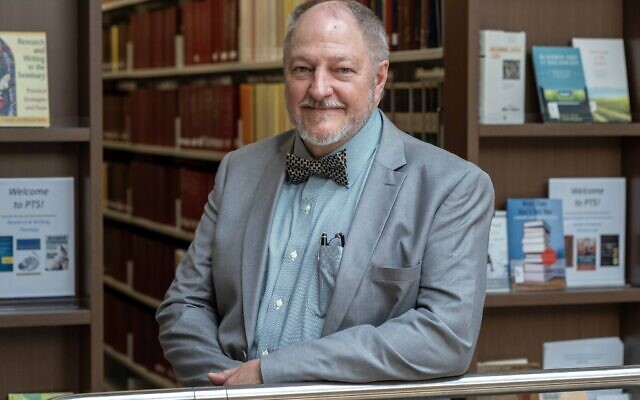
Tension between the Jewish and Lutheran religions goes back to the founding of Lutheranism. Kurt Kusserow is taking steps to mend the relationship between the two faiths.
Kusserow, bishop emeritus of the Western Pennsylvania Synod of the Evangelical Lutheran Church in America, has been recognized as Righteous Among the Neighbors for his honesty, humility and willingness to grapple with antisemitism in his religion.
Kusserow said his upbringing as the son of Lutheran missionaries in Singapore and Malaysia “informs a lot of who I am.”
Kusserow moved back to the United States for college and to enter the ministry. In 2007, he was elected bishop of the Western Pennsylvania Synod of the ELCA, overseeing nearly 200 congregations.
Kusserow was nominated for the Righteous Among the Neighbors award by Noah Schoen, the manager of community engagement at the Holocaust Center of Pittsburgh.
Kusserow and Schoen met through a program called Reckoning with Antisemitism as Christians, where Kusserow was on a panel of Christians who talked about their journeys of reckoning with antisemitism and how it affected them.
“[Kusserow] spoke with a lot of vulnerability about how difficult it was to face the presence of antisemitism in the Lutheran tradition and really modeled to everyone who was there what humble and meaningful Christian engagement on this topic could look like,” Schoen said.
Kusserow and Schoen created an initiative where groups of Lutheran pastors who meet for text study are visited by rabbis once a month, sharing their perspectives and helping the pastors reckon with antisemitism.
Kusserow also wrote a book called “What is the Gospel?” and he gave Schoen a copy so that he could read it and understand Kusserow’s perspective on Christian issues. While reading, Schoen encountered “a handwritten sticky note where [Kusserow] suggested an edit to the original text to avoid a word that could potentially have a slight connotation associated with antisemitism.”
“I thought, ‘Wow.’ He took the time to read over his whole book before giving it to me because he wanted to improve it from a perspective of addressing antisemitism,” Schoen said. “I think it shows his integrity, humility and understanding that for Christians reckoning with antisemitism, it is an ongoing process.”
“So often, people live in a small circle of knowledge and comfort that leaves very little reason to go beyond that,” Kusserow said. “When there’s an opportunity to open doors and see things that are not in your normal circle of life, you find things that you have been missing.”
Jim Paharik
By Lauren Rossetti
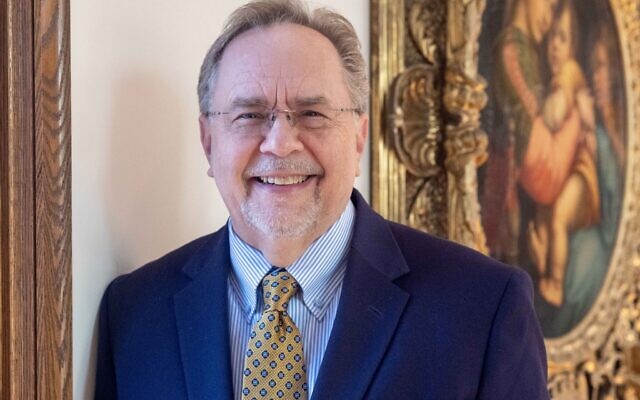
Paharik has led the NCCHE since 2019 as someone who understands the importance of Holocaust education in regard to the weight of the past and the urgency of the present.
“Jim is a person who builds community,” said Melissa Marks, a professor at the University of Pittsburgh at Greensburg, who nominated Paharik.
Marks has worked with Paharik on the NCCHE board since 2022, and has seen firsthand how he brings the community of Westmoreland Country together.
During his tenure, Paharik has worked to forward the goals envisioned by the Sisters of Charity who founded the NCCHE in 1987.
“Sister Gemma Del Duca and Sister Mary Noel Kernan viewed the work of the Center as a direct expression of the Catholic mission of their religious order and Seton Hill University, which focuses on a deep respect for Judaism and a commitment to upholding the dignity and sanctity of all human life,” Paharik said.
Among his many undertakings, in 2023 Paharik brought in the Violins of Hope to Seton Hill, a touring exhibit featuring musical instruments rescued and restored from the Holocaust.
Another program developed by Paharik was a series of video recordings of second-generation children of Holocaust survivors.
With a dwindling Jewish population in Westmoreland County, Paharik’s work provides the area with resources and education it would not have otherwise.
“Jim’s focus is on social justice for everyone and that it is the duty of everyone to be upstanders,” Marks said. “He uses examples of Catholics during the Holocaust, but he applies those principles today.”
Paharik’s life of academia and devout Catholicism has guided his aspirations. His work in the Center, he said, is a “spiritual calling.”
“It is informed by my life of academic inquiry into the dangers of totalitarianism and state-sponsored violence, as well as my desire to help bring about a more just and compassionate world,” he said.” The goal of tikkun olam, which is a Hebrew term meaning ‘to heal the world,’ has guided the Center’s work throughout our history, and will continue to inspire us into the future.”
Meg Pankiewicz
By Greta Stern
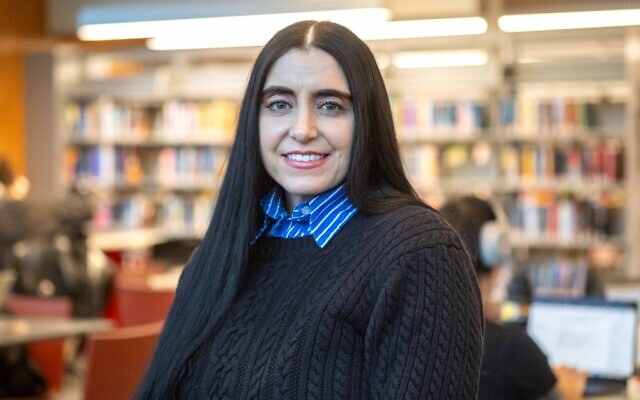
Meg Pankiewicz decided she wanted to dedicate her career to Holocaust studies after volunteering at the Jewish Community Center in Squirrel Hill. She met Holocaust survivor Sam Gottesman and immediately felt a “shift” in her life.
“Knowing him, learning from him, him becoming part of my family, changed every dynamic of how I look at the world and how I want to make it better,” she said.
After her life-changing meeting, Pankiewicz dedicated her career to Holocaust and Jewish studies.
Her actions stood out to the Pittsburgh Families Bridging Kindness nomination committee — a group composed of survivors and family members of victims of the Pittsburgh synagogue shooting — which nominated her as Righteous Among the Neighbors.
Pankiewicz teaches English alongside a course in Holocaust and genocide studies at Canon-McMillan High School. She also teaches Holocaust and genocide studies at Seton Hill University.
“This material is single-handedly the most important, most transformative material that we can give students,” Pankiewicz said. “Not just students, but even adults. I think even the world. I believe in its power, I believe in its meaning. I see it, firsthand, change students. It has changed me.”
She was so inspired by the material she taught and the experiences she had with Jewish community members that she pursued a doctorate in Holocaust studies. Her goal was to “learn more and be able to give [her] students and the people that [she] teaches more.”
Carol Black, one of the women responsible for nominating Pankiewicz, is a member of the Pittsburgh Families Bridging Kindness group and survivor of the Pittsburgh synagogue shooting. Black first connected with Pankiewicz two years ago when she spoke at Pankiewicz’s screening of “Repairing the World: Stories from the Tree of Life” at the public library in Canonsburg. She was impressed by Pankiewicz’s determination to show the film to students.
To Black, the world needs more educators like Pankiewicz, a person filled with compassion who empowers her students to make a difference. Pankiewicz, Black said, continues to go above and beyond for the Jewish people and always stays true to what’s important to her.
“She’s just a warm, caring, loving, tender person, and she’s very much involved with making sure that people know about what went on, and she works very hard at it,” Black said.
“I wish [the Jewish people] would know that I will stand by them forever,” Pankiewicz said. “They always have a place with me that is safe and loving.”
Bhavini Patel
By Addie Young
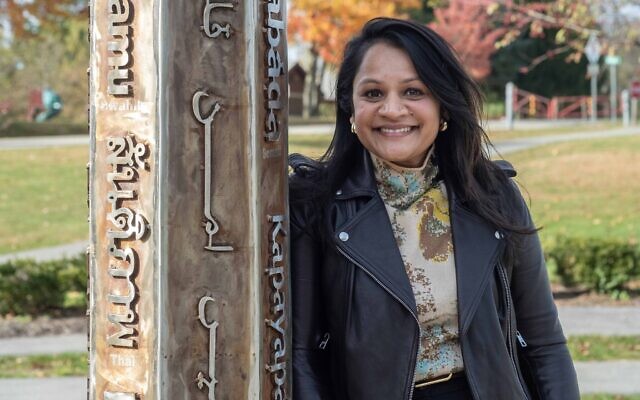
Just days after Hamas’ Oct. 7 attack in Israel, Bhavini Patel stood among hundreds of mourners gathered at a Pittsburgh vigil. Candles flickered, prayers were whispered and grief hung heavy in the air. Patel wasn’t there for a photo or a headline. She was there to listen, to grieve and to remind her Jewish neighbors that they were not alone.
As antisemitism continues to rise across the country, leaders who speak out play a crucial role in building understanding and hope. Patel is one of those voices. Her consistent efforts to confront hate and strengthen connections among communities earned her a nomination as Righteous Among the Neighbors.
Patel launched her campaign as a 12th district congressional candidate on Oct. 2, 2023. Just five days later, terrorists attacked Israel, leading to the worst loss of Jewish life in a single day since the Holocaust.
What followed was a period of intense grief and uncertainty for Jewish communities. Patel understood the need for visible solidarity, not just words. She attended vigils alongside local residents, showing empathy and a commitment to standing with her neighbors during a moment of deep heartbreak.
As Patel continued her campaign, she spoke openly against antisemitism, even when doing so drew criticism from opponents. For her, allyship was never a political strategy. It was a moral responsibility.
While Patel is no longer a candidate, her steady, visible solidarity has made her a key bridge-builder in Pittsburgh’s Jewish and Hindu communities.
Together with community leaders from StandWithUs, the Jewish Federation of Greater Pittsburgh and the Jewish Community Center of Greater Pittsburgh, she helped launch interfaith, cross-community initiatives bringing Hindu and Jewish residents closer together and strengthening bonds. From shared meals to cultural conversations, Patel has focused on creating spaces where communities come together to learn about one another, grieve together and celebrate together.
“Radical kindness is a method of responding to hate and extremism,” Patel said.
One of the earliest efforts was a community gathering at the Hindu Jain Temple in Monroeville. More than 200 Hindu and Jewish residents shared music, stories and a vegetarian meal.
“Sitting together, eating together, mourning together, dreaming together, figuring out what a world of peace could look like. That is how we move forward,” she said.
Those early events inspired a more structured initiative. Patel helped organize a five-session Hindu/Jewish cohort of 22 community members who met to explore culture, identity and faith.
Patel immersed herself in the work of understanding the challenges Jewish residents were facing. She participated in programs at the JCC and engaged with the Federation’s Community Relations Council, gaining a deeper awareness of the rising concerns about antisemitism.
Her leadership caught the attention of community members across the city, including The Tree of Life CEO, Carole Zawatsky, who nominated Patel for the award.
“I knew right from the start that she believed in a strong Jewish community, and that she was passionate about supporting the Jews of Pittsburgh and Squirrel Hill,” Zawatsky said. “She is a wonderful ally, not only against antisemitism, but against all forms of identity-based hate.”
Patel’s unwavering support has not always come easily. Speaking against antisemitism made her a target for online harassment and criticism. Still, she chooses to remain a visible ally.
“Being a good neighbor and good friend should not be controversial,” Patel said. “It should be who we are.”
Kannu Sahni
By Blake Silverman
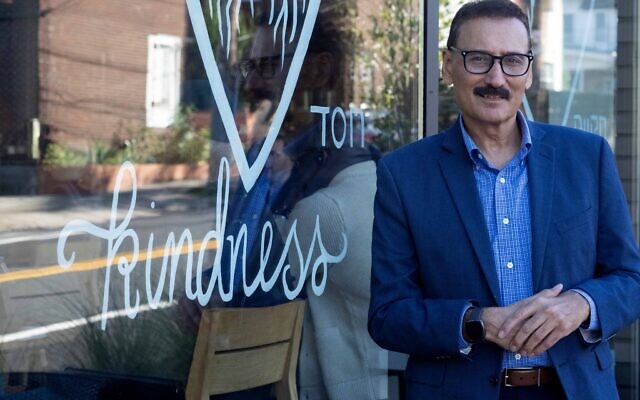
Kannu Sahni first came to Jewish Family and Community Services because he needed career direction.
“I was trying to understand my strengths and where I could be useful,” Sahni said. “The support I received helped me get centered. I stayed connected because I believed in what the organization was doing. I believed in the work.”
Sahni, who went on to become the first non-Jewish board member of JFCS, has been nominated by Dana Gold, chief operations officer of JFCS, as Righteous Among the Neighbors.
Gold first met Sahni when he applied to JFCS for career guidance. The counselors recognized his talent for working with people and helped him transition into a role where he supported clients seeking employment. He later continued to work alongside JFCS while working in other institutions across the city, and then was invited to join the board of the organization.
Over many years, Gold observed how Sahni listened, how he treated others with dignity and how he acted without needing acknowledgement.
“He had been part of the JFCS community as a client, a colleague and a partner,” Gold said. “When it came time to expand the board so that it reflected the diverse communities we serve, he was the clear and natural choice. He understood the mission because he had lived it.”
His role became especially meaningful in the period following the Pittsburgh synagogue shooting. JFCS was one of the central organizations providing support during that time. Staff members were grieving, families needed care and community members struggled with fear and sorrow. There were long meetings, difficult decisions and constant changes in emotional and practical needs.
Gold described Sahni’s role as steady and consistent.
“He showed up whenever we needed to gather the board,” Gold said. “He listened closely. He encouraged the team. He helped us stay grounded. He helped us think about how to support the Jewish community, while also remembering that the refugee and immigrant communities felt the impact as well. His presence mattered.”
Sahni said his sense of community motivated him to continue in this work.
“I have always believed that if you are part of a community, then you show up for it,” Sahni said. “I was supported by JFCS when I needed it. So when the community needed support, I showed up.”
Kevin Washo
By Abby Sohyda
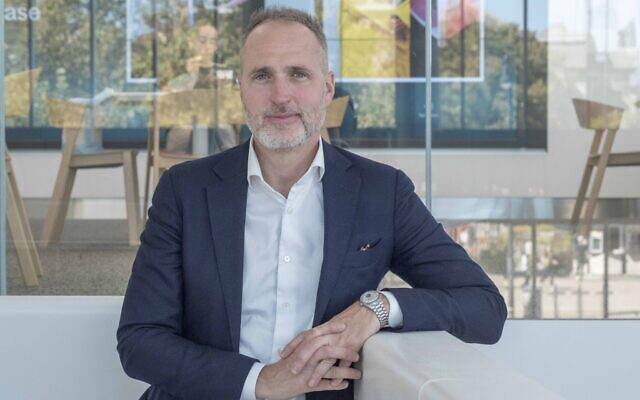
Life is busy for the senior vice chancellor at the University of Pittsburgh. Juggling everything from alumni engagement to government relations and advocacy leads to a consistently full schedule. However, for Kevin Washo, these responsibilities are only part of a much larger mission to create a more accepting environment for everyone on campus, including the Jewish community.
Rabbi Shmuli Rothstein believes this makes Washo the perfect candidate to be recognized as Righteous Among the Neighbors.
“He connects with people, but he’s not just working off emotions or feelings,” Rothstein said. “He is well-educated and he understands what the story is.”
Washo joined the University of Pittsburgh professionally eight years ago, but he also was a student there, and he always worked to foster a community of acceptance on campus.
“I had a friend whose name was Brian Gold who I met when I was running for student government president,” Washo said. “He took me to my first Shabbat dinner way back in 2002 and I’ve felt a connection to the community since.”
Rothstein sees Washo’s ability to help others as one of his most impactful traits.
“He’s someone I can truly admire,” Rothstein said. “He’s a good man with a big heart and a loving smile. He’s just a very real person to everyone he meets.”
Rothstein highlighted the work Washo has done with Jewish students on campus.
“He fights for everyone,” Rothstein said. “I would say he is one of the keys to why the Jewish community at Pitt is thriving.”
Washo also serves on the Antisemitism Working Group at the University of Pittsburgh.
“We look at all aspects of stopping antisemitism, whether it be on the Pitt campus or within the broader community,” Washo said. “Being on the committee and talking to members of the committee has beat my original thinking of how important the Jewish community is to Pitt.”
Washo insists that he has gained more from those around him than he has given.
“However long I’m at Pitt and working with all the people here, the thing that I’m taking away the most out of my years here are really the people I’ve met,” Washo said. “I am lucky to work with the people I get to work with on a daily basis. I wake up every day thinking about how blessed I am. It’s all about the people.”
But inclusion and understanding doesn’t end on the campus of the University of Pittsburgh. Washo believes that fostering a better, more inclusive environment across the country is achieved through one, simple action: communication.
“I think you really have to communicate,” Washo said. “The more you interact with students and people around you, the more you get to know people on a real human level.” PJC
comments