
Political strategist Joel Rubin says Democrats must address antisemitism, Israel tensions
“The leaders in this party understand there’s a problem,” he said, “that this is a challenge they have to address and deal with.”
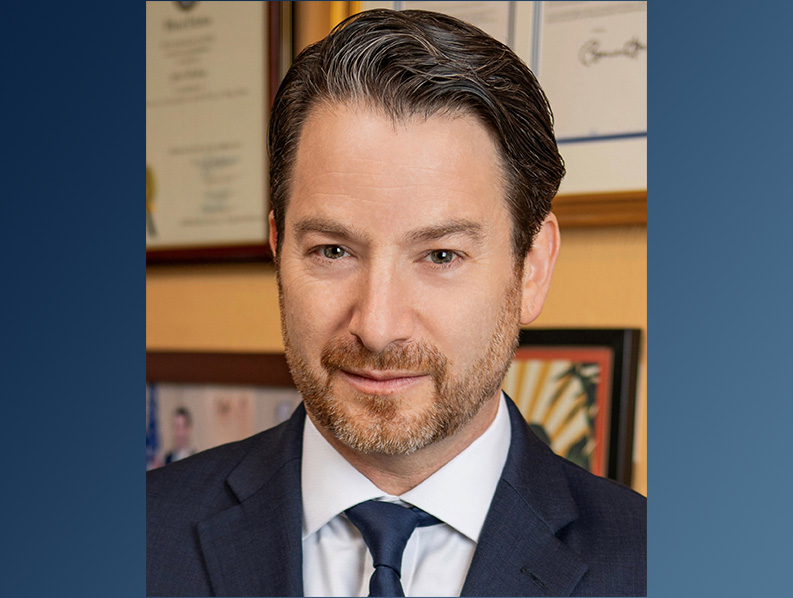
Squirrel Hill native Joel Rubin — a J Street founder whose extensive political resume includes working on Sen. Bernie Sanders’ 2020 presidential campaign — is concerned by the alignment of some of his fellow Democrats with candidates espousing antisemitism and maligning Israel.
In July, he opined to Jewish Insider that the wave of Democratic politicians’ support for anti-Israel candidates — notably former Maine Senate candidate Graham Platner — would ultimately harm the Democratic Party.
He specifically criticized his former boss.
“I think what Sanders and the Sanders operation have done is shove into our system the most categorically anti-Israel, antisemitic candidates that we’ve seen in a generation — if ever, certainly within the Democratic Party — and it’s by design,” Rubin told Jewish Insider. “It’s not by accident, and it’s very disruptive intentionally. The goal is to undermine Democratic unity and even rationality on Israel at this stage.”
Rubin was back in his hometown last week to speak at an event sponsored by the Democratic Jewish Outreach of Pennsylvania, a group that provides support for politicians and candidates, engaging them on a variety of Jewish positions.
After the event, the Steel City native told the Chronicle that “as a Squirrel Hill kid, I just couldn’t for the life of me contemplate that Sanders would endorse someone who had Nazi tattoos on his chest and seemed to think nothing of it. It was a violation of my morals as a Jew and as a Democrat that I’ve been fighting for, certainly for the last decade. I don’t separate Jewish and Democratic at the moment, because our values are aligned, but the values that Graham Platner espoused with his Nazi tattoo are not my values.”
Rubin said he considers himself part of the Jewish community that’s willing to “see the nuance of what it means to be an American Jew, who cares about Israel and is willing to work with this nuance to keep the party on track.”
“I believe there’s a battle underway,” he said. “I’m not feeling like there’s no home here (in the Democratic Party), but I understand that people of goodwill, if we don’t say anything, there will be no home. The party needs to stand for liberal values, the diversity of its coalitions, human rights and ethics. We need Jewish support. That’s why I’m speaking out.”
Rubin first felt the tug of public service as a child.
“As a kid growing up, I read the paper tracking what was going on in national political conversation, spent some summers in Israel and traveling, got exposed to international affairs and the fact that the United States is just one place in the world, not the only place,” he recalled.
Rubin attended Shady Side Academy before majoring in political science with a concentration on Near Eastern and Middle East affairs from Brandeis University.
After graduation, he spent time in Costa Rica with the Peace Corps as a teacher in environmental education. He had a revelation, he recalled, while serving in the Central American country.
“I was working in a rural village doing environmental education and I remember thinking that the textbook was for an urban student body, but I was in the countryside. I thought, ‘My God, how do people in the capital make decisions for people all the way out here?’ A light bulb went on, and I said, ‘I want to be in the capital.’ It was that experience that made me want to find a way to work in our capital.”
His time with the Peace Corps, he said, taught him the importance of representing his country, coming up with strategies and organization, and the value of engaging local leaders, activists and organizers, which, he said, are “really powerful political skills.”
When he returned to the States, Rubin first attended graduate school at Carnegie Mellon University.
After finishing his studies, he went to work in the Energy Department as a presidential management fellow as part of the administration of George W. Bush. Working in a Republican administration wasn’t an issue for Rubin, who said the role was non-political.
Al-Qaeda’s terrorist attack on Sept. 11, 2001, paved the way for Rubin’s next transition.
“I was giving a speech outside of the Pentagon on Sept. 11 and was impacted by that immensely,” he remembered. “Seeing the terrorists come here and hit us, I felt like, as someone who lived in Israel and studied the Middle East extensively, that it was time for me to work in that space.”
Rubin moved to the State Department and worked there nearly five years before heading to Capitol Hill.
“I felt that what I needed to do was transition to have a career where I could be involved in the decision-making and policy arguments rather than purely on the execution of those policy decisions, which is what I had been doing,” he said.
While on the Hill, Rubin served as a senior aide to Sen. Tom Harkin and Sen. Frank Lautenberg.
He spent the next six years working in the nonprofit and political advocacy sphere. He was the founding political director of J Street and worked on Middle East issues for the Ploughshares Fund, the largest U.S. philanthropic foundation dedicated to preventing the spread of nuclear weapons.
The siren song of politics was still ringing in Rubin’s ears, however, luring him back as a political appointee in the State Department under Barack Obama’s administration, where he served as deputy assistant secretary of state for House Affairs.
Rubin eventually ran for the House seat in Maryland’s 8th District but lost to Jamie Raskin.
The loss did nothing to deter Rubin’s mission of public service. He founded the Washington Strategy Group, was elected to local office three times — including serving on the town council of Chevy Chase, Maryland, and as its vice mayor — was a visiting fellow at the Heinz College program in Washington D.C., was the executive director of the American Jewish Congress and was a founding board member of the Democratic Council of America.
Although he has been vocal in his criticism, Rubin still finds plenty in the Democratic party to align with, including its history of fighting for civil rights. But he thinks the party may be on the precipice of losing Jewish American support.
“The leaders in this party understand there’s a problem,” he said, “that this is a challenge they have to address and deal with.”
Still, he said, party leadership has been surprised at the ferocity of its base and the intensity of its shift.
Asked about U.S. Rep. Chris Deluzio of Pennsylvania, who has shifted to the left on Israel — supporting bills like the Ceasefire Compliance Act of 2026 and the Block the Bombs Act, seeking to limit the United States supplying arms to the Jewish state — Rubin said it’s important to keep lines of communications open.
“He isn’t someone who is not to be spoken to; instead explain to him what the problems are,” he said.
The question, he said, is, will Democrats like Deluzio be willing to listen to Jews who are not comfortable with where the party seems to be headed.
Rubin isn’t one to shy away from uncomfortable conversations or to refrain from speaking to the values he holds and believes the Democrat party is built on. It’s the subject of his new book, “Saving Democratic Foreign Policy: How Democrats Can Earn the American People’s Trust to Lead the World Once Again.” In it, he writes Democrats can once again lead globally through pragmatism, patriotism, and populism.
Rubin said he’s concerned about the party’s willingness to accept diversity, especially after the anti-Israel attacks on Pennsylvania Gov. Josh Shapiro when he was considered as a running mate for Kamala Harris in the last presidential election.
That doesn’t mean he’s given up hope, though.
“The battle is right now,” he said. “The core question for the Democratic party is going to be Jewish participation. I think that’s being defined now.” PJC
David Rullo can be reached at drullo@pittsburghjewishchronicle.org.
comments