
Kiddush Hashem on the corner of 92nd and Broadway
Praised be the G-d of the Jews.

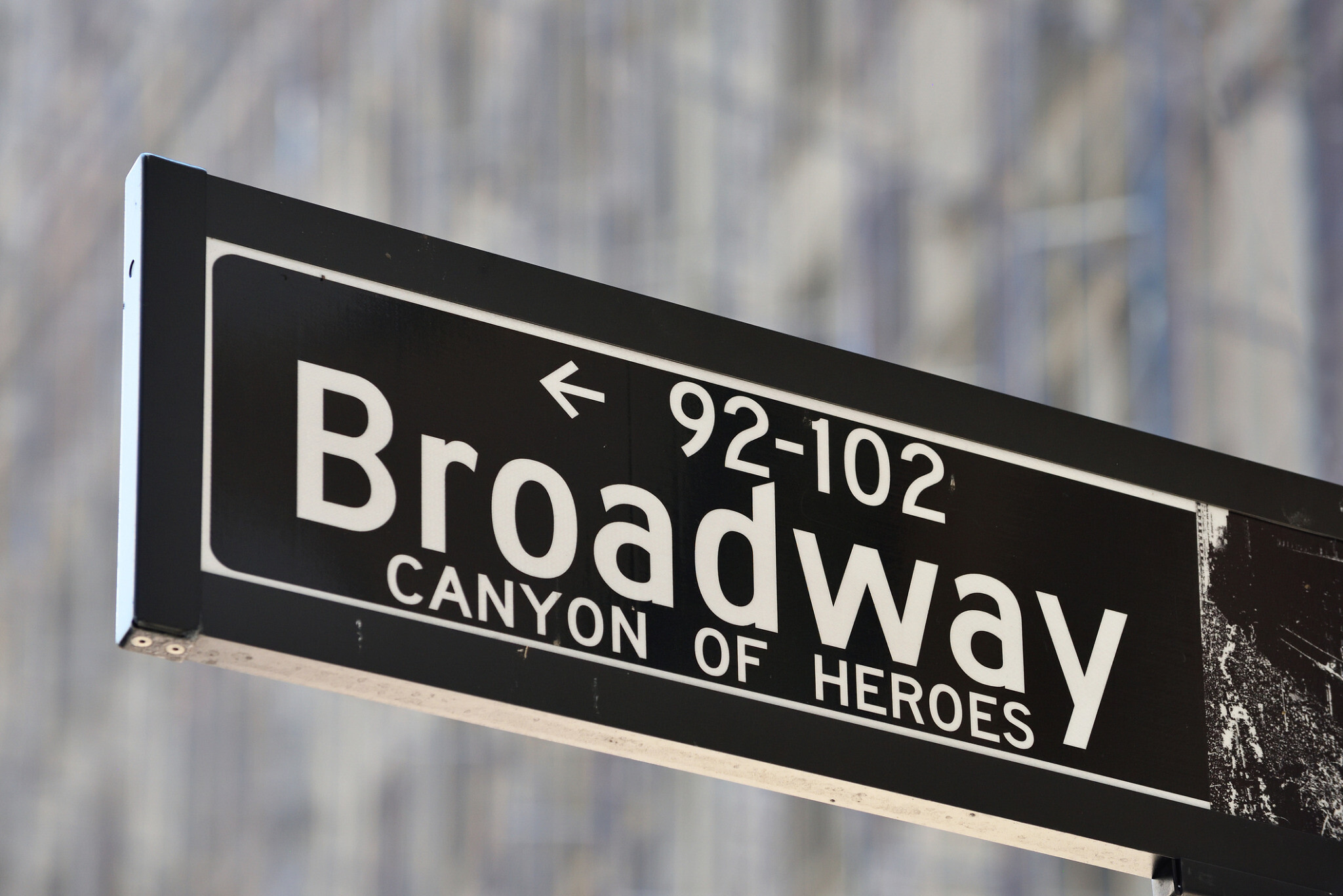
Of all the places I expected to meet Elijah the Prophet, the corner of 92nd Street and Broadway on Manhattan’s Upper West Side would not have been my first guess.
I was in New York for the Hadar Rabbinic Yeshiva Intensive, a gathering of clergy from across the Jewish denominational spectrum to spend several days studying Torah and Talmud purely for the sake of learning. Hadar comes from a traditional egalitarian perspective — and in that spirit they were egalitarian about titles as well. Though I am a cantor rather than a rabbi, I was welcomed as a full participant.
On the first morning I was paired in chevruta, the traditional study partnership, with Rabbi Ilan Emanuel of Syracuse. The study hall was full and noisy, and the weather outside was unseasonably beautiful — 60 degrees and sunny in early spring. So we did what many students have done before us: We took our learning out of the building and down the street. We settled at a small pizza shop a block away, opening our binders over some sodas.
Get The Jewish Chronicle Weekly Edition by email and never miss our top stories Free Sign Up
Our assignment that day was to study a set of passages about chilul Hashem and kiddush Hashem, the desecration and sanctification of G-d’s name. The first day focused mostly on the negative: what it means when someone’s behavior brings dishonor to G-d. We debated, analyzed and wrestled with the texts for about an hour and a half before returning to the classroom.
The next morning we picked up where we had left off. Another beautiful day — close to 70 degrees — so once again we returned to the pizza shop with our binders. This time our focus was on the opposite idea: kiddush Hashem, sanctifying God’s name through the way we act in the world.
About 20 minutes into our study, just as we began reading a passage from the Jerusalem Talmud, we heard a hesitant voice beside us.
“Excuse me,” a young man said. “I’m so sorry to bother you. But I was wondering what you were studying … and whether I might be able to join you?”
He looked to be about 24 or 25. His bag was in a chair and his pizza was half-eaten on the table next to us.
As someone who believes the wisdom of Talmud belongs to everyone, I immediately said yes. Rabbi Ilan, a bit more cautious, asked a few questions. Had he grown up religious? No. Was he religious now? Not really. Satisfied, we pulled up a chair. His name was Tyler.
The text in front of us could not have been more fitting for the moment; dare I say it felt divinely inspired. The passage tells several stories about Jews interacting ethically with non-Jews. In one story, a rabbi buys a donkey and later discovers a pearl tied around its neck. The debate begins: Does the pearl belong to the buyer, or must it be returned?
The man who wishes to return the pearl gives a striking reason for doing so: In his act of kindness, he wants to hear, “Praised be the G-d of the Jews.”
Another story tells of money discovered hidden in a pile of wheat and returned to its owner. The owner of the money gives the same reaction the previous rabbi desired: “Praised be the G-d of the Jews.”
For 45 minutes the three of us studied together. Tyler asked thoughtful questions. He pushed back on interpretations. He engaged the text with curiosity and seriousness. He might not have been a Talmud scholar, but he certainly acted like a chacham with us. Eventually he had to leave, thanking us for letting him join.
A few minutes later, after I had briefly stepped away, he came back to Rabbi Ilan alone. He told him how beautiful he found the ideas we had been studying and how moved he was that two strangers had shared their time with him.
When Rabbi Ilan told me this when I returned, something clicked. Without realizing it, we had stepped directly into the story we had just read. By studying openly and inviting a stranger into the conversation, we had participated in our own small act of kiddush Hashem. His words were just a breath away from the ones recorded in the Talmud: Praised be the G-d of the Jews.
Only later, walking back to the classroom, did I realize how deeply the moment affected me.
We are living through a time when antisemitism again feels frighteningly present. In moments like these, the instinct can be to retreat — to close doors, to hide Jewish symbols, to keep our traditions private and protected.
But the story we lived that morning suggested another path.
Soon, Jews around the world will open their doors at the Passover seder to welcome Elijah the Prophet, the mysterious herald of redemption. Tradition teaches that Elijah appears unexpectedly, in ordinary places, reminding us that a better world is still possible.
Perhaps Tyler really was just a young New Yorker curious about what two clergy were studying.
But in that moment, he also felt like Elijah.
Rabbi Emanuel and I had opened the door — literally — to our learning. And for a brief moment on a busy Manhattan sidewalk, someone stepped in.
Sometimes the sanctification of G-d’s name does not come through grand gestures. Sometimes it happens when we simply study and share our tradition openly, act with integrity and invite someone else to pull up a chair.
You never know who might walk by. It might even be Elijah. PJC
Cantor Kalix Jacobson is the cantor at Temple Emanuel of South Hills.
comments