
JFNA’s Eric Fingerhut shares plans for Jewish communal actions in a post-Oct. 7 world
Federation leader stresses urgent need for unity across Jewish communities in response to growing global and local challenges.
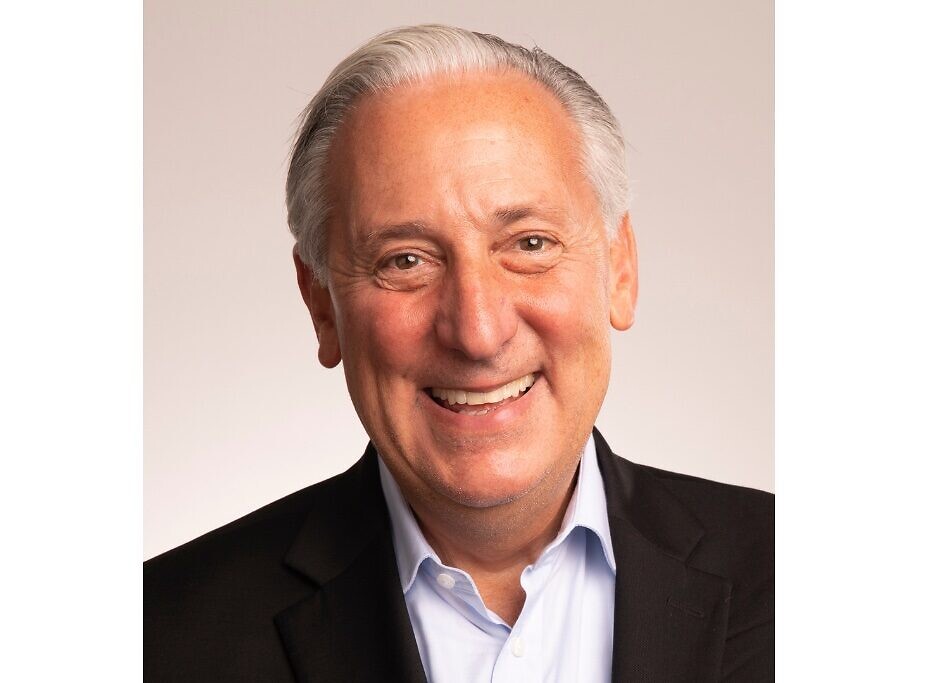
Eric Fingerhut has been president and CEO of the Jewish Federations of North America — the umbrella organization for the Federation system — since 2019. A former U.S. congressman from Ohio, Fingerhut has helped the JFNA navigate through uniquely difficult times, including the pandemic, an increasingly divisive political climate and the aftermath of Hamas’ Oct. 7 attack in Israel.
While in town last week to meet with Jewish Federation of Greater Pittsburgh’s lay leaders and staff, he spoke with the Chronicle about Jewish communal challenges — as well as opportunities — in a post-Oct. 7 world.
The interview has been edited for length and clarity.
Has your vision for the Jewish communal world changed since Oct. 7?
That’s a great question. I don’t think it’s changed, but I think that the need for an organized communal response that bridges all factions of our community has become more important than ever, because the challenges that have arisen as a result of Oct. 7, both in Israel and here at home, are bigger than any one organization and bigger than any one part of our community. Our responsibility in the Federation system is to be the convener that brings everyone together and mobilizes collective responses.
There are times — especially when times are good — that people don’t see the need for that level of communal organization. But I think everybody recognizes it now. So I wouldn’t say my vision has changed, but I do think the sense of responsibility that we have to this moment is at a very high level. We know that the community needs to be brought together across differing religious and political and ideological lines, to work together for the common good, and so it’s a very significant responsibility — and frankly, there’s a lot of pressure to get it right.
You phrased the question as “since Oct. 7,” but there’s no doubt that we’re sitting here at a moment that is probably the most challenging since Oct. 7. This is now the longest war in Israel’s history. We still have our hostages being held prisoner in Gaza. The political divisions here at home are growing and there are also the issues, the questions, about Israel’s policies intersecting with American political partisanship, which is extreme. So this is a very challenging moment for our community, and therefore, I think we have a huge responsibility here at the Pittsburgh Federation — and also at the Jewish Federations of North America — to be bringing our community together to find those collective responses that will help us get through this moment.
What is the JFNA doing to address the divide between Diaspora Jews and Israeli Jews?
Since Oct. 7, our primary focus in Israel has been to assist with the emergency needs that have arisen and continue to arise as a result of the war, and the terrible trauma that has occurred as a result. Everybody knew about the devastation of the south, but now we’re more aware of the problems in the north that have resulted from Hezbollah’s attacks and, of course, the miluim who’ve been serving for so many days and months. The collective response of the Federation system has been extraordinary. We raised over $900 million and got that money to where it needed to be deployed quickly — and I think with real efficiency, but also integrity. There really isn’t a sector of Israeli society or a part of the country that wasn’t touched in a positive way by the North American Jewish community through the efforts of the Federation emergency campaign. That is something that we’re enormously proud of.
And then we ask ourselves, “What does the future look like?” And even though we can’t say that the war is over — and the emergency, therefore, isn’t fully over yet — we’ve begun some serious planning for what comes after the war, which God willing will come soon, and we call it “Rebuild Israel.”
There’s really two components of it. One is to encourage all of the interactions that the Federations have in Israel to make long-term plans. We have many partnership communities, for example, and those Federations are making multiyear commitments to those communities. We adopted new kibbutzim during the course of the last two years, making long-term commitments — now, multiyear commitments — to them.
We’ve asked ourselves, “What are some of the big topics that that need collective action and support in Israel?” One is the whole issue of trauma. This is a country that has experienced such broad-based trauma, and needs support for resilience, and of course, some portion needs serious mental health and medical attention, which the hospitals and the medical system in Israel will provide, but we can help.
Finally, there’s an issue of rebuilding that is really both to help Israel, but also to help our own communities reconnect. We’re partnering together with Birthright to build a really broad-based volunteerism in Israel program to reach all ages and all communities in North America, so people can go and not only give of their financial resources, but also give of their time and commitment. Those are some things that are already underway, but we expect there’ll be more now.
A second important area for our future response is obviously here at home. We’re enormously proud of the successful unified support of the Jewish community across America since Oct. 7, for the physical security of American Jews, for the political support of America, for Israel. But we know that this last couple months have been very, very challenging, and are straining all of this success to the breaking point, both on physical security and on the antisemitism that is arising as a result of anti-Israel activity that has been unleashed. So our focus has to be on how do we also rebuild that at home, and making sure our community is connected in a positive way to Israel — the volunteer programs, but also just doubling down on the things we do, educating our kids, sending them to Israel, Jewish summer camps, Jewish day schools, all the Hillels, Chabads on Campus, all of the really important things to engage even more of our community, but also the relationships outside of our Jewish community.
Here in Pittsburgh, you know that you must be engaged in the broader community at a much higher level than in recent years — what we sort of lump under “community relations,” but it’s really about making sure that the civic institutions of our community on which we depend — city councils and city halls and police departments and school boards and chambers of commerce — are aware of this rising problem of antisemitism, that they understand why this is a threat to the Jewish community and to the Pittsburgh community as a whole. Because if it takes over the community, it damages the entire community, not just the Jewish community, and they have an important role to play in keeping out these negative influences and ideas.
The world saw how much support Pittsburgh got from the wider community after the horrific antisemitic attack here on Oct. 27, 2018. We have not seen that kind of support since Oct. 7. It seems like the tide has gone the other way. What do you make of that?
I think this is one of the major challenges and responsibilities we face. The mostly positive response from the community right after Oct. 7 has significantly eroded, and we know there’s a global campaign to do just that. And they have deep roots in every community — and they have roots here in Pittsburgh.
We have to be operating at a different level. The physical security protections we put in place are necessary but are not sufficient. We have to have an aggressive, well resourced, coordinated effort to make sure that every level of this community is aware that what they’re saying or what they’re doing or what they’re hearing is isolating and marginalizing and threatening their Jewish community. We have to be the ones that are out there expressing that and building and maintaining permanent relationships. Most of us have some relationships in the broader community — through business, through our families, through other ways — and we can’t stay inside of our community. We have to build these external communications and advocacy. This is what the central function of community relations in this coming period of years is: to protect the Jewish community and to do that by making sure that the leaders of the broader civil society in which we live understand this issue, know what the expectations are, and live up to those expectations.
Are you optimistic about the Jewish future?
One hundred percent. First of all, the extraordinary accomplishments of the Jewish community in North America since Oct. 7 — the response to support Israel, the response in our own communities — has been extraordinary, and that’s because of the work we’ve been doing all these years. Despite the terrible messaging that our young people are getting, well over half of our young people understand, and they support Israel.
We know that Jewish identity and identification, education and engagement with the Jewish community strengthens and builds the Jewish future. You have so many great examples of that here in Pittsburgh and we’re going to invest in that growth, and we’re going to see the dividends of it. So I’m very optimistic.
In the coming year, we’ll see our hostages come home, God willing. We’ll see the war end, and we’ll be able to then focus on those positive investments that need to be made. PJC
Toby Tabachnick can be reached at ttabachnick@pittsburghjewishchronicle.org.
comments