
JFCS CEO says immigration crackdown is shaking Pittsburgh’s immigrant community
'When immigrants are at risk, and are living in fear, it has reverberations throughout the community and impacts all of us'

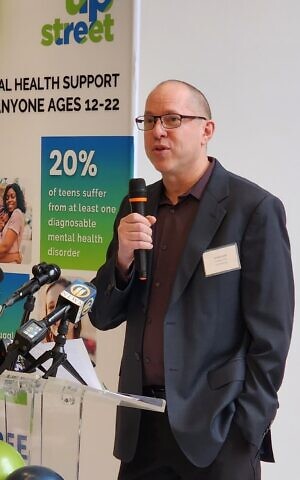
Pittsburgh is known for spells without sun, but the current view from Jordan Golin’s vantage point is especially bleak. In recent months the president and CEO of JFCS Pittsburgh has watched the closure of nearly all legal pathways for immigrants into the U.S.
“It’s been really tough,” Golin said. “We have immigrants who are on our staff. We have staff who have worked with immigrants for many years, who are American born, and all of us feel shaken up by the way in which immigrants in our country are now being treated.”
Following the Jan. 20, 2025, “Securing Our Borders” executive order from President Donald Trump, the U. S. Citizenship and Immigration Services announced it was pausing acceptance of Form I-134A.
Created for prospective sponsors, the form enabled individuals to “request to be a supporter and agree to provide financial support to a beneficiary and undergo background checks as part of Uniting for Ukraine; the Processes for Cubans, Haitians, Nicaraguans, and Venezuelans; or the family reunification parole processes.”
Earlier last year, the government suspended the Refugee Resettlement Program.
The move, Golin explained, struck one of JFCS’ central tasks.
Since 1980, JFCS has worked with HIAS, one of nine U.S. government-authorized agencies to resettle refugees through the U.S. Refugee Admissions Program of the State Department.
While the U.S. Congress created USRAP in 1980, “we have, of course, been resettling refugees through other programs prior to that,” Golin said.
JFCS origins date back more than a century.
Before assuming “its present form and structure” in 1937, according to JFCS representatives, the organization’s predecessors long helped welcome people to Pittsburgh.
That work, Golin said, resulted in “tens of thousands of refugees” being resettled here. Stopping the Refugee Resettlement Program — which resulted in decreased federal funding for JFCS totaling “several million dollars” — sparked organizational concern and warrants wider attention.
Within the Jewish community, particularly, there is an “intimate relationship with immigration,” he said. “Most of us are not very far, generation-wise, from being immigrants ourselves,” and ideas such as welcoming neighbors and strangers are central to “our culture and our religion.”
Golin said he and staff have followed news reports from Minnesota.
On Jan. 29, Zena Stenvik, superintendent of the Columbia Heights School District in suburban Minneapolis, told Here & Now, a live production of NPR and WBUR Boston, that earlier that morning three of her high school students’ cars were surrounded and stopped by Immigration Customs and Enforcement vehicles.
The students all attend the same district as Liam Conejo Ramos, a 5-year-old who was detained with his father, Adrian Alexander Conejo Arias, on Jan. 20 by federal immigration agents.
“I know for a fact right now behind our high school in the park, there are ICE agents looming,” Stenvik said, “and they’ve been circling my schools again this morning, parked outside of my middle school.”
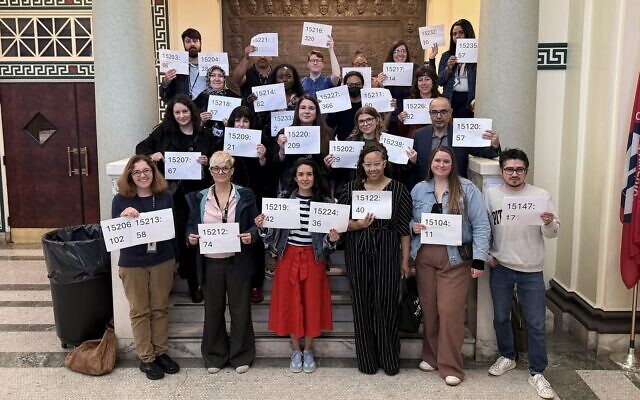
Golin said he and his staff are hearing from refugees in Pittsburgh who entered the country through legal pathways and who are “reading about these things in the news and are wondering, ‘Is that going to happen to me?’”
Those worries affect all Pittsburghers, Golin said. “When immigrants are at risk, and are living in fear, it has reverberations throughout the community and impacts all of us: It impacts our tax base, it impacts our economy, it impacts the culture of our region, and it also challenges us with how we think of ourselves as neighbors, and how we care for the people living next door to us.”
Lest Pittsburghers be lulled into believing the situation is fait accompli, a possibility of improvement remains, Golin said. “If people believe that immigrants have a valuable role to play in our community then they should speak up and let their public officials know. The public officials are the ones who have the ability to set public policy about how immigrants in our community are treated, and they need to hear from their constituents.” PJC
Adam Reinherz can be reached at areinherz@pittsburghjewishchronicle.org.
comments