
Jewish Morocco: Essaouira, the North African port that was half Jewish
Essaouira may be the most moving destination on a trip to Morocco from a Jewish perspective.
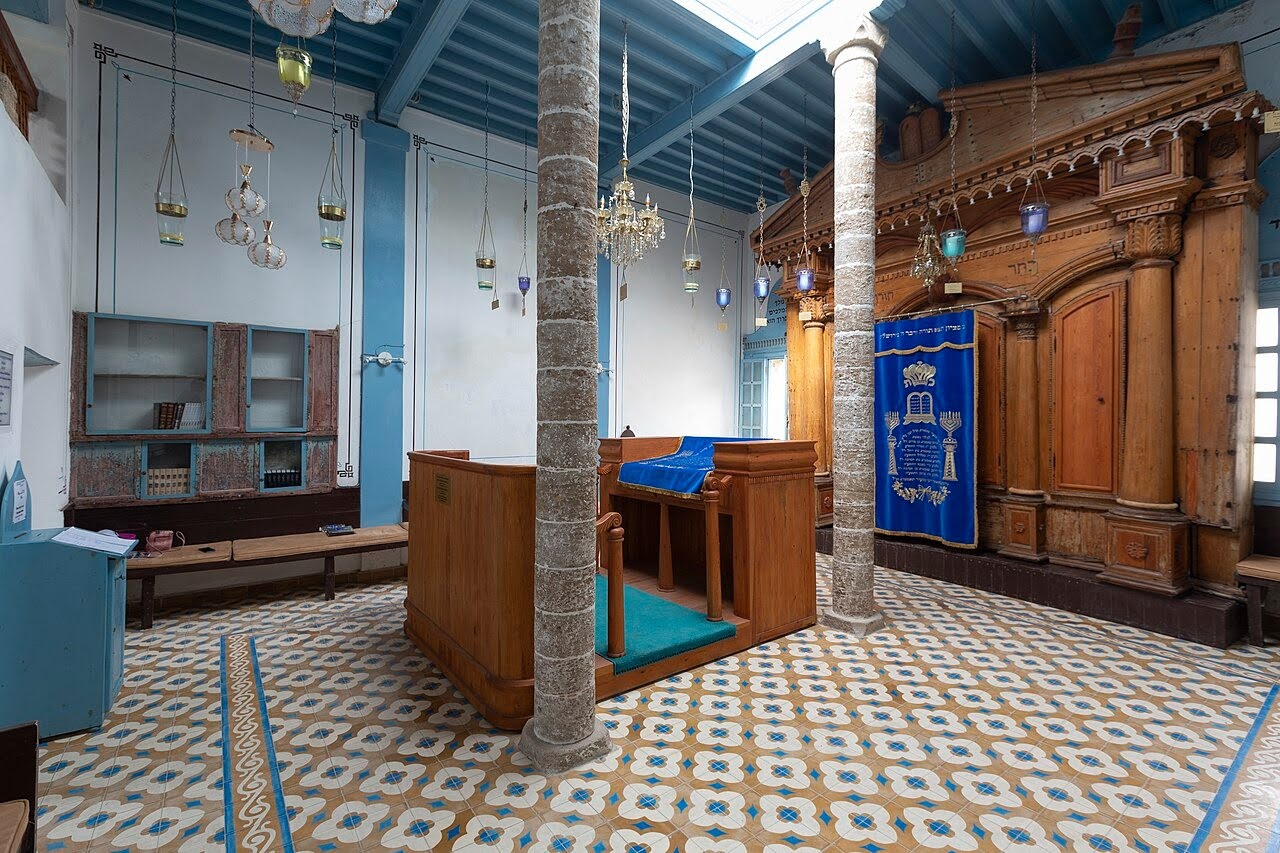
In the first week of September, more than 1,000 people arrived in a small Moroccan port on the Atlantic to pray at the tomb of a rabbi who died in 1845. They came from the East Coast, Israel, France, Canada and beyond, filling the guesthouses and the narrow lanes behind the harbor for five days. Rabbi Haim Pinto’s hiloula (death anniversary celebration) draws them back to Essaouira every year at this season.
The town has almost no Jews left. Fewer than a handful live there now, though 60 or 80 Moroccan-Jewish families spend part of each year in the place their parents left. Many of those families left in the same postwar decade that brought Moroccan Jews to Pittsburgh.
Sephardic history in Pennsylvania has mostly been an eastern story. The Jews who left Spain and Portugal after 1492 and traveled north through Amsterdam and London reached New York, Newport and Philadelphia, and, as Eric Lidji has written in these pages, they largely didn’t cross the Alleghenies. Our Sephardic community arrived later and by another road: after the Second World War, in families from Egypt, Greece, Iran, Israel and Morocco.
That last word is worth following. The expulsion had a southern door as well as a northern one, and the Strait of Gibraltar is eight miles across at its narrowest. The Jews who crossed it did not arrive in an empty country. Communities had lived in Morocco since Roman times, in Amazigh villages, praying in a rite the newcomers from Spain did not recognize.
Most people planning a Jewish journey through North Africa think of Fes or Marrakesh. Essaouira rarely comes up. But in my experience it’s the history, the old Jewish quarter, and the annual hiloula that make Essaouira the most moving destination on a trip to Morocco from a Jewish perspective.
The Moroccan city that was half Jewish
Essaouira, known as Mogador until the 1960s, was not an ancient quarter that grew slowly. It was built almost from scratch in the 1760s, when Sultan Sidi Mohammed ben Abdellah wanted a modern Atlantic port to channel Morocco’s trade with both Europe and with sub-Saharan Africa.
I recently did a deep dive into the fascinating Jewish history of Essaouira. From around 1764 he recruited roughly 10 Jewish merchant families to run it: the Corcos, the Afriat, the Knafo, the Pinto. They were named tujjar as-sultan, the sultan’s traders, exempt from the poll tax levied on non-Muslims. They were housed in the prestigious casbah quarter rather than the cramped Jewish streets, given interest-free royal loans and sent to negotiate with European consuls on the sultan’s behalf. They controlled the port’s tea, sugar, metals and gunpowder, and they nicknamed their city the “Port of Timbuktu”.
This community was not sheltered. It was recruited. At its height the town was close to half Jewish, and by one account held more synagogues than mosques.
The top Jewish sites to visit in Essaouira
The Jewish sites sit within a morning’s walk of one another.
Start at Bayt Dakira, the House of Memory, a restored home inaugurated by King Mohammed VI in January 2020 and now holding a small museum, a research center and the restored Simon Attias synagogue. It was the project of André Azoulay, born in Essaouira and for decades a senior adviser to the king.
From there the Mellah spreads across the northern corner of the medina, 15 blocks or so, part of the UNESCO-listed old town. Much of it fell into disrepair after the community left. Stars of David are still cut above doorways. The quarter once held dozens of small distilleries producing mahia, an anise-scented fig spirit.
The Haim Pinto synagogue preserves the rabbi’s home and still holds services when pilgrims come, which is essentially the week I have just described. Slat Lkahal, a short walk away, reopened at the end of 2017 after a five-year restoration paid for by Jewish donors around the world and by UNESCO. That restoration was led by Haim Bitton, who was born in Essaouira, left as a young man and came back in retirement to do it.
Outside the city gates, on the seafront, are the old and new Jewish cemeteries. This is where Pinto’s shrine stands and the Hebrew inscriptions are slowly eroding in the salt air.
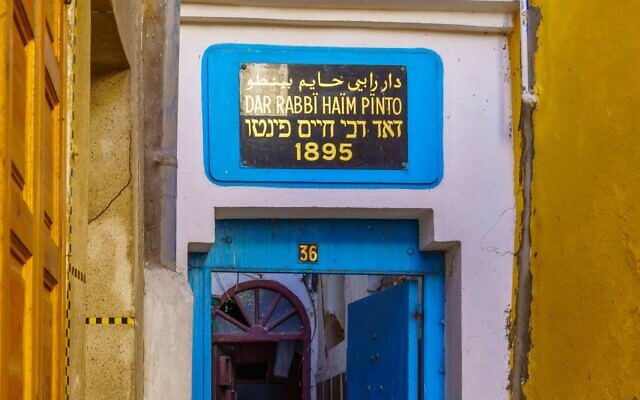
I have led Jewish heritage journeys through Morocco for years, and Essaouira is the place that most often stops people in the street. Partly it is the scale of what was here. Mostly it is the care with which a country preserves a heritage almost none of whose people remain.
Two days on foot
Day one: Bayt Dakira first thing, before the light gets hard. Then the Mellah on foot, slowly, looking up at the doorways. Lunch at the harbor.
Day two: The Haim Pinto synagogue and Slat Lkahal in the morning, then out through the gate to the cemeteries by the sea in the late afternoon, when the wind drops. Marrakesh is three hours inland if you want to pair the two. PJC
Asaf Peled is the founder and CEO of Shin Tours, which specializes in Jewish heritage travel to Morocco, Spain, Portugal, Italy, France and Israel. He has been a registered tour guide since 2012.
comments