
Inmate’s request for kosher meals denied amid complicated questions of faith
“It’s imperative that a person who needs kosher food should be able to request it,” he said.
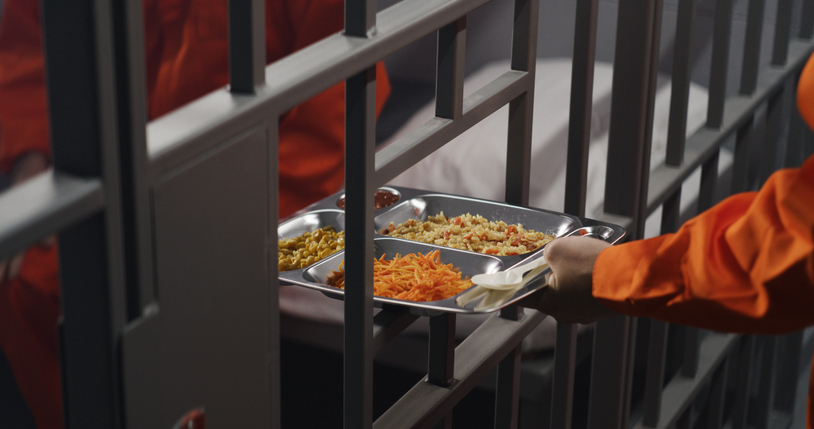
If Rabbi Moishe Mayir Vogel had his way, kosher food would be available to every Jewish prisoner regardless of where they are incarcerated.
Unfortunately, in western Pennsylvania that isn’t always an option.
The issue was recently highlighted when Westmoreland County jail officials denied Kort Noel Eckman’s request for kosher food because, according to the Tribune-Review, he “has not completed a formal conversion to the Jewish faith.”
The paper quoted commissioner Ted Kopas, who said the decision of whether Eckman was Jewish wasn’t made by the county. Instead, he said, it relied on a rabbi.
“I am never going to question anyone’s faith or religious preference,” Kopas said.
Eckman was arrested after he allegedly stabbed his mother more than 20 times in 2023. His mother told police that her son suffered from delusions and believed she was a Nazi.
Eckman’s Jewish identity has been an issue with prison officials since his arrest.
Earlier this year, Eckman missed a hearing when he was refused transportation from the county jail to the courthouse because he refused to remove his yarmulke.
His lawyer, Tim Andrews, told the Chronicle in July that prison officials refused to transport him because of “safety concerns.”
At the time, Andrews also said that Eckman bought all his food at the prison’s commissary because the county wouldn’t provide kosher food.
While not commenting specifically on Eckman’s case, Vogel, who is the executive director of the Aleph Institute – North East Regional Headquarters — which offers services to imprisoned Jewish men, women and their families — said he doesn’t determine who is or isn’t Jewish in any of the prisons, but he can lobby for an inmate if he believes they are Jewish.
The process of certifying whether someone is Jewish starts with an application, where the prisoner answers a variety of questions. Vogel said the issue of who is, or isn’t, Jewish is challenging.
Part of the problem, he said, is the length of time some inmates remain in county prison.
“The average stay of an inmate in the county jail is three months, at which point there has been a trial and the issue will be mute,” he said.
If a defendant is found guilty, they are sent to a state prison and those prisons provide kosher food. But that is complicated as well, Vogel said.
“The state provides a few vegetables, some pieces of bread, some peanut butter,” he said. “Ohio, on the other hand, uses a private catering company, which covers a lot of other prisons and has kosher kitchens, which are supervised; therefore these meals are cost effective.”
And that is part of the problem for the Commonwealth of Pennsylvania and its counties — kosher food is more expensive. It can also be perceived as having a higher intrinsic value than the customary meals provided, so it has some trade value on the prison yard, Vogel said.
Regardless, he said, the Supreme Court has been extremely clear: federal and state prisons are required by law to provide kosher food to Jewish prisoners.
In fact, Vogel said, Pennsylvania was sued by the American Civil Liberties Union nearly 30 years ago, with the court ordering the state to provide kosher food.
Vogel said the issue is important.
“It’s imperative that a person who needs kosher food should be able to request it,” he said.
And while Vogel doesn’t decide who or is or isn’t Jewish, he said sometimes that issue is complicated, noting that some prisoners prefer not to be identified as Jewish while incarcerated. For the state, the issue may come down to dollars and cents, but Vogel said that for some inmates, keeping kosher may be the first step in rehabilitating their lives.
“Niney-nine percent, if not 100%, of the inmates are good people who have made a mistake,” he said. “They’ve got a problem which has to be addressed, but even if they’re staying in prison, who are we to judge? They’re asking for it, they want to become more religious. People find religion in prison.”
By refusing some inmates the first step into what can be a deep and meaningful relationship with Judaism, Vogel said, society can be harmed. He noted that 12-step programs are rooted in religion.
It’s religion, he posited, that helps people make the right moral and ethical decisions.
“It’s the best support system there is. It’s their key to rehabilitation,” he said. PJC
David Rullo can be reached at drullo@pittsburghjewishchronicle.org.
comments