
Hayli Firtell-Elgarten hopes to strengthen community of Jewish women entrepreneurs
Jewish Woman Entrepreneur plans to meet in September
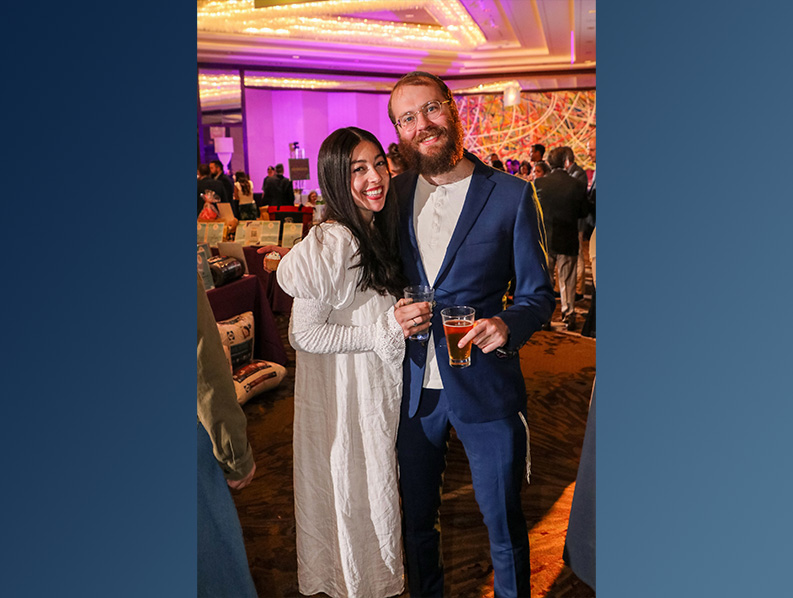
Hayli Firtell-Elgarten and her husband Yossi knew it would require more than a simple 9-to-5 job to raise their three children in the traditional Jewish life they desired.
“My husband and I didn’t go to college but we’re both entrepreneurs,” Firtell-Elgarten said. “We dabbled in a lot of businesses.”
The couple, she recounted, tried several different money-making opportunities, including starting an Airbnb in their basement (which they still own), renting out one of their cars and creating a business selling Amazon returns.
“It was very labor intensive,” she recalled. “We decided we needed to work more with our minds than our bodies.”
The pair decided to start a new venture, Debbie’s Room Jewelry, selling baby jewelry on Amazon.
And while she said it’s nice to see dollar signs begin to get added to her family’s bank account, Firtell-Elgarten said it can be hard and lonely running a company alone. She longed to be able to create a community and build a network of business owners.
“It’s what fuels me. Forgetting the sales and all that stuff, it’s being able to share with people what’s working and what’s not. Asking each other, ‘Do you have any tips? What’s your strategy?’”
That’s when she discovered The Jewish Woman Entrepreneur, an organization created as a “place where Jewish women could bring their whole selves to their professional growth,” according to its website.
Firtell-Elgarten learned of JWE’s 2026 conference too late to attend. Instead, she reached out and asked the organization if she could start a cohort in Pittsburgh.
The response she received was a full-throttled yes. In fact, the organization was in the process of reorganizing the way it created chapters.
Mouchka Heller, JWE’s CEO and executive director, joined the organization in 2026. She said it’s her intention to “professionalize and scale the organization to a degree that really brings excellence and opportunities that these women would not have access to otherwise.”
Heller, who comes from a Hasidic background, said she intends to bring the type of training and excellence found at blue-chip companies and make them accessible to people who “are not served by the system.”
When it comes to executive training, the mother of three knows of what she speaks. She worked as an executive at Amazon, the World Economic Forum and The Economist magazine. She also served as a trade commissioner of infrastructure for Canada in New York.
“Education is what gave me a life and the ability to surpass my own economic circumstances,” she said. “So, I believe in education and I believe in humanity. I believe in human beings. I don’t come from much but my parents would give the shirt off their back in order to give me whatever opportunity they could.”
The lesson Heller learned is that education combined with mentors and support makes anything possible.
Cohorts, or “pods” as Heller calls them, are already set up in cities around the country including Chicago, Florida, Maryland and New York. New ones are being established in Dallas, Cleveland, Ohio and Pittsburgh. The organization has an international footprint, she explained, and currently touches between 10,000 to 12,000 women.
The goal, she said, is a mix of autonomy and agency, helping each pod organize itself in ways that are culturally appropriate and reflects the need, market and ecosystem of an environment while having a national infrastructure to provide support.
“I don’t think they want a New Yorker telling them what to do and how to do it. Instead, I want them to tell me what they need and we can provide those tools and resources,” Heller said.
Firtell-Elgarten’s mother’s words rang in her head when she first thought of starting a JWE pod.
“Ask a busy person to do something you need to get done” was the maxim of her mother as she raised a family and started several businesses of her own with Firtell-Elgarten’s father. It’s an axiom that she’s found truth in as she, too, raises a family, starts a family and builds the Pittsburgh JWE pod.
She’s posted about the group on Facebook’s Jewish Pittsburgh group and has started a WhatsApp group. In the short time that she’s been collecting names, the list of interested women has already topped 30.
Firtell-Elgarten plans on a kickoff event in September and is anxious to get started for several reasons.
“It’s community. It’s connection. It reassuring to talk with other people and know we’re not crazy and we’re doing things right and headed in the right direction. That we have people that are rooting for us and supporting us and we can piggyback on,” she said. “It’s always good to connect with different types of people and learn.”
For Heller, the value of JWE can be summed up in what she calls their three pillars: infrastructure, mentorship and education.
Or to put it in the words JWE founder Chaya Fishman spoke to Heller, “Let’s organize a community of women into something that is structured enough that people can find mentors and coaches. Let’s create educational workshops that don’t exist anywhere else to give people knowledge they may not have gotten and let’s make community into infrastructure.”
Those interested in learning more about JWE’s Pittsburgh pod can reach out to Firtell-Elgarten at (239) 784-3255. PJC
David Rullo can be reached at drullo@pittsburghjewishchronicle.org
comments