
David Aschkenas captures Jewish history in photo exhibit at Rodef Shalom
The images are a testament to the long arm of Jewish history and the richness of European Jewish life.
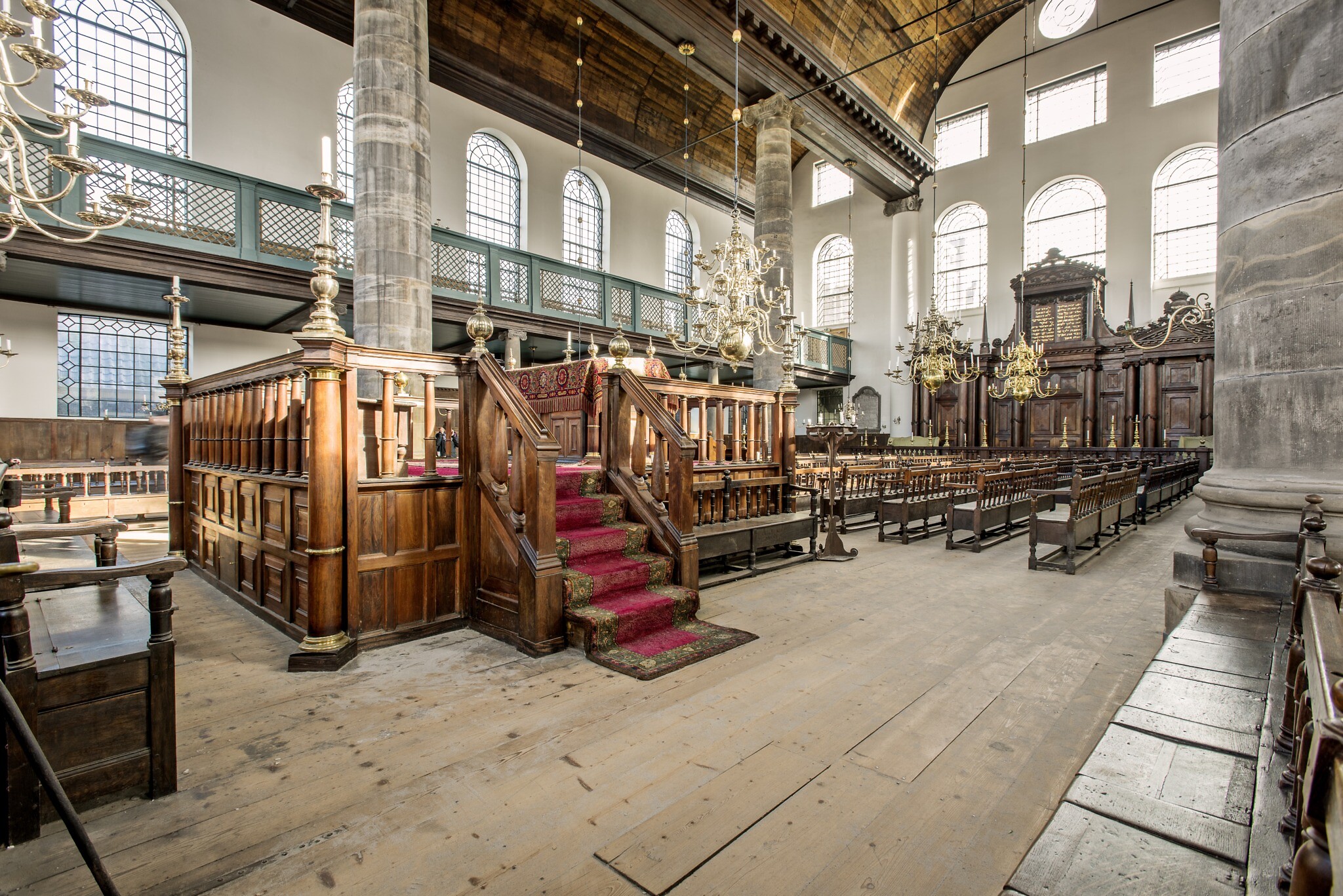
David Aschkenas may be one of the few people in the world to photograph both the Butler County Fair and a synagogue from the year 1270.
Aschkenas — whose exhibition “Synagogues of Middle Europe” opens Jan. 12 at Rodef Shalom Congregation’s Jewish Museum lobby space — points his camera at what interests him, regardless of the breadth of the subject matter. His photography doesn’t tell viewers what to think or strive to make a grand statement. Rather, Aschkenas allows the objects and spaces to speak for themselves.
Aschkenas began photographing synagogues years ago with a project at Rodef Shalom he did while working for Pittsburgh Quarterly. “They let me into every nook and cranny and were so welcoming,” Aschkenas remembered.
In 2014, he photographed the Jerusalem Synagogue in Prague and was invited to exhibit his photographs there. He found the spaces enchanting and continued traveling each year to Europe to photograph synagogues. He compiled his work into a photobook and is now sharing those photos with the public.

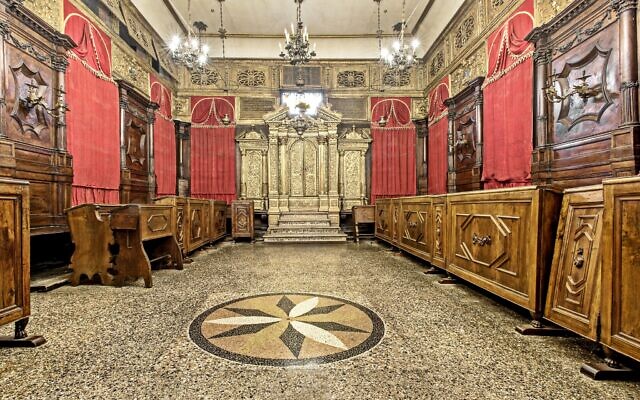
The synagogues in Hungary, Czechia, Spain, Italy, and Poland are staggeringly beautiful, with ornate architectural features and a grandeur. Most of them are now designated as museums, but several still have congregants. Some are the stuff of legend, including the Old New Synagogue, famous for the Golem of Prague, which is rumored to live in its attic.
“I walked into the Old New Synagogue at 9 a.m. and this guard told me they didn’t open until 10, so we were in there all alone. It was sort of eerie, thinking I’m in there with the golem,” Aschkenas said.
Though no golems appear in Aschkenas’ photos, there are plenty of ghosts of the past. One photograph shows a lock-box where Jews placed coins for taxes to the king during the medieval period.
The images are a testament to the long arm of Jewish history and the richness of European Jewish life.
“It was quite funny, hearing a curator in Venice speak Italian, then perfect English, then call her relatives in Israel and speak Hebrew,” Aschkenas recalled. The images show how Jewish life is a negotiation between the present and the past, preserving ancient language and tradition in an ever-changing world.
But the photographs have an unsentimental quality, and Aschkenas approached the spaces with technical craft in mind. “I wish I could say it was spiritually enlightening, but it was just visual,” Aschkenas said. “It was very special to get to go inside and touch things and walk around.”
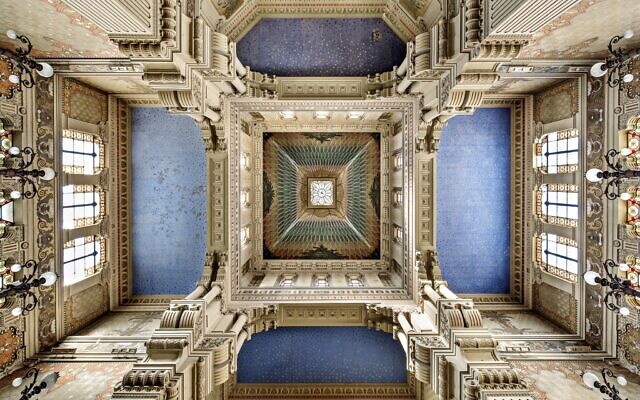
Small details caught his eye, like door hinges or intricate stonework. “There was no rhyme or reason to it, I just looked for anything that appealed to me,” he said. Sometimes that was the view from the bimah, sometimes it was a piece of wood paneling on the floor.
Some of the photographs resemble paintings because of how weathered the stone and wood are, rendering an almost pastel effect. Aschkenas has a particular talent for photographing light through stained glass windows, capturing it at just the right moment when color spreads across the room.
Though Aschkenas’ images of county fairs and city streets might seem worlds away from medieval European synagogues, all his images show the craft of photography as an act of preservation. His work documents the passage of time. In one of his photobooks, Aschkenas displays photographs of Highland Park during every season of the year. (“I was trying to do a diet and get some exercise by walking in the park every day and it was so boring that I brought a camera with me,” he quipped.)
His photographs of Pittsburgh history from the ’70s and ’80s show a vision of the city that no longer exists, “seasons” in their own way.
“Some people think I just do street photography or just black and white or just music,” he said. “But I do everything. I want to do something different every day. It keeps me busy and poor.”
When we spoke, he shared a quote attributed to Oscar Wilde that “Bankers get together and talk about art and artists get together and talk about money.” Life as an artist isn’t always easy, but Aschkenas has been doing it for 30 years and plans to do it for 30 more. Lately, he hasn’t been traveling as much and instead dedicates his time to making prints of work that hasn’t yet come off his camera.
For the exhibition at Rodef Shalom, he picked his favorites of the more than 200 photographs he has of synagogues across Europe. Whether viewers come to it thinking of their own family history, spiritual matters, or simply the beauty of the building is up to them.
“I never give a statement,” Aschkenas said. “Either you like it or you don’t — I just want you to look at it.”
David Aschkenas’ “Synagogues of Middle Europe” will have an opening reception Jan. 12 at 6 p.m. at Rodef Shalom Congregation, 4905 Fifth Avenue. The show runs through March 27. PJC
Emma Riva is a freelance writer living in Pittsburgh.
comments