
Chabad of CMU’s new facility is a testament to organization’s growth
Jewish organization has continued to grow for nearly two decades
If someone wanted to learn the secret of Jewish engagement — and the steady growth that eludes most congregations today — they might want to chat with Chabad of Carnegie Mellon University’s Rabbi Shlomo Silverman.
“We’ve had steady growth over the 17 years that we’ve been here,” Silverman said. “Student involvement is definitely up.”
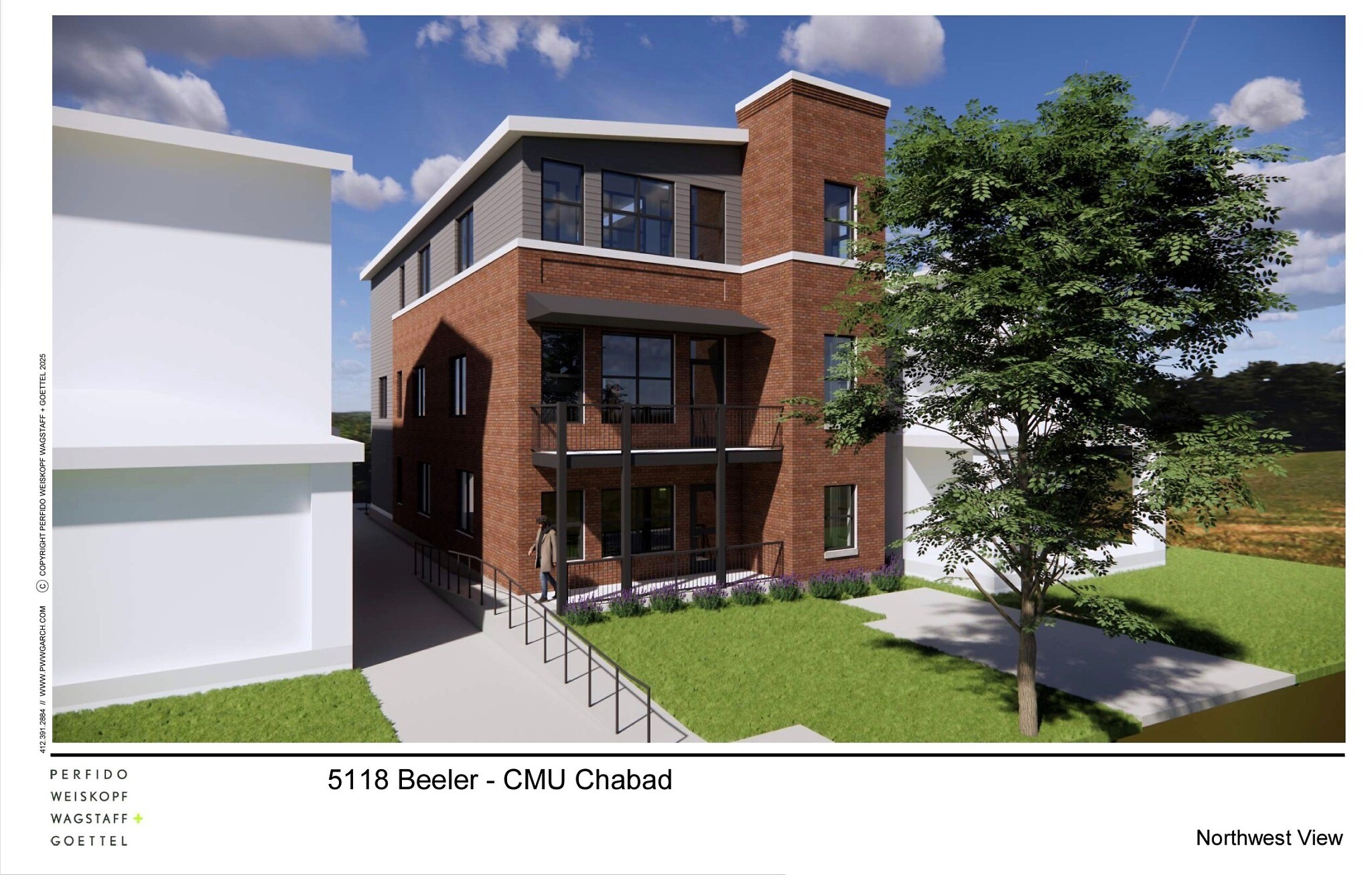
To accommodate that growth, the organization recently purchased the house next to its current location. The plan is to tear it down and build a new Chabad center.
The new structure on Beeler Street will be modern and have space for all the organization’s needs, Silverman said.
“We’ll have a huge social hall, a commercial kitchen,” he said. “All of the bathrooms are handicap accessible and there will be an elevator. There will be ramps, a shul and spaces for students to study. We’ll have a game room that will be a space to have fun and play some Nintendo.”
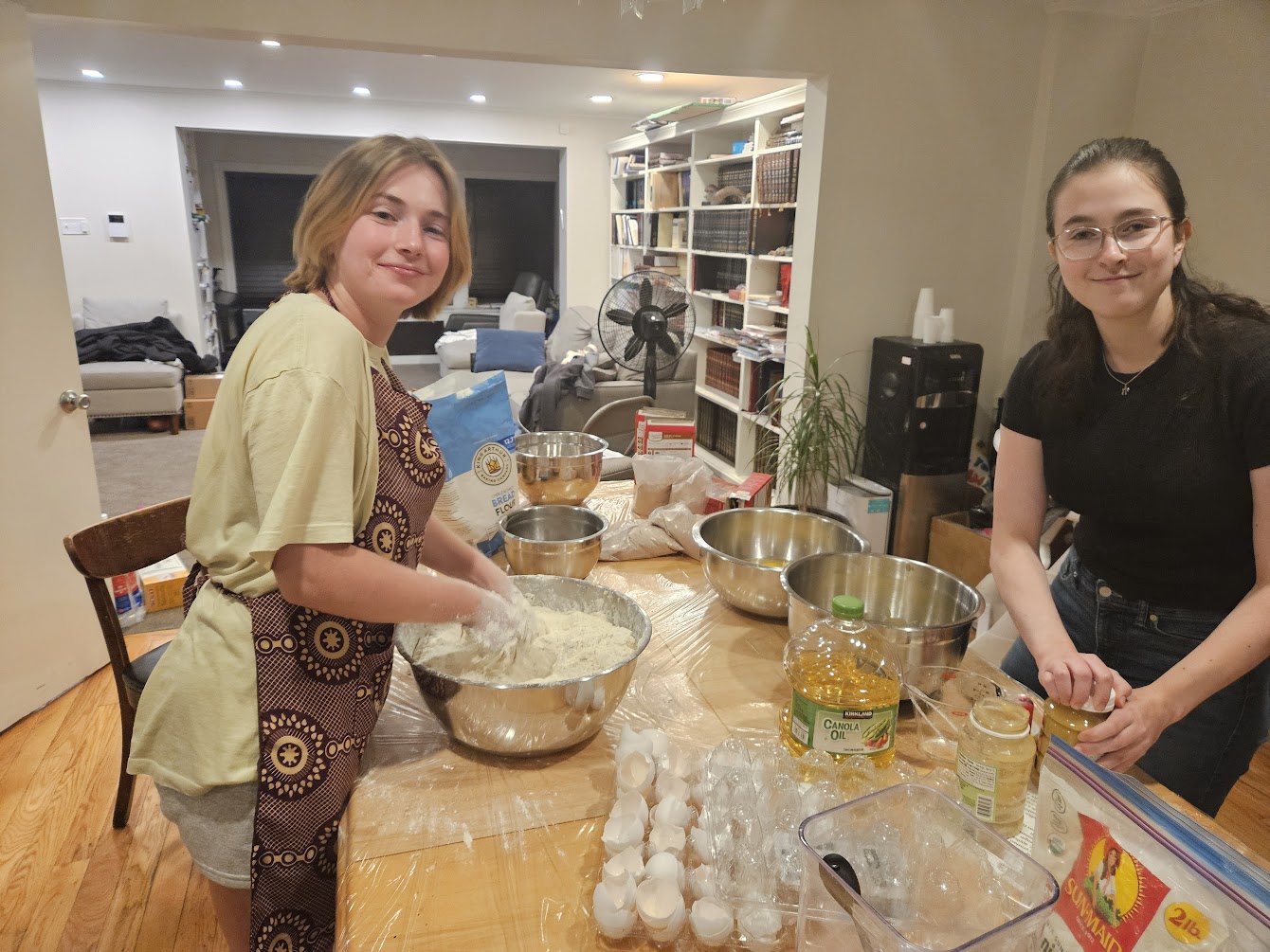
The rabbi’s goal is for the new house to feel like a home, complete with a fireplace and bookshelves.
“I want people to feel that they’re in an environment that’s conducive to studying and relaxing,” he said. “We’re going to create a five-star Chabad house that is going to be awesome.”
Achieving that, Silverman said, will help prepare the university’s Chabad center for the future and lay the groundwork for hiring more staff.
“We have a need to fulfill,” he said. “There are many organizations that are doing things and have buildings and are suffering, and shuls that are merging, and our question is, ‘What do we have to do to keep the youth connected and growing?’ That’s what we’re excited about.”
And while the lot has already been purchased and renderings created by architecture firm Perfido Weikopf Wagstaff and Goettel, Silverman said he’s just begun the fundraising to complete the project — he hopes to raise $7 million, with an eye toward opening the house in 18 to 24 months.
Silverman said he’s talking with larger donors now and plans to launch a full fundraising campaign soon.
“Anyone that wants to talk about sponsoring a room or the building, or putting their name on something, can reach out to me,” he said.
He also needs to get approval from the city’s zoning board, something he doesn’t believe will be an issue. The university, Silverman said, is already on board.
The rabbi is direct when asked about the growth Chabad of CMU is experiencing. The secret sauce, he said, comes down to “authentic Judaism.”
Silverman recently returned from a Chabad on Campus international conference, a gathering of 150 Chabad rabbis from some of the 500 colleges and universities that have Chabad houses.
“People are looking for what’s real,” he said. “They’re not looking for what feels comfortable at the moment they’re in.”
The important thing, he said, is to cater to CMU’s students while understanding they are different from those at other universities — even neighboring University of Pittsburgh. The two groups of students, he said are like “apples and oranges.”
CMU students tend to be more studious and focused on their work, he said, going so far as to say they’re a little “nerdy,” a label he identifies with.
“We’re the nerdiest school in the world — I think the bagpipes put us over the edge,” Silverman said, pointing to the Scottish musical instrument that has long been associated with the university.
Recognizing there is a difference between students is important, he said, because “when you try to cater to everyone, sometimes you cater to no one.”
So, while the Chabads at Pitt and CMU might team up — and even partner with groups like Hillel JUC — for programs like Shabbat 1,000, or High Holiday events, Silverman said CMU’s Chabad has its own programs, including weekly Shabbat meals, Sukkot observances and Purim celebrations.
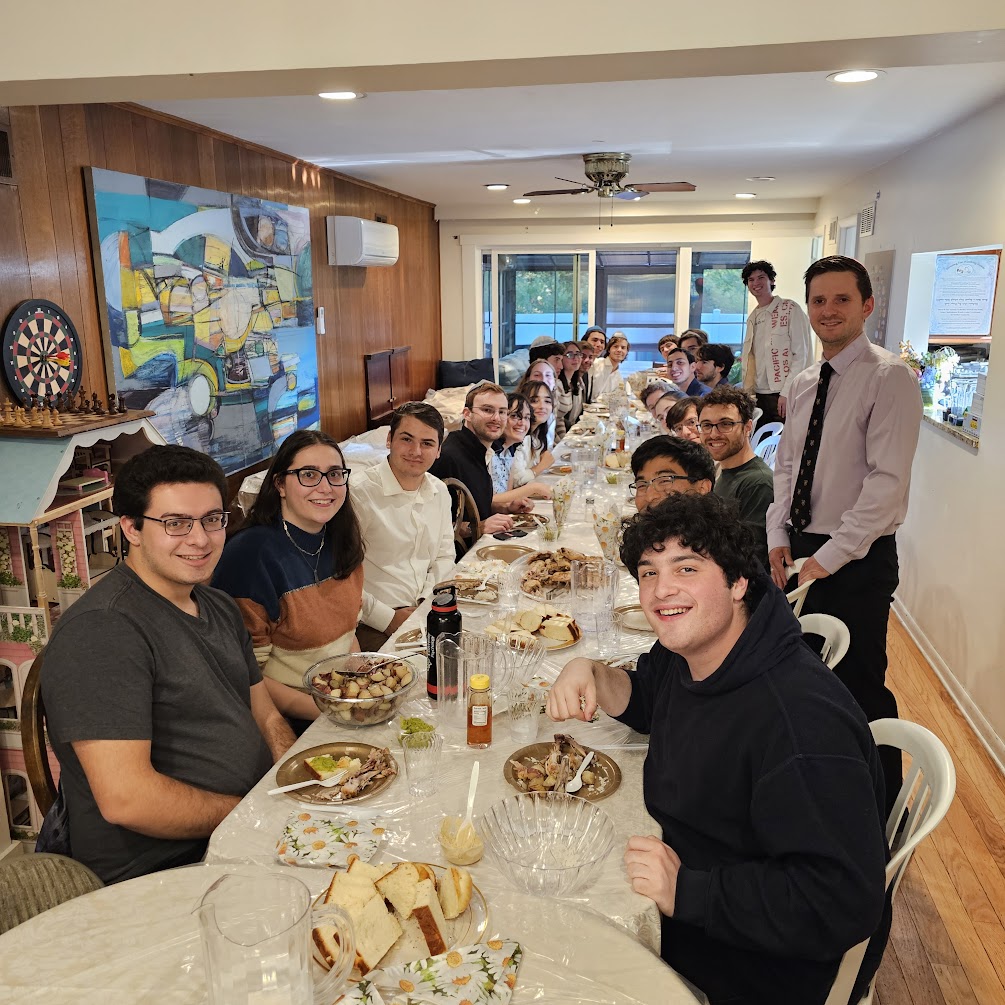
Some of those programs are large; others, like various educational opportunities, he said, might draw 10-15 students.
Silverman strives to find the right mix of programs and social activities for students who are sometimes far from home and looking for connections to Judaism, he said, adding that since the pandemic, and Hamas’ terrorist attack in Israel on Oct. 7, 2023, students are “searching.”
“They’re searching for meaning, searching for something more than just, ‘I’m Jewish, I just have matzo ball soup.’ We sometimes have two education programs a day — our classes are growing. Obviously, we’re not Pitt — we don’t have thousands of Jews — but we make individual connections that make huge differences.”
Those connections last a lifetime, the rabbi said, noting that many students who spend time at Chabad become part of the “family” and come back to visit after graduation.

And yet, as important as Jewish connection is while in college, Silverman said he isn’t naive about the challenges students face, including an uptick in antisemitism.
CMU, he said, does a good job helping make Jewish students feel accepted and safe overall, but there is more the administration can do.
“They’re still figuring things out,” he said. “Every challenge we face, though, brings out a blessing, brings out some good.”
And it’s that focus, Silverman said, that matters to him — something to which the new Chabad house will be a testament.
“I can build a center to highlight antisemitism, or I can say, ‘I’m going to build a center that’s focused on doing more mitzvahs and putting more light into the world.’ Not just for Jews — this is a building for everyone. The entire campus will benefit. The entire community will benefit, and I think we’re going to see exponential growth.” PJC
David Rullo can be reached at drullo@pittsburghjewishchronicle.org.
comments