
Building toward fluency: Community Day School adopts innovative Hebrew curriculum
Driven by ambitious goal, educators hope students develop greater 'sense of belonging to the wider Jewish world'
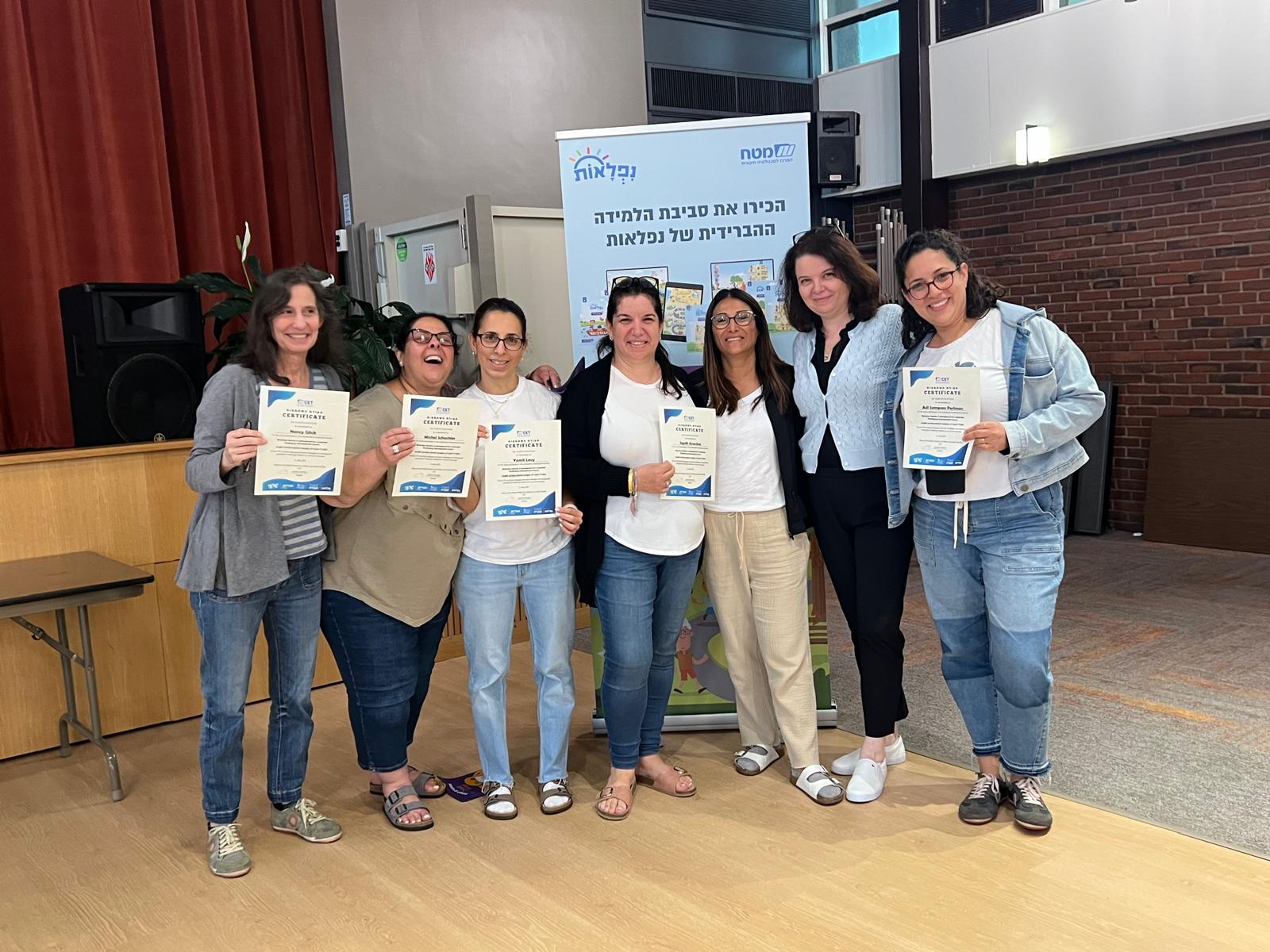
Efforts are underway to bolster Hebrew proficiency at Community Day School. Beginning this fall, educators will implement a new curriculum. Geared for elementary school students, Niflaot employs a “hybrid approach” to learning by combining digital and print materials. Young learners are introduced to modern Hebrew through direct instruction, singing, workbook activities and personalized digital assignments.
Adopting the new curriculum was spurred by data and parent feedback, according to Casey Weiss, CDS’ head of school.
“It became very clear to me that students were not hitting benchmarks, as far as their modern Hebrew fluency,” she said. “Parents, every year on the survey, say, ‘I wish my child would speak Hebrew fluently,’ or ‘I wish my child will have a better handle on it.’ I really saw this as an opportunity to pilot something and try something new.”
After learning about Niflaot, Weiss sent a delegation of Hebrew instructors to Boston for a five-day immersive seminar.
Ronit Pasternak, a CDS administrator and head of Hebrew and Jewish learning at the school, traveled with the group and said Niflaot provides students a three-year plan to develop “speaking, listening, reading and comprehension skills.”
After discussing the curriculum with educators who’ve implemented it, Pasternak said she was impressed by students’ abilities to master Hebrew through “role-playing, conversations, singing and interactive activities.”
One of the curriculum’s strengths is its flexibility, she said. “The program is structured in a way that allows teachers to adapt and differentiate instruction, ensuring that each student receives the support and challenge they need.”
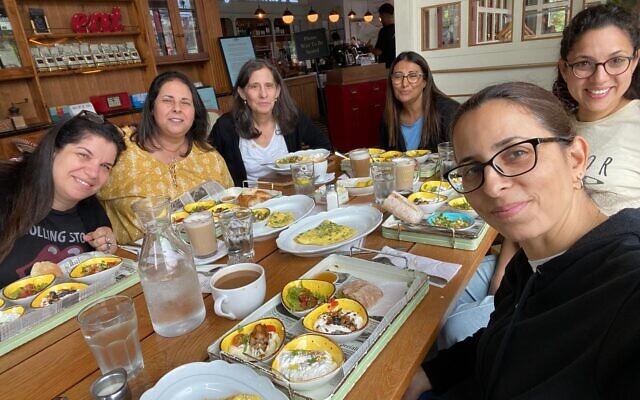
Yamit Levy, a Hebrew teacher responsible for support and intervention at CDS, told the Chronicle she’s excited to work with the new curriculum.
Niflaot was created by MaTaCh (The Center for Educational Technology) in Israel, a group also responsible for Bishvil HaIvrit, an advanced curriculum designed for middle school students.
Levy said she’s worked with Bishvil HaIvrit and “loved it.”
Having students start with Niflaot makes perfect sense, she said. Each MaTaCh curriculum “builds on top of another.”
As for Niflaot, Levy said, the curriculum’s benefit stems from its helical nature. “It’s designed to revisit key skills and themes over time with increasing depth and complexity.”
Weiss, Pasternak and Levy would like to see CDS students achieve Hebrew proficiency during their years at the Jewish day school.
Reaching that end would be impressive, as merely 2% of American Jewish adults described their Hebrew fluency as being “completely fluent or native language,” according to a 2021 American Jewish Committee survey.
Effortlessly swapping sentences in Hebrew about food or singing songs about trains is great, but the real goal, CDS educators said, is for students to speak fluently while traveling in Israel at the end of eighth grade.
The multi-week visit, which was canceled due to war the past two years, is the “culmination of a student’s experience here,” Weiss said.
Eighth grade excursions feel lightyears away from first grade classrooms, but the building blocks are necessary, Pasternak explained.
“Beyond language acquisition, Niflaot weaves in authentic exposure to Israeli culture” through instruction about “customs, holidays and daily life of Israel,” she said. The goal may be ambitious, but the hope with this new curriculum, is that students develop a greater “sense of belonging to the wider Jewish world.” PJC
Adam Reinherz can be reached at areinherz@pittsburghjewishchronicle.org.
comments