
Biblical roots, modern community: Rodef Shalom garden thrives nearly 40 years on
The space fosters community as well as education.
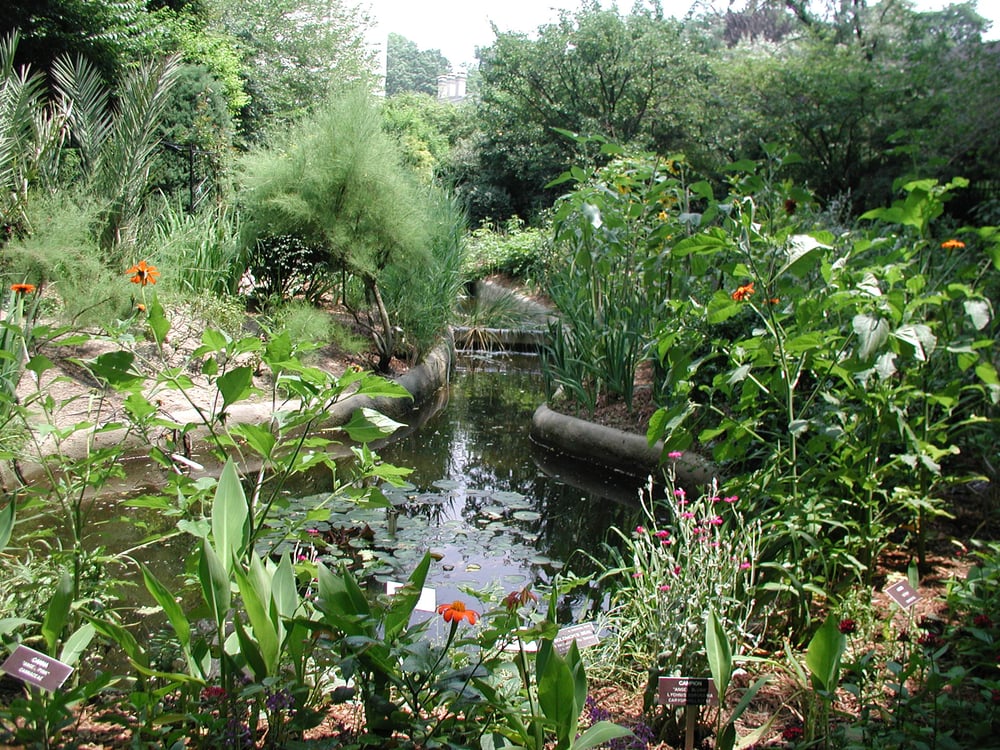
For almost 40 years, the Rodef Shalom Biblical Botanical Garden has immersed visitors in a landscape reminiscent of what life might have looked like in biblical times.
The space continues to be one that fosters community as well as education.
The garden broke ground in 1986 before officially opening a year later, thanks to the efforts of the late Rabbi Walter and Irene Jacob. While the garden has evolved over time, its purpose has largely remained the same.
Get The Jewish Chronicle Weekly Edition by email and never miss our top stories Free Sign Up
The garden offers a community-first environment that is different from what one might experience inside the walls of a synagogue, where decision-making falls up on the congregation’s leadership. In the garden, though, it is the community that comes together to make decisions impacting the outdoor space, according to Dasya Petranova, the director of the garden.
Walter and Irene Jacobs saw the garden “as a way to make the past tangible to the future,” Petranova said. On most Sundays, Walter Jacob could be found in the garden, tending to the plants and trimming the hedges. Since taking the reins in 2022, Petranova has shared that same passion.
Carrying on the mission established by the Jacobs, Petranova was faced with a tough task. Before she took over, the garden “was completely filled in with shrubs and phragmites, which is an invasive species,” she said. “I came in and cleared those out with a small hand chainsaw and digging implements.”
Petranova has also made improvements to the space. For instance, she has established a rock garden, which allows for plants that are native to Israel to flourish. She also plans to plant an arboretum, a botanical garden specializing in trees, with those that are native to Israel.
A water feature, which runs through the center of the garden, is a representation of the bodies of water in Israel. The first pond represents the Sea of Galilee; it is connected to a second pond, the Dead Sea, via a small river, which represents the Jordan River. A waterfall flows over a rock structure meant to symbolize Mount Hermon.
Aside from the plants and water, the garden features a pavilion which serves as a community space for Rodef Shalom and many others. Religious groups, garden clubs, schools, social circles and retirement communities are all examples of users of this community space.
AgeWell at the JCC, Winchester Thurston School, Giant Oaks Garden Club and Women of Rodef Shalom have all used the pavilion space this season. The garden also hosts a 20s and 30s Shabbat; the next two will be held on Friday, July 25 and Friday, Aug. 22, allowing young Jewish professionals to connect. The 7 p.m. events include appetizers and wine and require registration at rodefshalom.org/lateshabbat.
Rodef Shalom also offers regular story times for children and open tours of the garden.
The garden has allowed for the pursuit of the passions of gardening, Petranova said.
“Humanity,” she stressed, “is connected through time through the environment.” PJC
Andrew Rich can be reached at arich@pittsburghjewishchronicle.org.
comments