
Ari Lightman’s guide to slaying organizational ‘monsters’
'You're never going to transform either yourself, your community or your organization, until you start thinking about the barriers that impede transformation'
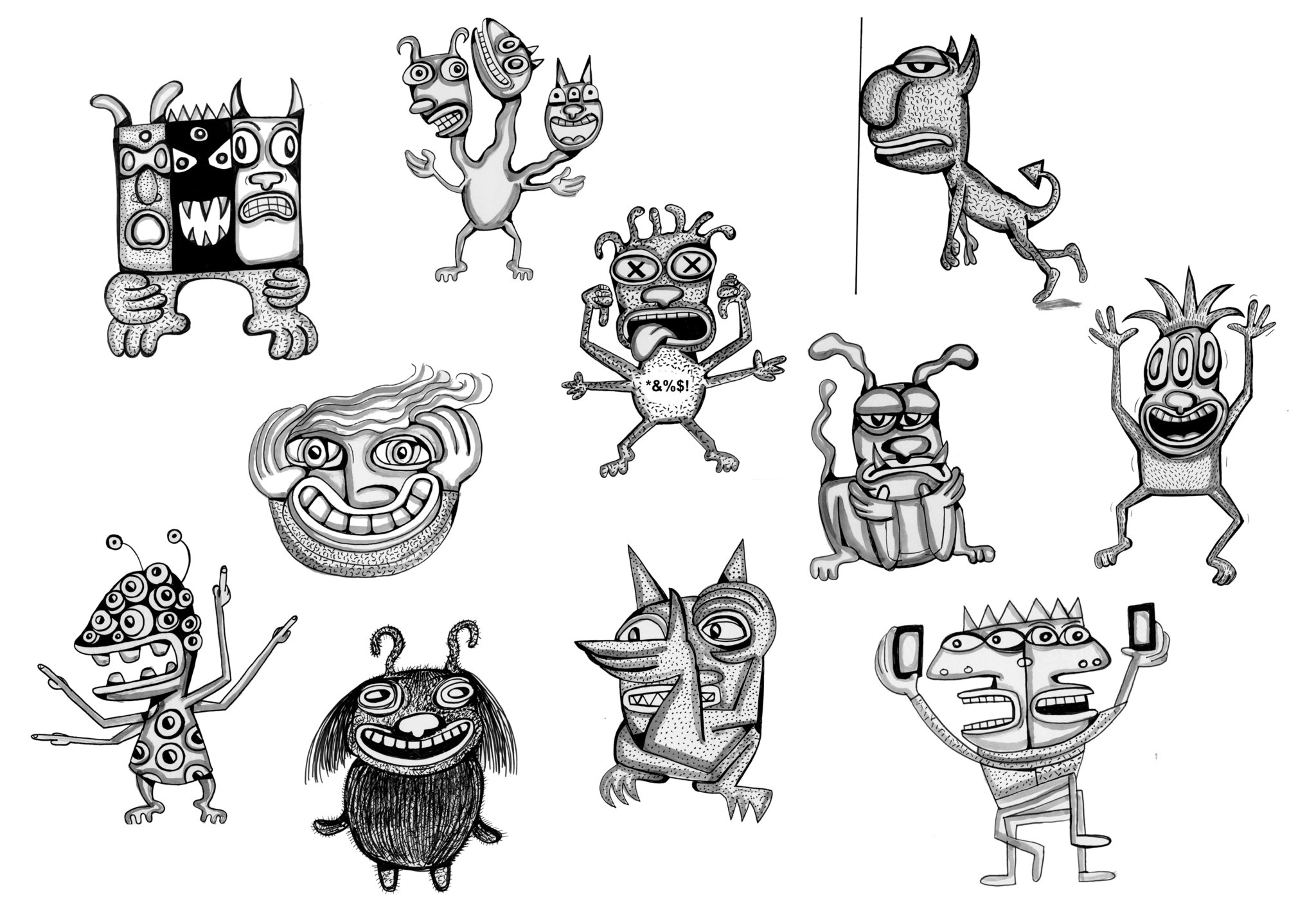
Ari Lightman believes in monsters. The Carnegie Mellon University professor even thinks they have enough power to spur organizational and self-improvement.
Lightman, 58, is co-author of “Monster Transformation: Conquer Your Digital Fears, Be AI Ready, and Focus on What Matters to Your Organization.” The 352-page text, published in December by Wiley, melds case studies, illustrations and action items in an effort to promote readers’ transformations.
For nearly 15 years, Lightman a digital media and marketing professor, has taught students why transformation efforts “fail to meet expectations.” What he learned from research, and by speaking with colleagues, he said, is that companies “really need to reset their expectations.”
Seeing obstacles such as silos, the need for consensus, and organizational complexity as monsters makes it easier to identify a way forward.
“Monsters provide some sort of psychological response. We’re afraid of them. We want to avoid them,” the Jewish Squirrel Hill resident said. But in the same way monsters exist, so do “monster slayers.” These individuals have “superpowers” that must be harnessed. For companies and organizations, the question becomes “how do you elevate these employees with unique competency to actually reduce the power that these monsters have in terms of stopping transformation efforts or
grinding them to a halt?”
Lightman’s text provides stories, delightful drawings and exercises intended to foster increased “monster slaying.”
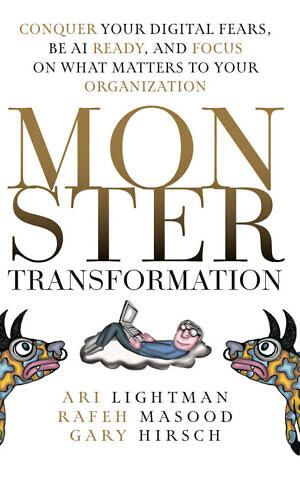
The work, which is co-written with Rafeh Masood and Gary Hirsch, represents one of Lightman’s areas of expertise. Another, which he is often asked to speak about, is the current state of information.
“A lot of information that gets construed as disinformation is actually misinformation. It’s people that are not putting context onto information. They’re purposely leaving out information,” Lightman said. Ideas that have been disproven, “that information is not being taken down. There’s no retraction associated with it. It just remains out in the internet universe forever.”
Part of what’s occurring today is that information is widely disseminated and it leads to “inadvertent” results. With the advent of artificial intelligence propelling a deluge of content the stakes become clearer, he continued.
When a person receives something from someone deemed trustworthy, the material is considered to have a “different sort of gravity.” The challenge — for well-meaning people — is what to do with so much potentially questionable content.
“I believe very wholeheartedly in the First Amendment, but we also have to recognize that there’s a cost associated with free speech. We have to, unfortunately, understand how that speech can be manipulated, how it can be misconstrued,” Lightman said.
Society isn’t devoid of responsibility: “We have to be better associated with providing the right context, the right background associated with why we’re saying what we’re saying.”
Doing so requires having “your radar up,” he said. “Things that are being sent to you might not be real. They might be designed to steal stuff from you, and you got to think about that with everything.”
The academic acknowledged that maintaining focus and exhibiting rational behavior are more difficult during stressful periods. Still, he continued, “we got to be better informed. We have to have a variety of radar up.”
With that said, being a judicious person doesn’t mean distrusting everything, he continued, “but you kind of have to have those sorts of protective barriers and guardrails associated with what you read, what you send along, what you’re engaged with.”
Both on a macro level and when making the smallest personal change, improvement is possible; people just need to see themselves as having the power to slay a formidable foe, he explained. “You’re never going to transform either yourself, your community or your organization, until you start thinking about the barriers that impede transformation.” PJC
Adam Reinherz can be reached at areinherz@pittsburghjewishchronicle.org.
comments