
Abby Mendelson named Aleph Institute’s Chaplain of the Year
“They give us far more than we give them.”
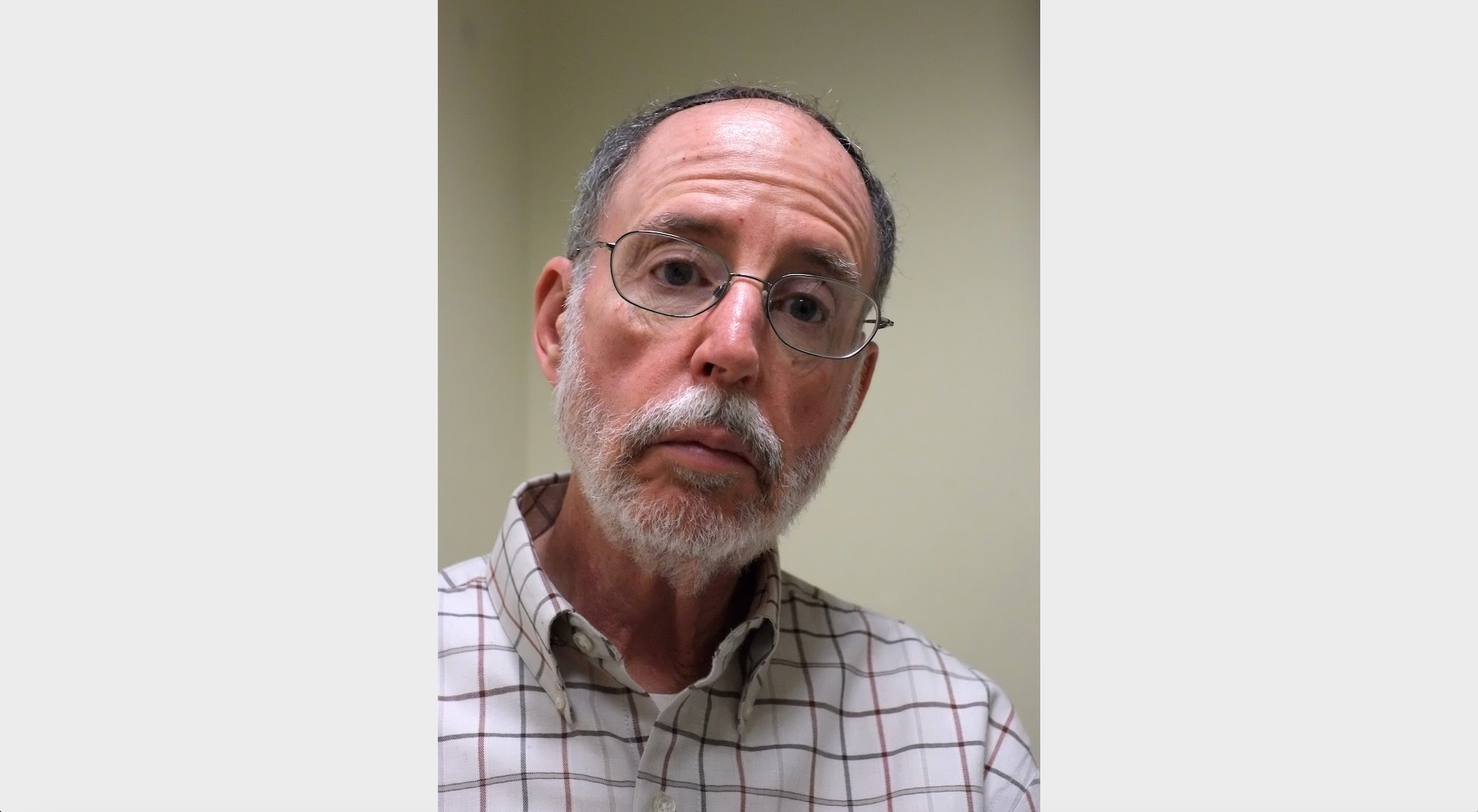
Abby Mendelson, 78, has lived his life by a simple maxim: “Any day that I can help another human is a good day.”
Mendelson has held true to the edict, whether it’s serving as part of the Chevra Kadisha, leading study groups for community members or volunteering with the Aleph Institute as a chaplain in both the Allegheny County Jail and the State Correctional Institute in Fayette County.
The Squirrel Hill native is being honored as the Aleph Institute’s Chaplain of the Year at the organization’s 16th annual Second Chance Symposium on May 11.
Mendelson, an author and writer, said he first became interested in prison life nearly 45 years ago when he interviewed an inmate at Western Penitentiary for a story he was writing.
“I visited him regularly,” Mendelson recalled. “He was transferred to a different prison. I would visit him regularly and, like a lot of relationships, it faded over time, but the life and outlook of inmates was very different than anything I imagined, and very fascinating.”
Fast forward to 2004 and one of Mendelson’s friends was volunteering with Aleph, visiting Jewish inmates at a minimum-security prison in West Virginia. Mendelson took over the visits from his friend, driving the 85 miles each way, weekly, before his schedule changed and he rotated out of volunteering.
In 2022, Mendelson retired from what he called “working for money” and began thinking about volunteering with Aleph again, for a simple reason: Quoting Rabbi Moishe Mayir Vogel, the organization’s Northeast Region executive director, Mendelson said, “They give us far more than we give them.”
Mendelson “gladly” went back to visiting inmates in 2023, he said, first at Fayette and then adding the county jail.
He now spends two days a week visiting inmates — Tuesdays at the state prison, Thursdays at the county jail.
To get to the Fayette correctional institute, Mendelson leaves at roughly 7:20 a.m., explaining that it’s not just the 75-minute drive that takes time.
“I have to go through metal detectors. I have to get keys because there are a number of things to unlock, and I walk across the yard to the chapel. The full-time chaplains are there before me,” he noted.
Mendelson’s role, he said, was made clear by one of the full-time chaplains, Rabbi Elisar Admon.
“He said, ‘I am D.O.C. [Department of Corrections], you are the rabbi,’” Mendelson said.
As the rabbi, he spends the first part of his day visiting inmates, splitting his time with them into thirds.
“There’s always a concern about holidays and kosher meals, and what they do and what they can’t do,” Mendelson said. “Then we look at texts like ‘Strive for Truth!’ [by Rabbi Eliyahu Eliezer Dessler], and then we spend the last third of our time studying Mishna.”
Broken up this way, he said, 90 minutes fly by.
He then “makes rounds,” meaning he visits the infirmary. Some of the patients there, he explained, are severely handicapped, while others are terminally ill.
He next heads to those in RHU — Restrictive Housing Units, or as it’s colloquially known, “the hole.”
“These are guys who are locked in with a glass panel in a cell,” he said. “There are 192 units I walk by every Tuesday. I say ‘Hello, how are you doing?’ Some want to hear about my trips to Israel, some have the most profound questions about Torah I’ve heard.”
Mendelson will then take a brief break for a cup of coffee before starting another 90-minute session, much like the first part of his day visiting with inmates.
Leaving the facility is another process of walking across the yard, putting away the keys and then departing the premises.
It’s a process that leaves him both physically and mentally exhausted, he said. So exhausted, that Tuesdays are the only evenings besides Shabbos that he does not participate in any sort of organized learning session. Instead, he visits with friends, either online or in person.
“By the time I’m home on Tuesdays, I’m drained,” Mendelson said. “It takes awhile to get used to being inside, to seeing people in 23-hour lockdown, to seeing the guys in the infirmary. You’ve got be strong. You have to take the proverbial deep breath, but I’m the rabbi. I have to, and I have to pick them up. That’s what I have to do.”
On Thursdays, he spends an hour-and-a-half at the Allegheny County Jail seeing inmates who request a visit.
“I leave my house around noon,” Mendelson said. “I go through metal detectors, get a chaplain badge with an alligator clip that I put on my collar, and I go to the chapel and see if there are any new requests to see me.”
During each visit, Mendelson spends time with regulars in their pod. One person, he said, is studying Tanakh, so he usually has some questions.
“I always tell them I’m there for them, so whatever they want to talk about, we do,” Mendelson said.
Sometimes that means spending a few minutes discussing the Steelers or the Pirates; inevitably, though, it ends with some talk about a Jewish text — sometimes it’s Pirkei Avot, a musar work, the weekly parsha or something else.
Mendelson said he’s “amazed” at what some of the inmates have learned. One person, he said, is writing a prisoner’s commentary on Pirkei Avot. Another is studying the Zohar, and another is learning the Gemara.
“I walk in and he says, ‘This is what I’m reading and here’s my question.’ He always isolates the central question of the Gemara portion he’s reading,” Mendelson noted.
It’s not only the inmates who benefit from the visits, Mendelson stressed.
“I told one particular fellow, ‘This was the highlight of my week,’ just talking to him. He was so receptive. It was so profound that we would talk about these really nifty concepts and why the Torah works this way. I should be paying for this,” he said.
It’s part of what keeps him motivated. The other two things are the belief that he can help people and his understanding that there are good people in jail who made some errors in their lives.
“The mistake is not the total sum of their lives,” Mendelson said. “Maybe I can help them see a better path in life and take the proverbial next step.”
The Aleph Institute’s Vogel, concurs.
“Show me a person that hasn’t failed,” Vogel said. “We make mistakes, we mess up. Some more, some less. Some get caught, some don’t.”
Vogel said the system is made to break prisoners. Mendelson, he noted, sits down and talks with them, giving them tools to prepare for the rest of their lives, which is crucial because there is an 83% recidivism rate. The Aleph Institute provides hope to inmates and their families that they can break that cycle, Vogel said.
“Rabbi Mendelson’s devotion goes far beyond routine chaplaincy,” Vogel said. “His weekly visits, personal care and deep compassion embody the very essence of what it means to serve. He brings light into environments that are often dark and forgotten.”
For his part, Mendelson said he’s “humbled and honored” to be a part of an organization as prestigious as the Aleph Institute.
“The work we do is so meaningful to so many people, and it’s a great privilege to be recognized for all my efforts,” he said.
While Mendelson’s efforts are unique, Vogel said the Aleph Institute is always looking for more volunteers. He urged anyone interested in becoming involved to reach out. And, if someone needs motivation to volunteer, he said, Mendelson provides that, too.
“He provides a lot of warmth, a lot of encouragement, a lot of truth because Torah is truth and that’s what anchors him,” Vogel said. PJC
David Rullo can be reached at drullo@pittsburghjewishchronicle.org.
comments