
A career of compassion: Sandy Budd ends 33 years serving Holocaust survivors
“Many shared stories with me that they had never shared with their families and opened up about deeply personal stuff. It was incredibly moving."
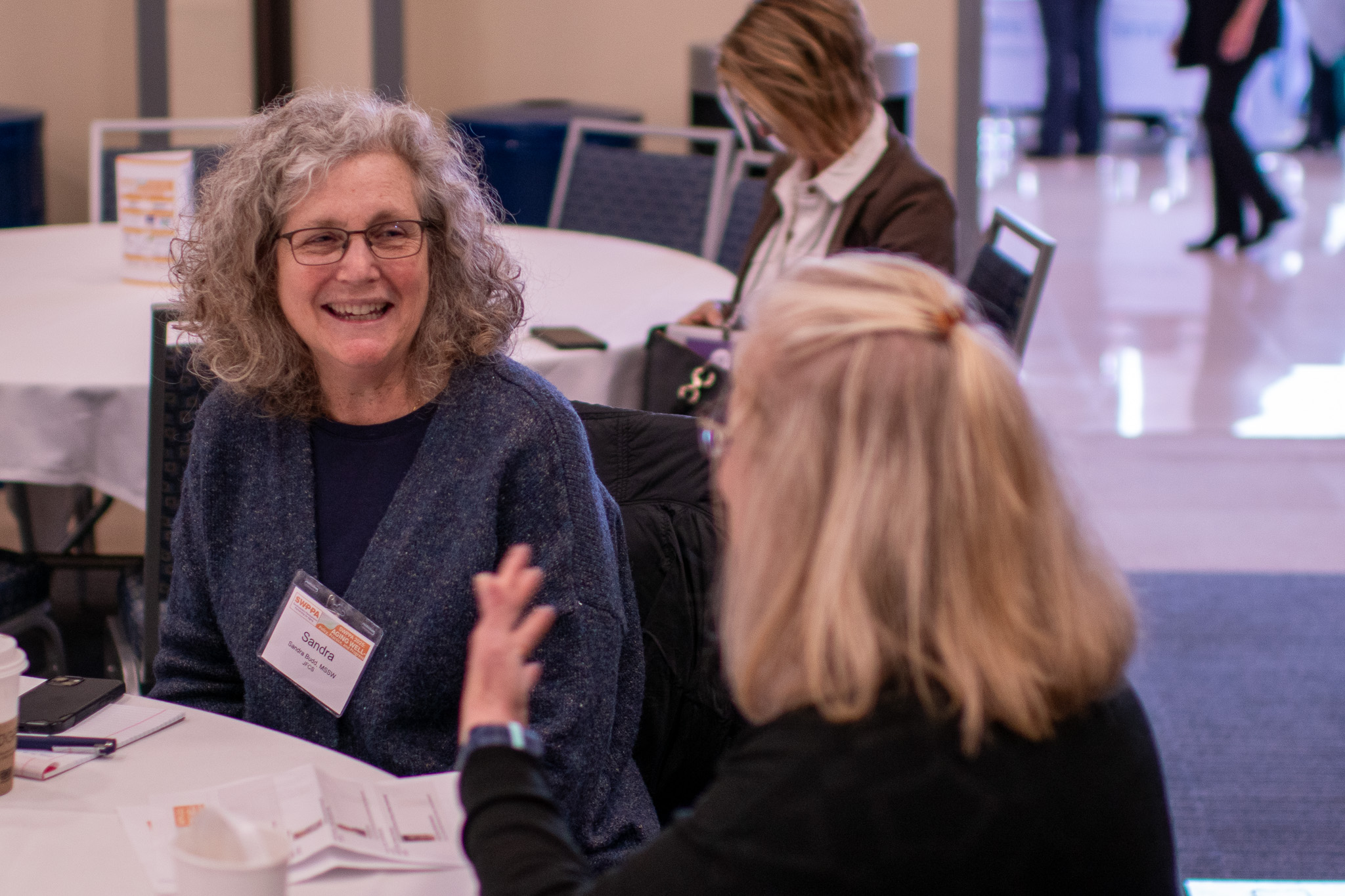
When geriatric social worker Sandy Budd reflects on her 33-year career, many of her most poignant memories are of the Holocaust survivors she has helped care for in Pittsburgh.
Set to retire from Jewish Family and Community Services of Pittsburgh Dec. 31, Budd has provided case management and counseling to 150 survivors over the years through a grant from the Conference on Jewish Material Claims Against Germany.
Working with the survivor community has been “an honor,” she said, and epitomizes what it means to be a Jew working in a Jewish agency.
Get The Jewish Chronicle Weekly Edition by email and never miss our top stories Free Sign Up
“This, to me personally, is why we are here.”
The Claims Conference, founded by Jewish world leaders in 1951, distributes funds provided by the German government as restitution for Holocaust-related suffering and property theft. The primary beneficiaries are now elderly and in need of financial support and social services.
Many were inherently mistrustful of government, given what they had endured in their countries of origin, and when they first resettled in the U.S., Budd said.
“They were not using government funding because of the processes. They would suffer in silence and the Jewish community just felt that funding from the Claims Conference was an opportunity to provide services to a group that in the past would not seek them out.”
At its peak, Budd managed a caseload of 60 individuals. Today, there are four.
The Claims Conference grant provides them with access to home-delivered kosher meals and assistance with housework, errands and personal care, thus enabling them to remain within their homes and stay active in the community “without going through a lot of rigamarole,” Budd said.
Budd provides psychotherapy as needed.
“I was a neutral but friendly third party,” she said. “Some at first were a little suspect, so I tried to make it as easy and gentle and unassuming an experience as possible. I gradually gained their trust as someone who was there to listen.”
“Many shared stories with me that they had never shared with their families and opened up about deeply personal stuff.
“It was incredibly moving.”
Budd recalled one man with whom she worked years ago caught in the dilemma of where to live after his wife, diagnosed with dementia, could no longer care for him.
“He was legally blind and pretty hard of hearing and his kids lived out of town,” Budd recalled. “They wanted their parents to move to assisted living near them. It was a tough situation.”
The man was religious and learned, and every time Budd visited, he would tell her a story.
One day he described how at 19 he was about to be drafted into the military and didn’t want to go, so he went to the Rebbe and explained his situation and asked what he should do. The Rebbe advised him to go to the conscription center, at the local high school, and so he did. When, by the end of the day, his name hadn’t been called, he went to the desk to ask about it and was told he could go home.
“At the end of the story, he said, ‘Sandy, I want you to be my Rebbe. Tell me what to do.’”
At that moment, the phone rang, which felt like divine intervention, Budd recalls. “I wouldn’t tell him what to do. But in the end, he did move to a lovely place near his kids and lived out his life there.”
Perhaps listening with compassion had enabled him to arrive at the decision, she said.
After his death, his son called to inform Budd and to thank her for what she had provided.
Many survivors came to JFCS through word of mouth, Budd said, but with so few survivor clients remaining, the JFCS Claims Conference grant has been transferred to Philadelphia.
The Holocaust Center of Pittsburgh has worked with Budd for decades.
“Sandy has been an incredible resource in helping survivors access the services they need and deserve, that they are entitled to,” said Emily Loeb, Holocaust Center director of programs and education.
“Because she has been doing this work for so long, she knows so many people and is so well respected in the community. She has built trust.”
As happy as she is for Budd to embark on a new chapter, Loeb said “her retirement is a loss for JFCS and for the community.”
Budd admits she wrestled a little with the decision to retire but the timing seemed right, especially since her husband, Ray Engel, also a social worker, retired this past summer from the University of Pittsburgh.
A native of Minnesota, Budd met Engel when they were in graduate school at the University of Wisconsin, Madison.
Budd comes from a family steeped in Jewish communal service and spent two years doing community work in Israel. She and her husband live in Squirrel Hill and have two adult children.
They celebrated their 40th wedding anniversary Dec. 1, and are making plans for retirement, Budd said.
“We want to spend more time together, to travel. I want to learn pickleball. But, first, I need a period of time to decompress.” PJC
Deborah Weisberg is a freelance writer living in Pittsburgh.
comments