
Poale Zedeck, Shaare Torah end unification talks
“It takes a lot of effort to do this evaluation, and we didn’t want to continue if there was no hope it would ultimately be supported by the congregation,” Sunshine said.
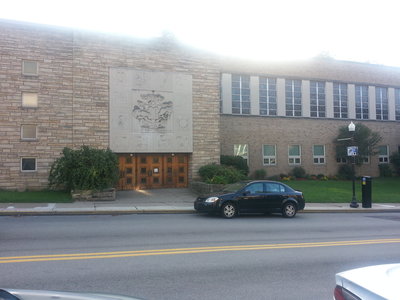
Talks of a possible unification between Congregation Poale Zedeck and Congregation Shaare Torah have ended.
Members of Shaare Torah voted against continuing to evaluate a possible merger during a Sept. 14 meeting. Several blocks away, Poale Zedeck members voted to continue the process during a similar meeting on Sept. 7. Without a united consensus, explorations of unification between the shuls, Pittsburgh’s two oldest active Orthodox congregations, have ended.
“We set a threshold of 60% in favor of continuing in order for us to continue the evaluation,” Shaare Torah President Joshua Sunshine said. “Fifty-six percent voted in favor of the evaluation and 44% voted against it, so we stopped and aren’t doing it anymore.”
He said that both congregations would have had to approve the unification with more than two-thirds of its members in favor of a merger.
“It takes a lot of effort to do this evaluation, and we didn’t want to continue if there was no hope it would ultimately be supported by the congregation,” Sunshine said.
The September meetings were born out of the dissatisfaction of some members, who were unhappy with the idea of uniting the two congregations, according to Dr. Lou Felder, Poale Zedeck’s president.
“I think it was in the best interest of the process,” Felder said. “They organized it and brought it to the board. The board decided to bring it to the congregation to have a discussion and vote to proceed or not.”
Poale Zedeck ultimately decided to move forward.
Felder said he’s not disappointed by Shaare Torah’s decision to reject a possible merger.
“I’ve been president for 10 years and I was not pushing for a unification,” he said.
That contrasts with the opinion of Sunshine, who started his second two-year term as Shaare Torah’s president earlier this year. He said he was in favor of continuing the exploration.
“I think it would have benefited the synagogue to see it through and learn from the experience,” Sunshine said. “I think that there were big dreams that were part of the unification evaluation and it’s harder to dream those big dreams when you have a single congregation.”
David Chudnow is both a Shaare Torah board member and an associate member of Poale Zedeck. He said he wasn’t surprised by the congregations’ decisions regarding unification talks.
“There are people with very strong opinions on both sides,” Chudnow said. “There are people who feel this conversation needed to happen, that we needed to look at this seriously because we probably have to do it, and there are people who said if you start these conversations then you are causing it to be inevitable.”
Chudnow isn’t originally from Pittsburgh and isn’t necessarily tied to the history and legacy of either congregation.
Instead, for him, the goal should be to maintain a strong Modern Orthodox Jewish community. In fact, he said it’s his love of both shuls that left him without strong feelings one way or another about a possible merger.
“That was my conundrum,” he said. “I appreciated that this committee was trying to decide if there were reasons to merge.”
The two congregations, Chudnow said, already collaborate on a lot of programming and have built a close-knit community.
“Even if there’s no more conversation of merging, we’re going to continue. Neither is going to go our own separate way or stop talking to the other shul,” he said.
The process of exploring a merger between the two congregations began in April, following a letter that was sent to members of both Poale Zedeck and Shaare Torah, saying that formalized conversations meant to evaluate opportunities for collaboration, up to and including “full unification,” had begun.
A steering committee, comprised of six volunteers from the two congregations’ executive boards, was formed and unification expert David Weinberg, who assisted in the merger between Reform congregations Rodef Shalom Congregation and Temple Sinai, agreed to help with the exploration on a pro bono basis.
Ultimately, the letter said, unification might not make sense.
In the end, Sunshine said, because neither shul is experiencing financial woes and no crisis exists pushing the unification, it was harder to convince members of the two congregations to make a dramatic change, especially if they identify with one shul’s culture more than the other.
Now that unification is in the rear-view mirror, he said, energy has been generated to tackle some of the issues highlighted during the talks.
“I think we’re going to build groups of committees and groups of people to look into that carefully,” Sunshine said. “I’ve already set up several meetings with individuals and groups that are interested in working on those issues.”
Felder, too, said now that talks have ended it’s time for Poale Zedeck to move forward and put its proverbial shoulder to the wheel.
“We have to up our game so that we can move forward and improve things,” he said. “We’re certainly not unique. The tools are here. We’re not in any financial difficulty. We just have to be in a constant state of fundraising and looking for new members.”
Felder said the idea of maintaining two separate congregations may prove to be the best decision.
“People like to have two shuls. It’s nice to have different shuls and to go back and forth,” he said. “I think competition and choice is good. So, it’s just a matter of, can it be sustained? We have to work on it, get the younger people involved and hopefully grow membership.” PJC
David Rullo can be reached at drullo@pittsburghjewishchronicle.org.
comments