
Pitt’s Jewish Studies Program revives antisemitism course
The timing of the course, called “Antisemitism Then and Now,” coincides with a rapid rise of antisemitism in the United States and around the world.

Just three months after the Oct. 27, 2018, deadly antisemitic attack at the Tree of Life building, the Jewish studies department at the University of Pittsburgh offered a 12-week pop-up course titled “Antisemitism Then and Now: Perspectives after Tree of Life.”
The professors who conceived of the course wanted to provide “a scholarly response to help the Pitt community put some of this into context and into perspective,” Rachel Kranson, an associate professor of religious studies at Pitt, told the Chronicle then.
The class was a one-off — but that didn’t reflect on its value, said Kranson, now director of Jewish Studies at Pitt.
“In an ideal world, we would have been doing this since 2018 and there never would have been a pause,” Kranson said.
Now, seven years later, the class is being offered again.
The timing of the course, called “Antisemitism Then and Now,” coincides with a rapid rise of antisemitism in the United States and around the world, which intensified after Hamas’ Oct. 7, 2023, attack on Israel and the Jewish state’s response.
There were more than 9,000 antisemitic incidents reported across the U.S. in 2024, according to the Anti-Defamation League — a 344% increase over the past five years and an 893% increase over the past 10 years, and the highest number on record since ADL began tracking antisemitic incidents 46 years ago.
On Sunday, 11 Jews were murdered while celebrating Chanukah at a Chabad event on Bondi Beach in Sydney, Australia.
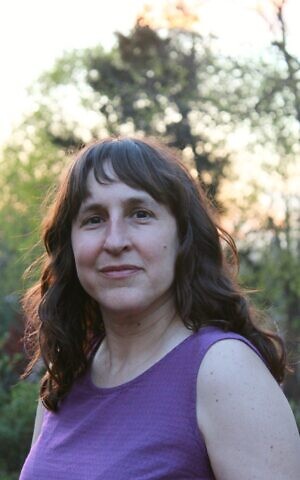
Kranson said she’s been trying to reinstate the course for years. The challenge, she explained, was the model, which had 12 lecturers from a variety of disciplines exploring Jew-hatred in various historical and geographical contexts.
“We can’t keep asking our colleagues to volunteer to give lectures again and again and again — that’s really a huge burden on them,” Kranson said. “So that model just wasn’t feasible for a continuous course.”
The issue may be resolved now, though, as the new course, which begins next month, will feature recorded lectures that can be used for years to come, hopefully making it “sustainable for the long term,” Kranson said.
After the students view each video, they will meet in person for a discussion facilitated by Frayda Cohen, director of the Gender, Sexuality, and Women’s Studies Program and director of the Pittsburgh Consortium for Adoption Studies. Cohen is also on the faculty of the Jewish Studies Program.
This will be the first class Cohen has led concerning antisemitism, but she is skilled at facilitating dialogue, Kranson said, adding “I fully trust her to do a great job with this.”
As of press time, there were only 10 students enrolled in the seminar. Kranson said she would have liked “more and stronger support from the administration” for the course.
“It’s very hard for students to find a course like this right now,” she said. “It is being sponsored by the Jewish Studies Program and the Religious Studies department, meaning that the only students who are seeing it are students who are interested in Jewish studies or religious studies.”
Other universities, Kranson said, have offered one-credit courses presenting an overview of antisemitism tuition-free for all students, “which made them quite popular, ” including a similar course at the University of Connecticut.
“But we can’t do that unless the university either makes this tuition-free or gives it a university number so that all students are able to see it,” she said. “There are ways that the university could put more support behind the course, and I’d really like to see that happen.”
Pitt spokesperson Jared Stonesifer said because of the high number of courses offered across campus, advertising those courses “is typically handled by the units in which those courses are housed — in this instance, the Dietrich School of Arts and Sciences. The Dietrich School, which is the largest undergraduate school at Pitt with several hundred course offerings per semester, promotes individual courses at the request of faculty members, as we did with this course with the creation of a promotional flyer. The course was also promoted via Pittwire earlier this month.”
Additionally, he said, “Pitt does not currently have any non-tuition courses.”
The lecturers for “Antisemitism Then and Now” primarily will be faculty members of Pitt or Carnegie Mellon University.
So far, 11 lectures have been recorded and another three will be added to the cache before the semester begins. Topics include antisemitism in the Soviet Union; antisemitism in Eastern Europe; the Holocaust; antisemitism in Spain; antisemitism in the medieval and early modern world; the intersections between antisemitism, body size and Jewish bodies; antisemitism in the United Kingdom; and antisemitism in Pittsburgh.
“I think even folks who have some knowledge on the subject are going to find some real depth here, because we’ve got scholars from across the disciplines,” Cohen said. “That’s the part of what I see as so dynamic about this project, because it is so multidisciplinary.”
A lecture dealing with anti-Zionism will also be delivered, although as of press time, the lecturer had not been finalized. While the other lectures will be presented by local scholars, Kranson said the talk on anti-Zionism would likely be given by a “worldwide expert on the topic.”
Kranson said talks are being held with several scholars across the country.
“We’re committing to finding one of them to give this lecture,” she said. “So we don’t know who it is yet, but it is something that is not only on our radar, but that we’re actively searching — not just for a person, but the right person.”
The topic is not without controversy, as there is wide range of opinions as to whether — or when — anti-Zionism is antisemitic.
“What we’re looking for is really somebody who can take us through the stakes of the various approaches to this,” Kranson said. “So rather than somebody who is going to get up there and say, ‘This is what you have to believe; my idea of it should be everybody’s approach,’ what we really want is somebody who has thought deeply about a variety of different approaches to this very thorny issue, and can approach it in a way that is thoughtful and nuanced and accessible, so that students will have the tools to be able to make their own determinations based on real knowledge.”
No lecture is scheduled specifically about antisemitism in the Arab world, but Cohen said other lectures will likely reference it.
“We’re also always looking to add those kinds of subjects,” she said. “So that’s something I don’t think we have a specific lecture on, but certainly something that is folded into some of the timeframes that we’re talking about.”
One central objective of the course is to foster constructive dialogue.
“Myself and my colleagues in the program, we’ve been teaching this material for a very long time,” Kranson said. “We’ve been teaching students from a variety of backgrounds who are coming in with a variety of perspectives on the Middle East, on Israel and Palestine, on antisemitism in general, and when you get them in the classroom together, and when you present this material in such a way that makes the stakes of these issues clear, that is based on real expertise and evidence, you can get them talking in ways that are productive, and it’s a chance that I think every student in the university deserves — to be able to have a carefully moderated conversation about even the most difficult subjects.”
Cohen agreed.
“Of course, we want them to learn and to have some expertise in the subject, the history, the geography and all the rest, but also, I think, helping them find ways to discuss this subject is really, in my view, a big part of what the university does best — teaching them, yes, about this particular subject, but also how to orient themselves in difficult conversations, how to move forward in productive ways, and move beyond just shouting at each other, and the kinds of difficult things they find on social media,” she said. PJC
Toby Tabachnick can be reached at ttabachnick@pittsburghjewishchronicle.org.
comments